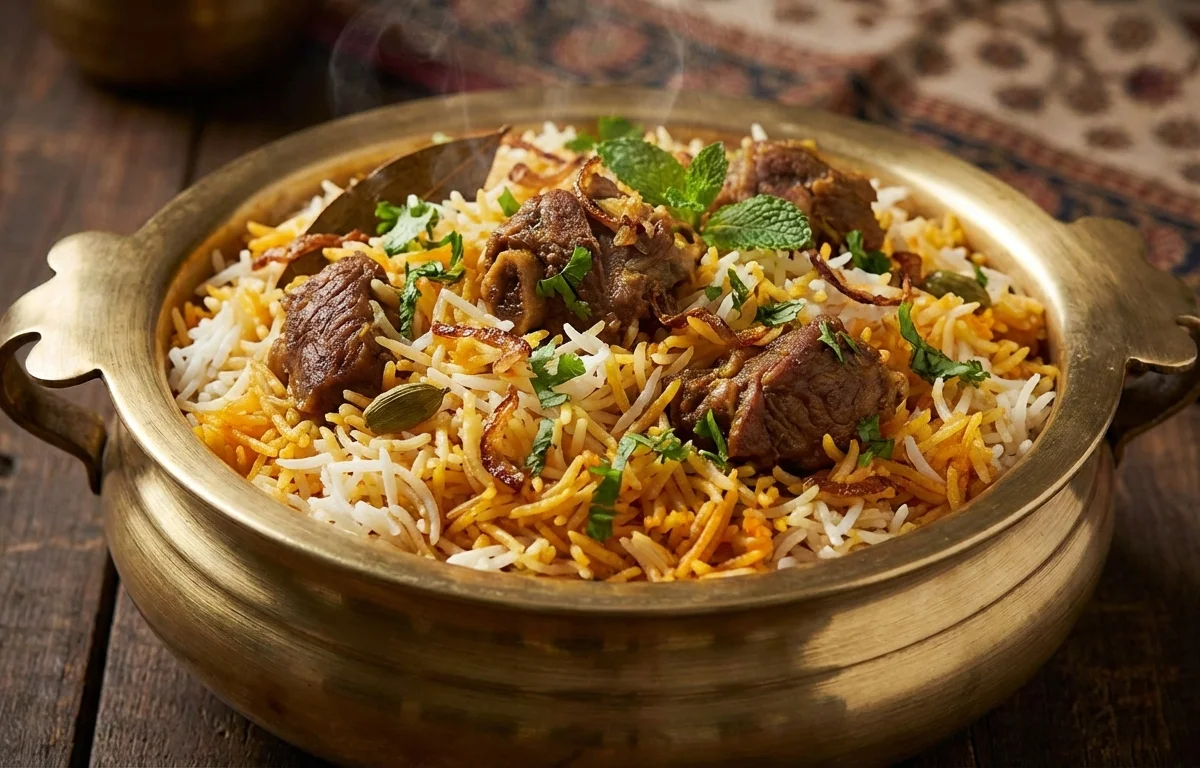
Maharashtrian Mutton Biryani
Fragrant basmati rice layered with spiced mutton, fried onions, mint, and saffron milk, then cooked on dum until every grain turns rich and aromatic. This Maharashtrian-style biryani is festive, deeply savory, and perfect for sharing.
For 4 servings
- prep · ~30 min
Soak the rice and saffron.
1.Rinse the basmati rice until the water runs mostly clear.2.Soak the rice in water for 30 minutes, then drain.3.Soak the saffron in warm milk and set aside.TIPSoaking helps the rice cook longer on dum without breaking. - fry · ~12 min
Fry the onions.
1.Heat the oil in a deep pan over medium heat.2.Add the sliced onions and fry until deep golden and crisp, stirring often.3.Lift them out and spread on a plate so they stay crisp.TIPDo not rush this step on high heat or the onions will burn before they turn sweet. - saute · ~12 min
Cook the mutton masala.
1.Heat the ghee in a pressure cooker over medium heat.2.Add cinnamon, green cardamom, cloves, black peppercorns, shah jeera, and 1 bay leaf.3.Add half of the fried onions and sauté for 30 seconds.4.Add ginger-garlic paste and green chili, then cook until fragrant.5.Add tomato, turmeric powder, red chili powder, coriander powder, garam masala, and salt for the masala.6.Cook until the tomatoes soften and the masala looks glossy. - pressure cook · ~30 min
Pressure cook the mutton.
Add the mutton, yogurt, lemon juice, half of the mint, and half of the coriander leaves. Mix well, pour in 3 cups water, cover, and pressure cook until the mutton is tender, about 20 to 25 minutes after full pressure.
TIPThe mutton should be just tender and still hold its shape, since it cooks again on dum. - boil · ~8 min
Parboil the rice.
1.Bring 6 cups water to a boil in a large pot.2.Add the remaining bay leaf and the salt for parboiling rice.3.Add the drained rice and cook until it is about 70 percent done and still firm in the center.4.Drain the rice right away.TIPIf the rice is cooked too far now, the final biryani will turn soft instead of fluffy. - assemble · ~4 min
Layer the biryani.
1.Spread the cooked mutton masala in a heavy pot.2.Top with the parboiled rice in an even layer.3.Scatter the remaining fried onions, mint, and coriander leaves over the rice.4.Drizzle the saffron milk on top. - simmer · ~30 min
Cook the biryani on dum.
Cover the pot tightly and cook on very low heat for 20 minutes so the rice finishes cooking and the flavors blend. Let it rest off the heat for 10 minutes before opening.
TIPUse the lowest heat possible to avoid catching at the bottom. - serve
Fluff gently and serve hot.
What to keep in mind.
7 tips from the recipe — small details that make a real difference to the final dish.
- 1Fry the onions to a deep golden brown, not just light gold; they sweeten the masala and finish crisp after cooling.
- 2Pressure-cook the mutton only until just tender, because it cooks again during dum and can shred if overdone.
- 3Drain the parboiled rice immediately at about 70% done so the grains stay separate after layering.
- 4Use a heavy-bottomed pot or place a tawa under the biryani pot during dum to prevent the masala from scorching.
- 5Keep the saffron milk for the top layer only, so you get distinct streaks of aroma and color through the rice.
- 6Rest the biryani for 10 minutes after dum before fluffing; this helps the steam settle and keeps the grains intact.
- 7When serving, scoop from the side and lift vertically so each portion includes both rice and mutton masala layers.
Adapt it for your goals.
Spicier
Add extra slit green chilies or a little more red chili powder for a hotter Maharashtrian-style finish.
low oilLow-oil
Use less oil for frying onions and shallow-fry them in batches; the biryani will be a bit lighter but still aromatic.
bonelessBoneless
Use boneless mutton for easier serving and faster eating, though bone-in pieces give a deeper, richer stock-like flavor.
chickenChicken
Swap the mutton for chicken and reduce the pressure-cooking time or cook it directly in the masala before dum.
Why this is on our healthy list.
Protein-Rich Main Dish
Mutton and yogurt make this biryani satisfying and protein-forward, helping turn it into a complete festive meal.
Herb-Forward Flavor
Mint, coriander leaves, ginger, garlic, and spices add freshness and aroma without relying only on heavy richness.
Balanced With Fermented Dairy
Yogurt brings tang and helps soften the meat while adding a cultured dairy element to the masala.
Frequently asked questions
The rice should be about 70% cooked: the grain will look longer but still have a firm white core when pressed or bitten.



.webp)