Meen Kozhambu
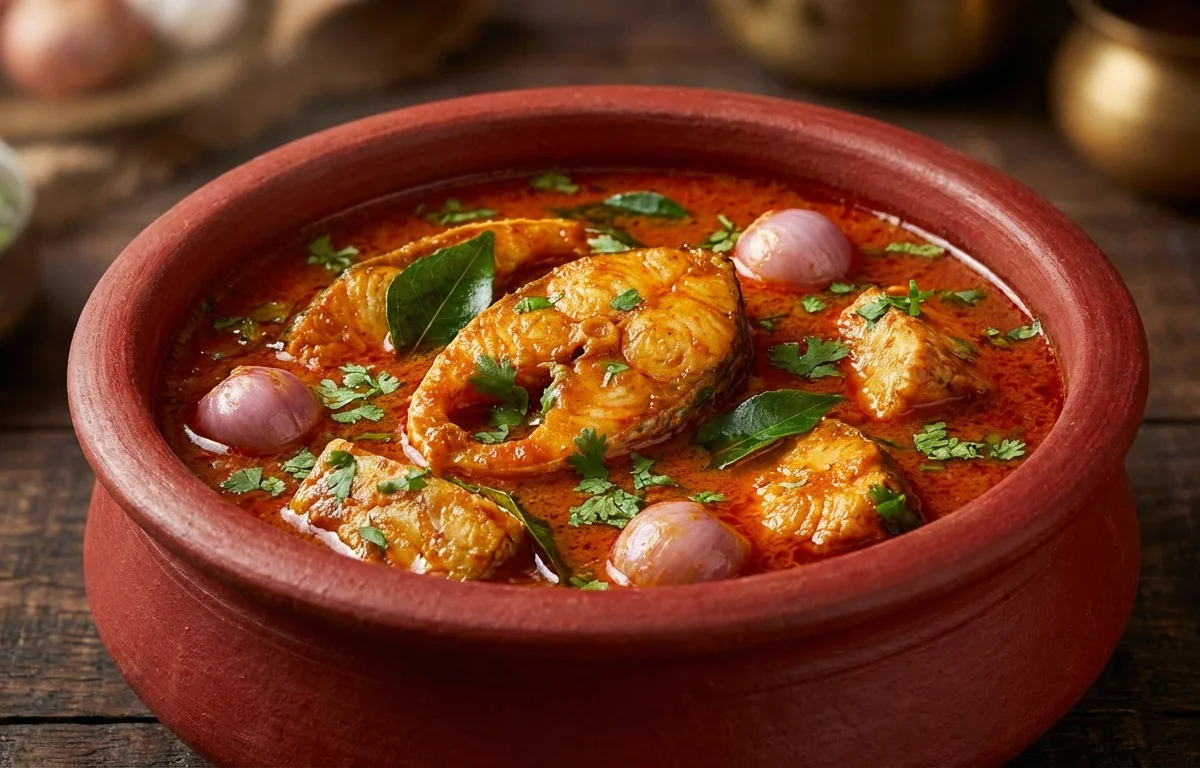
A tangy South Indian fish curry simmered with shallots, tomato, tamarind, and spices until the gravy turns rich and deeply flavorful. It is comforting, bold, and especially good with hot steamed rice.
For 4 servings
- prep · ~15 min
Prepare the tamarind extract and fish.
1.Soak the tamarind in 1 cup warm water for 15 minutes.2.Squeeze well and strain to make a smooth tamarind extract.3.Rinse the fish pieces gently and keep them ready. - temper · ~1 min
Make the tempering.
1.Heat sesame oil in a kadai or clay pot over medium heat.2.Add mustard seeds and let them splutter.3.Add fenugreek seeds and curry leaves and cook for a few seconds.TIPKeep the heat moderate once the fenugreek goes in so it does not turn bitter. - saute · ~8 min
Cook the shallots and garlic.
1.Add shallots, garlic, and green chili.2.Cook until the shallots soften and turn lightly golden.3.Add chopped tomato and cook until it breaks down. - saute · ~1 min
Add the spice powders.
Add turmeric powder, red chili powder, coriander powder, black pepper, and salt. Mix well and cook for 30 seconds so the spices bloom without burning.
- simmer · ~12 min
Simmer the gravy.
Pour in the tamarind extract and the remaining 1 cup water. Bring to a gentle simmer and cook until the raw smell fades and the gravy tastes rounded.
- simmer · ~10 min
Cook the fish in the gravy.
Slide the fish pieces into the simmering gravy in a single layer. Cover partly and cook on low heat until the fish is just done and the curry thickens slightly.
TIPDo not stir hard after adding the fish; swirl the pan gently so the pieces stay whole. - rest · ~10 min
Let the curry rest.
Turn off the heat and let the meen kozhambu rest for 10 minutes so the fish absorbs the tangy, spicy gravy.
- serve
Serve hot with rice.
What to keep in mind.
7 tips from the recipe — small details that make a real difference to the final dish.
- 1Use a clay pot if you have one; it keeps the simmer gentle and deepens the tamarind-rich flavor over time.
- 2After fenugreek seeds go into the oil, keep the heat low-moderate so they turn aromatic, not dark and bitter.
- 3Cook the tomato until fully soft and jammy before adding spices, or the gravy can taste sharp instead of rounded.
- 4Let the tamarind gravy lose its raw smell before adding fish; the fish cooks quickly and should not sit long in acidic liquid.
- 5Add fish in a single layer and swirl the pan instead of stirring, so delicate pieces stay intact.
- 6This curry often tastes even better after resting; make it a few hours ahead or the next day for a more settled flavor.
- 7Refrigerate leftovers and reheat very gently, just until hot, to avoid overcooking the fish.
Adapt it for your goals.
Spicier
Add extra red chili powder or one more slit green chili for a hotter meen kozhambu that still keeps the tamarind tang in front.
coconut styleCoconut-style
Stir in a little coconut milk near the end for a softer, slightly richer South Indian-style curry with mellow heat.
sardineSardine
Use sardines or mackerel instead of firm fish for a more traditional oily-fish version with a stronger, deeper seafood flavor.
shallot heavyShallot-heavy
Increase the shallots for a sweeter, thicker gravy that balances the sour tamarind beautifully.
Why this is on our healthy list.
Protein-Rich Main Dish
Fish provides high-quality protein, making this curry filling and suitable as a substantial main with rice.
Antioxidant-Rich Spices
Turmeric, black pepper, chili, curry leaves, garlic, and coriander bring plant compounds that add both flavor and nutritional value.
Lighter Than Creamy Curries
This curry gets body from shallots, tomato, and tamarind rather than cream, keeping the gravy bold without being heavy.
Digestive Tang and Aromatics
Tamarind, garlic, fenugreek, and curry leaves are traditional ingredients that contribute a bright, appetite-stimulating profile.
Frequently asked questions
Use firm fish that holds shape in gravy, such as seer fish, king fish, pomfret, tilapia, cod, or similar steaks and chunky fillets.