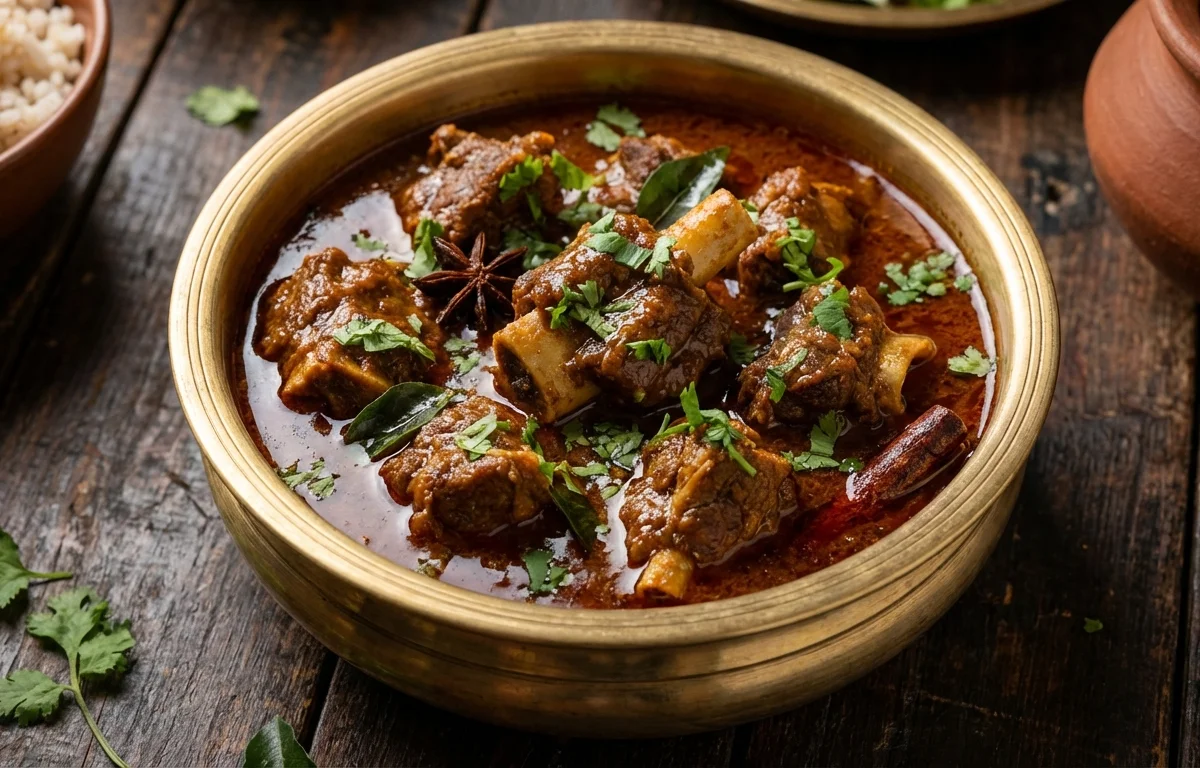
Mutton Kuzhambu
A homestyle South Indian mutton curry with tender pieces simmered in a rich onion-tomato gravy, layered with coconut, spices, and a gentle tang. It pairs beautifully with rice, idli, dosa, or parotta.
For 4 servings
- prep · ~5 min
Grind the coconut masala.
1.Add fresh coconut, fennel seeds, cumin seeds, and black pepper to a mixer jar.2.Pour in 0.5 cup water from the measured water.3.Grind to a smooth paste and keep aside. - pressure cook · ~30 min
Pressure cook the mutton.
1.Place mutton in a pressure cooker with turmeric powder, 1 tbsp ginger-garlic paste, and 1 cup water from the measured water.2.Close the cooker and cook on medium heat for 20 minutes after the first whistle.3.Let the pressure drop naturally and keep the cooked mutton with its stock aside.TIPBone-in pieces give the curry deeper flavor and a richer stock. - saute · ~8 min
Cook the whole spices and onions.
1.Heat oil in a heavy pan over medium heat.2.Add cinnamon, cloves, green cardamom, bay leaf, and curry leaves.3.Add onion and cook until light golden, 6 to 7 minutes. - saute · ~8 min
Build the masala base.
1.Add the remaining ginger-garlic paste and cook for 1 minute.2.Add tomato and salt, then cook until soft and pulpy, 5 to 6 minutes.3.Add coriander powder and red chili powder, then cook for 1 minute on low heat.TIPKeep the heat low after adding spice powders so they toast gently without burning. - simmer · ~15 min
Simmer the curry.
1.Add the cooked mutton with its stock to the pan and mix well.2.Stir in the ground coconut paste and tamarind paste.3.Pour in the remaining 1 cup water and bring to a gentle simmer.4.Cover and cook until the gravy thickens and the mutton turns very tender, 12 to 15 minutes. - garnish
Garnish with coriander leaves.
- serve
Serve hot with rice, idli, dosa, or parotta.
What to keep in mind.
7 tips from the recipe — small details that make a real difference to the final dish.
- 1Choose bone-in shoulder or rib pieces; they stay juicier and enrich the kuzhambu with a fuller stock.
- 2Grind the coconut masala very smooth, or the gravy can taste grainy instead of silky.
- 3After adding tomato, cook until the oil starts separating at the edges for a deeper, less raw-tasting base.
- 4If your mutton is older or tougher, pressure cook a little longer before adding it to the gravy.
- 5Add tamarind only after the mutton is pressure-cooked; early acidity can slow softening.
- 6Let the kuzhambu rest 15 to 20 minutes before serving so the coconut, spices, and stock meld better.
- 7The curry thickens as it stands, so loosen with a splash of hot water when reheating.
Adapt it for your goals.
Spicier
Increase black pepper and red chili powder for a hotter, more pepper-forward kuzhambu that pairs especially well with parotta.
thinner gravyThinner-gravy
Add a little extra hot water during the final simmer if you want a more pourable curry for rice or idli.
coconut lightCoconut-light
Reduce the coconut slightly for a lighter, less rich gravy while keeping the tamarind and spice profile intact.
shallot styleShallot-style
Use small onions instead of regular onions for a sweeter, more traditional Tamil-style depth in the masala.
Why this is on our healthy list.
Protein-Rich Main Dish
Mutton provides substantial protein, making this curry filling and satisfying when served with rice or flatbreads.
Spice-Based Digestive Support
Fennel, cumin, ginger, garlic, and pepper add aroma while contributing traditional digestive-supporting spices to the dish.
Herb and Tomato Antioxidants
Tomatoes, curry leaves, and coriander leaves bring plant compounds and freshness that balance the richness of the meat.
Frequently asked questions
The meat likely needs more pressure-cooking time. Tougher or older goat meat can take longer before it becomes tender enough for the final simmer.