Nattu Kozhi Kozhambu
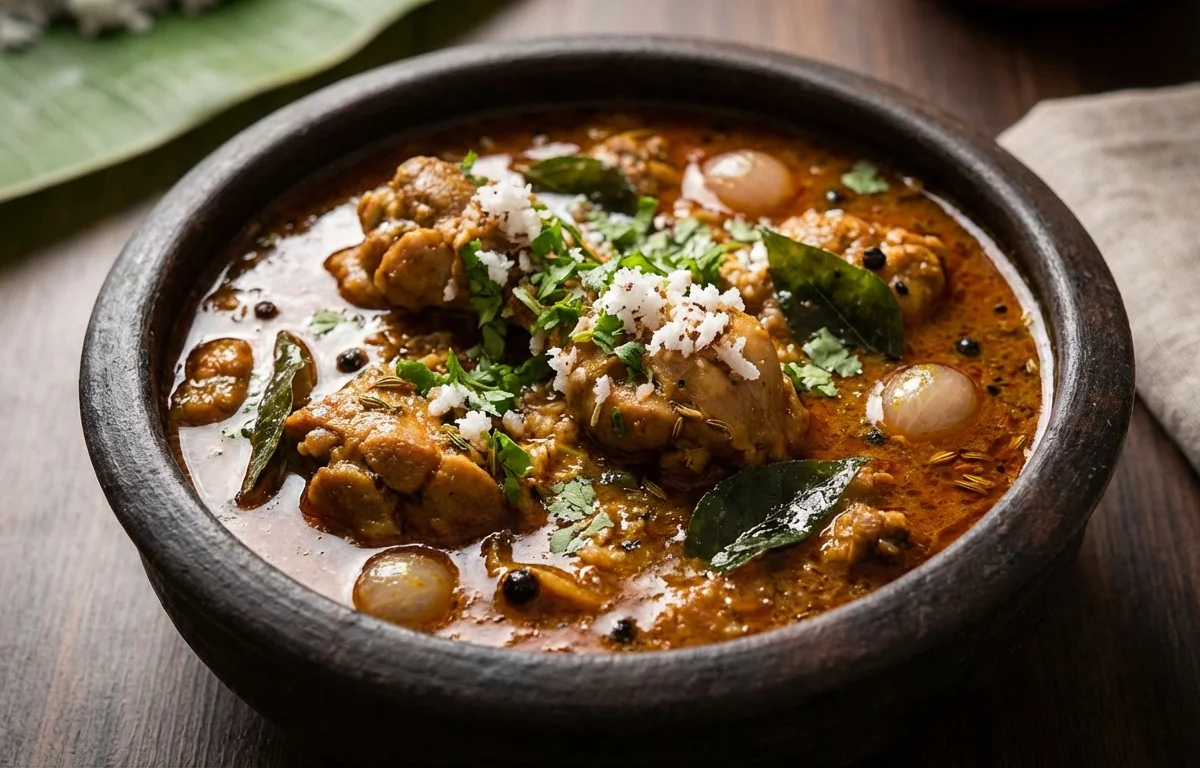
A homestyle Tamil chicken curry made with country chicken, fresh coconut, poppy seeds, and warming whole spices. The gravy is earthy, peppery, and deeply flavorful, with slow-cooked pieces that turn tender and rich.
For 4 servings
- prep · ~15 min
Soak the poppy seeds and prep the chicken.
1.Soak the poppy seeds in a little water for 15 minutes.2.Clean the country chicken well and cut it into medium bone-in pieces.3.Slice the onion, chop the tomato, peel the shallots, and keep the garlic and ginger ready. - roast · ~6 min
Roast the masala ingredients.
1.Heat a small pan over low heat.2.Add fennel seeds, coriander seeds, black peppercorns, cumin seeds, and dried red chili.3.Add shallots, garlic, ginger, and grated coconut.4.Roast gently until the coconut turns light golden and the spices smell fragrant.TIPKeep the heat low so the coconut browns evenly and the spices do not turn bitter. - mix · ~4 min
Grind the roasted masala.
Cool the roasted mixture slightly, then grind it with the soaked poppy seeds and a little water to a smooth paste.
- saute · ~8 min
Cook the whole spices and onions.
1.Heat sesame oil in a heavy pot over medium heat.2.Add cinnamon, cloves, green cardamom, bay leaf, and curry leaves.3.Let them sizzle for a few seconds, then add the sliced onion.4.Cook until the onion softens and turns light golden. - saute · ~7 min
Add tomato and spice powders.
Add the chopped tomato, turmeric powder, red chili powder, and salt. Cook until the tomato turns soft and the oil begins to separate.
- saute · ~5 min
Coat the chicken in the masala.
Add the country chicken pieces and mix well so they are fully coated with the onion-tomato base. Cook for 5 minutes, stirring often.
- simmer · ~5 min
Add the ground paste and cook the gravy.
Stir in the ground masala paste and cook for 4 to 5 minutes until it thickens slightly and smells rich.
- boil · ~7 min
Add water and bring the curry to a boil.
Pour in the water, mix well, and bring the curry to a steady boil over medium heat.
- simmer · ~25 min
Simmer until the chicken is tender.
Lower the heat, cover, and cook until the country chicken turns tender and the gravy is flavorful. Stir once or twice while it cooks.
TIPCountry chicken takes longer than broiler chicken, so simmer patiently until the meat is properly tender. - garnish
Finish with coriander leaves.
Sprinkle chopped coriander leaves over the curry and give it a gentle mix.
- serve
Serve hot.
Serve Nattu Kozhi Kozhambu hot with rice, idli, dosa, or kal dosa.
What to keep in mind.
7 tips from the recipe — small details that make a real difference to the final dish.
- 1Roast the coconut-spice mixture on low heat only; dark coconut will make the kozhambu bitter.
- 2Grind the roasted masala very smooth so the gravy turns thick and silky, not grainy.
- 3Let the tomatoes cook until oil separates before adding chicken; this removes raw sourness from the gravy.
- 4Country chicken needs a gentle, longer simmer than broiler chicken, so judge doneness by tenderness, not time alone.
- 5If the gravy thickens too much after simmering, loosen it with a splash of hot water, not cold.
- 6This curry tastes even better after resting 30 minutes, when the pepper, coconut, and whole spices settle into the meat.
- 7Refrigerate leftovers and reheat slowly the next day; the bone-in chicken makes the gravy richer overnight.
Adapt it for your goals.
Broiler-chicken
Use regular chicken for a faster weekday version; reduce simmering time because broiler chicken cooks much quicker than country chicken.
spicierSpicier
Increase black peppercorns and dried red chilies for a hotter, more pepper-forward village-style kozhambu.
thinner gravyThinner-gravy
Add a little more hot water if you want a looser curry to serve with rice, idli, or dosa.
coconut lightCoconut-light
Slightly reduce the grated coconut for a lighter gravy while keeping the poppy seed and spice body.
Why this is on our healthy list.
Protein-Rich Main Dish
Country chicken provides satisfying protein, making this curry filling and suitable as a hearty meal centerpiece.
Rich in Aromatic Spices
Black pepper, cumin, coriander, fennel, ginger, and garlic add flavor while contributing beneficial plant compounds.
Naturally Nourishing Fats
Fresh coconut and sesame oil bring richness and help carry the flavor of the roasted spices through the gravy.
Frequently asked questions
Country chicken is firmer and leaner than broiler chicken, so it needs a longer, gentle simmer to become tender and flavorful.