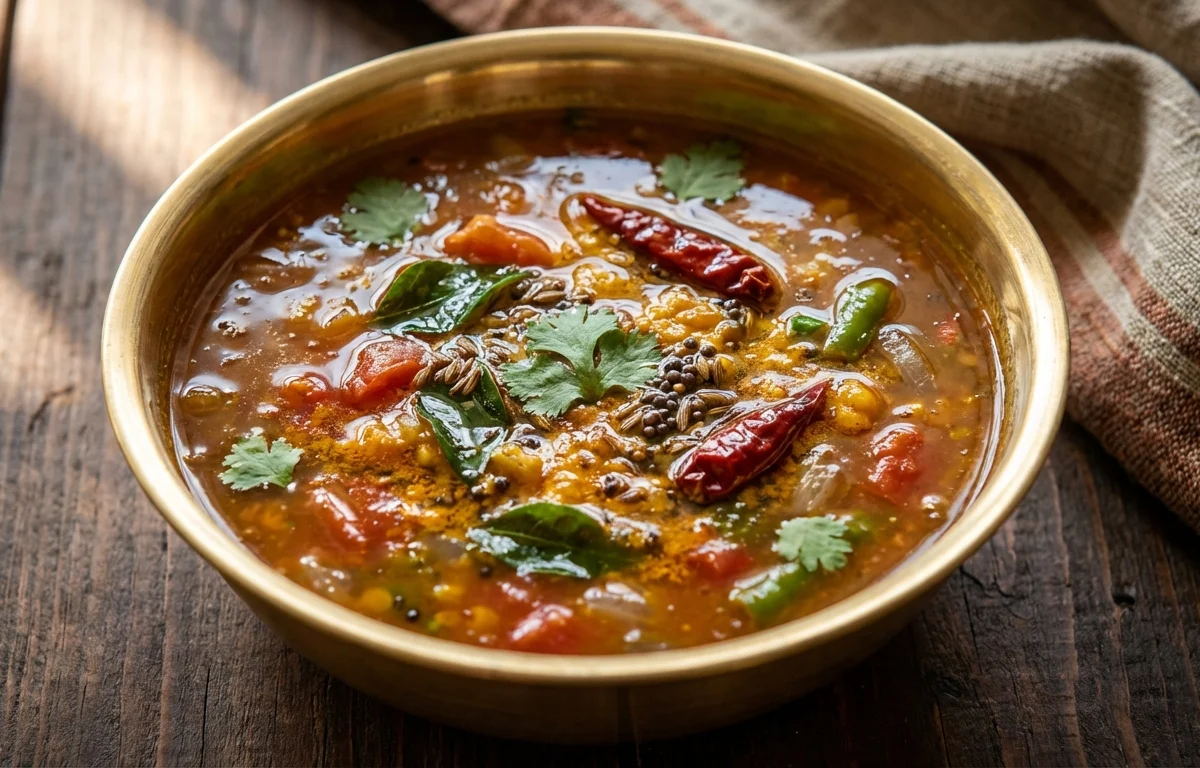
Pappu Charu
A comforting Andhra-style lentil rasam made with cooked toor dal, tamarind, tomato, and a simple tempering. It is light enough to sip like soup but hearty enough to spoon over hot rice for an everyday home-style meal.
For 4 servings
- prep · ~10 min
Prepare the tamarind and dal.
1.Wash the toor dal well.2.Soak the tamarind in a little warm water for 10 minutes.3.Squeeze and extract the pulp, then strain if needed.TIPA smooth tamarind extract gives the charu a cleaner, lighter texture. - pressure cook · ~15 min
Cook the dal until soft.
Add the toor dal, 1.5 cups water, and turmeric powder to a pressure cooker. Cook until the dal is very soft, then mash it lightly.
- boil · ~12 min
Boil the charu base.
1.Add tamarind extract, chopped tomato, sliced onion, green chili, red chili powder, salt, and the remaining water to a pot.2.Bring it to a boil over medium heat.3.Cook until the onion and tomato soften and the raw tamarind smell fades.TIPLet the tamarind boil first before adding dal so the sour taste mellows properly. - simmer · ~7 min
Add the dal and simmer.
Stir the mashed dal into the pot and mix well. Simmer gently for 6 to 8 minutes until the charu looks lightly thickened but still pourable.
- temper · ~2 min
Make the tempering.
1.Heat oil in a small pan over medium heat.2.Add mustard seeds and let them splutter.3.Add cumin seeds, dried red chili, crushed garlic, and curry leaves.4.Cook for a few seconds until fragrant.TIPKeep the heat medium so the garlic and spices do not burn and turn bitter. - assemble · ~1 min
Pour in the tempering.
Pour the hot tempering over the simmering pappu charu and mix gently. Let it bubble for 1 minute so the flavors come together.
- garnish
Garnish with coriander leaves.
- serve
Serve hot with rice.
What to keep in mind.
6 tips from the recipe — small details that make a real difference to the final dish.
- 1Mash the cooked toor dal only lightly; a little texture keeps the charu rustic, not pasty.
- 2Boil the tamarind, onion, and tomato base until the raw sour smell disappears before adding dal.
- 3Keep the final consistency thinner than sambar; pappu charu should be pourable over rice and easy to sip.
- 4Crush the garlic just enough to split it so it perfumes the tempering without burning too fast.
- 5Add the tempering while both the oil and charu are hot, so the mustard, cumin, and curry leaf aroma blooms fully.
- 6If making ahead, reheat gently and add chopped coriander only at the end for a fresher finish.
Adapt it for your goals.
No-onion
Skip the sliced onion for a simpler homestyle version that still keeps the tamarind-dal balance intact.
spicierSpicier
Increase green chilies or red chili powder for a hotter Andhra-style charu that pairs especially well with plain rice.
more garlickyMore-garlicky
Add a few extra crushed garlic cloves to the tempering for a deeper, more robust flavor.
thinner soup styleThinner-soup-style
Add a little extra water and simmer briefly if you want to serve it more like a light soup than a rice accompaniment.
Why this is on our healthy list.
Plant Protein From Toor Dal
Toor dal adds satisfying plant-based protein and makes the charu more filling while still staying light.
Digestive Spice Support
Cumin, garlic, curry leaves, and tamarind are commonly used in light, comforting dishes that feel easy to eat.
Tomato and Tamarind Brightness
Tomato and tamarind bring tang and natural acidity, helping the dish taste lively without relying on heavy fats.
Frequently asked questions
Yes. Simmer the toor dal in a pot with water and turmeric until very soft, then mash it well before adding to the charu.



.webp)