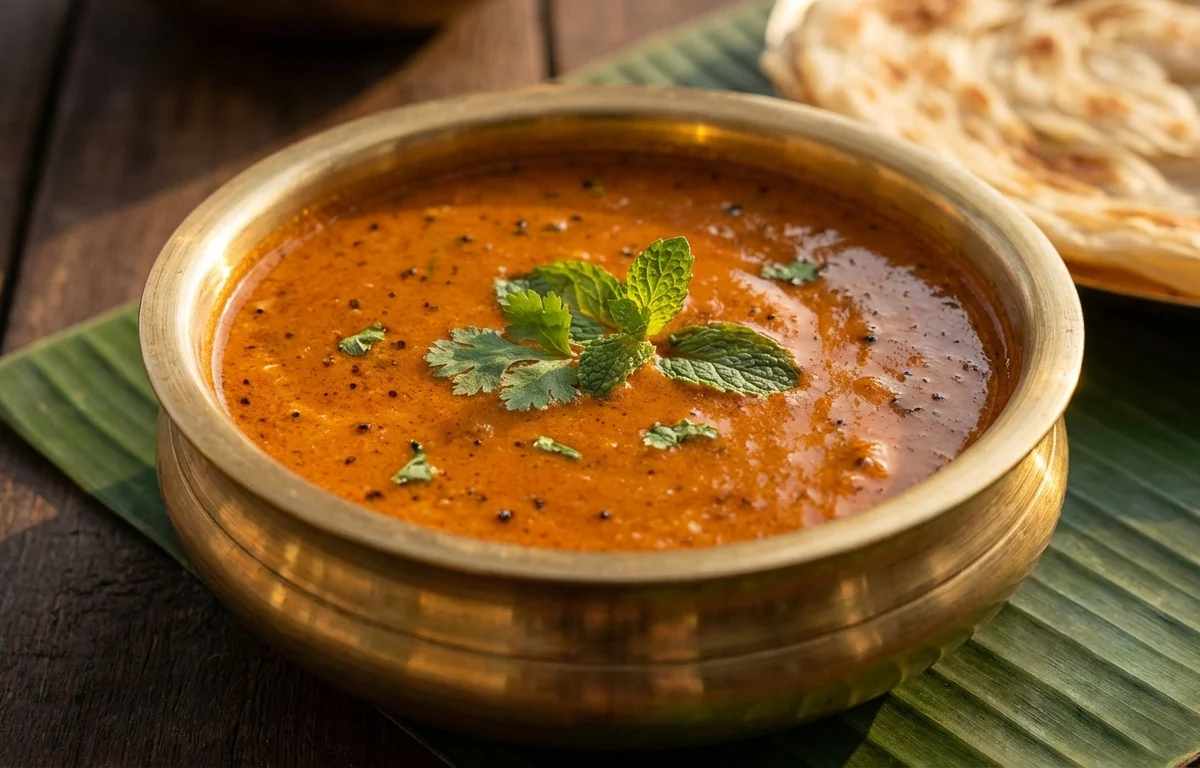
Plain Salna
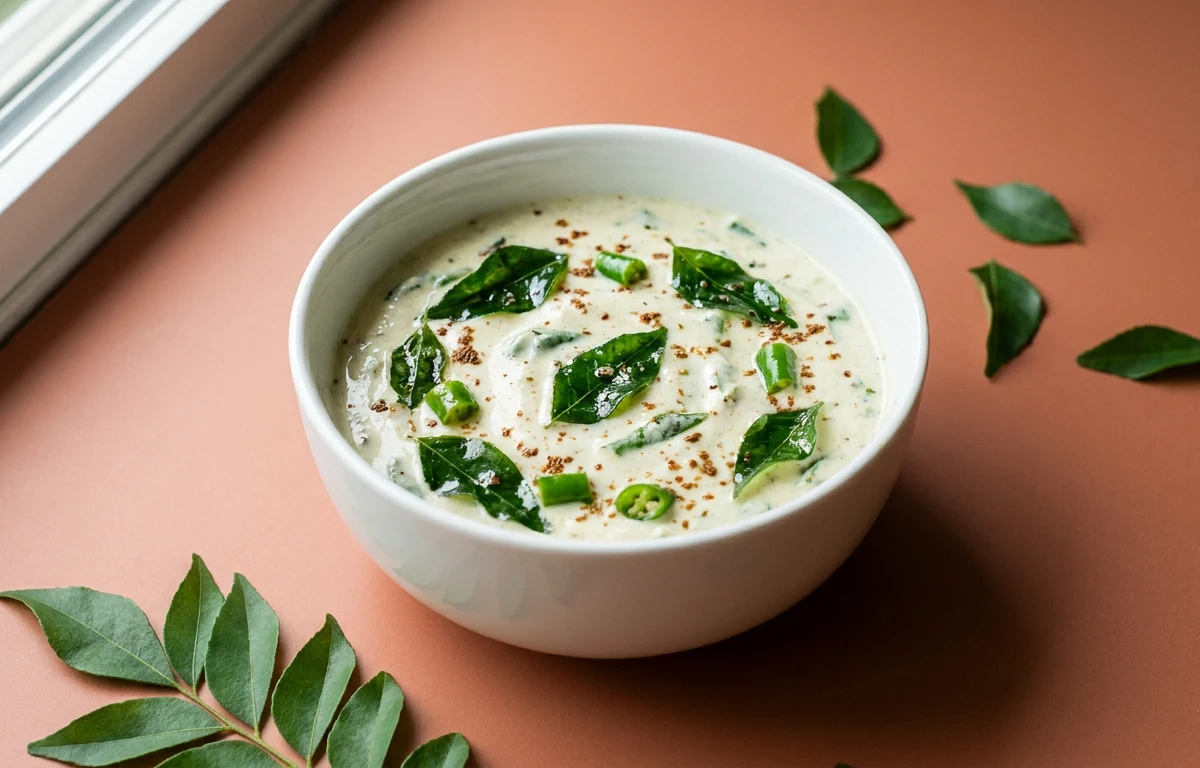
A simple yet deeply flavorful thin gravy from Tamil Nadu, typically served alongside biryani or parotta. Made with a freshly ground coconut and spice paste simmered in a fragrant onion-tomato base, this no-vegetable curry is light, aromatic, and the perfect companion to rich rice dishes.
For 4 servings
- prep · ~3 min
Grind the coconut paste.
1.In a blender jar, add grated coconut, cashews, 1 tsp fennel seeds, garlic cloves, and green chilies.2.Pour in 1/4 cup water and grind to a very smooth, fine paste.3.Set the ground paste aside.TIPA smooth paste ensures the gravy doesn't separate. Grind for at least 2 full minutes. - temper · ~1 min
Temper the whole spices.
1.Heat oil in a saucepan over medium heat.2.Add 1/2 tsp fennel seeds, cinnamon stick, cardamom pods, and curry leaves.3.Saute until fragrant and the seeds start to sizzle, about 30 seconds.TIPUse sesame oil for an authentic Tamil Nadu flavor — it adds a unique nutty aroma. - saute · ~5 min
Saute the onions.
1.Add the sliced onions to the pan.2.Cook, stirring occasionally, until they turn translucent and soft, about 4 to 5 minutes.3.Do not let them brown — this keeps the salna light in color.TIPKeeping the onions from browning is key to achieving the 'white' or 'plain' look of this gravy. - saute · ~6 min
Cook the tomato base.
1.Add the chopped tomatoes, turmeric powder, red chili powder, and coriander powder.2.Cook until the tomatoes break down, turn mushy, and oil starts to appear at the edges, about 5 to 6 minutes. - simmer · ~12 min
Simmer the gravy with ground paste.
1.Pour the ground coconut paste into the saucepan. Add salt and 2 cups of water.2.Stir well to combine everything and bring the mixture to a gentle boil.3.Reduce heat to low and simmer for 10 to 12 minutes, stirring occasionally.TIPThe gravy will thicken slightly as it simmers. If it becomes too thick, add a splash of water to maintain a flowing consistency. - garnish
Finish and serve.
Turn off the heat. Garnish with chopped coriander leaves. Serve the plain salna hot as a side gravy with biryani, parotta, or steamed rice.
What to keep in mind.
6 tips from the recipe — small details that make a real difference to the final dish.
- 1Grind the coconut paste until silky smooth — a grainy paste will cause the gravy to curdle.
- 2Use fresh or frozen grated coconut; desiccated coconut lacks the moisture needed for a silky texture.
- 3Do not brown the onions; keeping them pale ensures the salna stays 'plain' and light in color.
- 4Simmer the gravy on low heat after adding the coconut paste to prevent it from splitting.
- 5For a restaurant-style finish, strain the gravy through a coarse sieve before serving.
- 6Make ahead: the salna tastes even better the next day as the flavors meld — reheat gently.
Adapt it for your goals.
Vegan
This recipe is already vegan since it uses no dairy, meat, or eggs. Perfect for plant-based diets without any modifications.
nut freeNut-free
Replace the 6 cashews with 1 tablespoon of raw white poppy seeds (khus khus) for a nut-free version that still gives body and creaminess.
low oilLow-oil
Reduce oil to 1 tablespoon for the tempering and sauté the onions in a splash of water after the spices bloom; the coconut paste adds enough richness.
spicierSpicier
Increase green chilies to 4 and add 1/2 teaspoon of freshly crushed black pepper along with the red chili powder for an extra layer of heat.
biryani salnaBiryani salna
Add 1 teaspoon of garam masala powder and a pinch of saffron threads soaked in 2 tablespoons of warm milk for a more aromatic gravy to pair with dum biryani.
Why this is on our healthy list.
Rich in Healthy Fats
Coconut and cashews provide medium-chain triglycerides (MCTs) and monounsaturated fats that support heart health and provide sustained energy.
Packed with Antioxidants
Curry leaves, turmeric, and coriander are loaded with antioxidants that help fight inflammation and protect cells from oxidative damage.
Good Source of Iron
Coriander powder and curry leaves contribute dietary iron, which is essential for healthy blood and oxygen transport.
Contains Digestive Spices
Fennel, cardamom, and cinnamon aid digestion and help reduce bloating — making this gravy easy on the stomach even after a heavy biryani meal.
Naturally Gluten-Free
This salna contains no wheat or gluten-containing ingredients, making it suitable for those with celiac disease or gluten sensitivity.
Frequently asked questions
Coconut-based gravies thicken as they simmer. Start with 2 cups of water and adjust after 10 minutes of simmering — add hot water if it's too thick, or simmer longer if too thin.