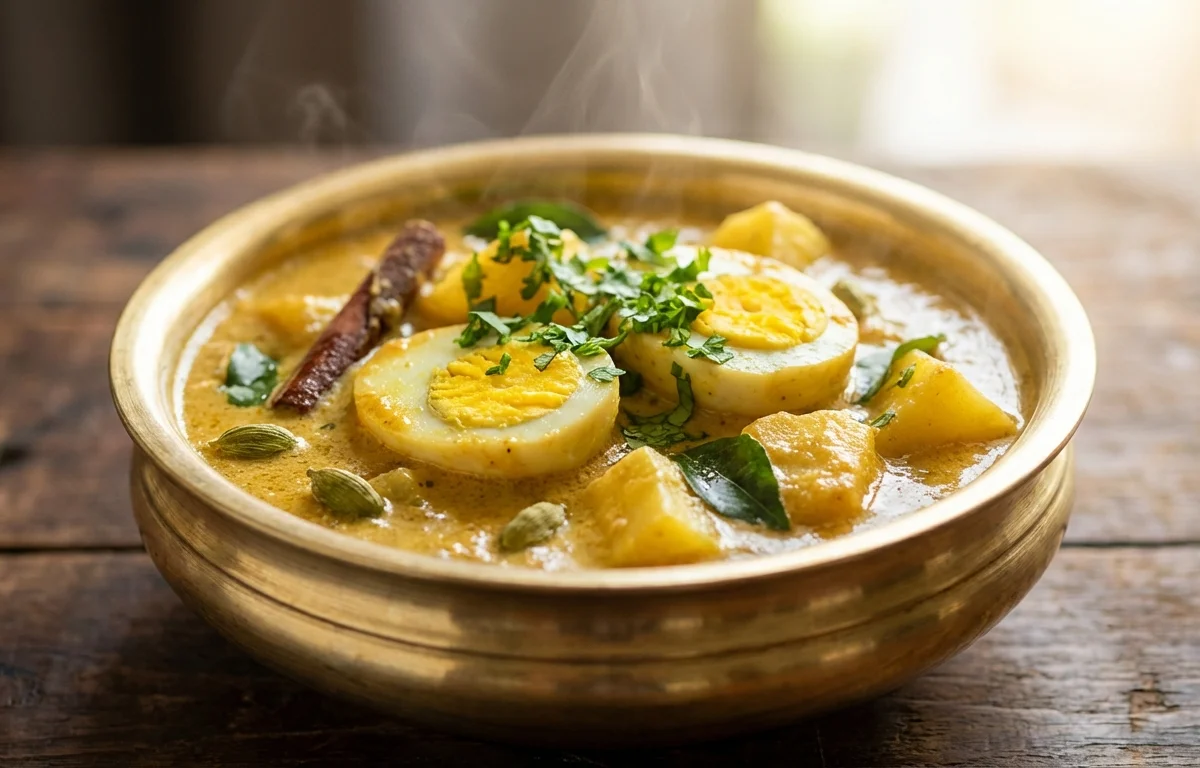
Potato Egg Kurma
A rich and comforting South Indian-style kurma where tender boiled eggs and soft potatoes swim in a fragrant coconut-based gravy. The gentle heat of green chilies mingles with the warmth of whole spices, making it a perfect companion for flaky parottas or steaming hot rice.
For 4 servings
- prep
Boil the eggs and potatoes.
1.Place eggs in a saucepan with enough water to cover them. Bring to a boil and cook for 8 minutes.2.In another saucepan, boil cubed potatoes until fork-tender but not mushy, about 7-8 minutes.3.Drain eggs and potatoes. Peel eggs once cool enough to handle, and set everything aside.TIPKeep the potatoes slightly firm, as they will simmer again in the gravy. - prep
Prepare the coconut paste.
1.In a blender, combine grated coconut, fennel seeds, poppy seeds, and cashew nuts.2.Add 1/2 cup of water from the total water quantity and grind to a smooth, thick paste.3.Set the paste aside for later.TIPSoaking cashews in warm water for 10 minutes yields a creamier paste. - temper · ~1 min
Temper the whole spices.
1.Heat oil in a heavy-bottomed pan over medium heat.2.Add bay leaf, cinnamon stick, cardamom, and cloves.3.Sauté for 30 seconds until the spices release their aroma. - saute · ~10 min
Build the onion-tomato base.
1.Add sliced onions and slit green chilies to the tempered oil.2.Sauté until onions turn golden brown, about 6-7 minutes.3.Stir in ginger-garlic paste and cook until the raw smell disappears, about 1 minute.4.Add chopped tomatoes and cook until they turn soft and mushy, releasing oil from the sides.TIPTake your time with browning the onions — it builds the foundational sweetness of the kurma. - saute · ~1 min
Cook the spice powders.
1.Lower the heat and add turmeric powder, red chili powder, coriander powder, and garam masala.2.Sauté continuously for 30 seconds to bloom the spices without burning them.TIPIf spices stick, add a splash of water rather than more oil. - simmer · ~5 min
Simmer the gravy with the coconut paste.
1.Add the ground coconut paste to the pan and stir well.2.Pour in the remaining water to achieve a thick, creamy consistency.3.Season with salt, mix well, and bring the gravy to a gentle boil.4.Reduce heat to low and simmer uncovered for 5 minutes, stirring occasionally. - simmer · ~7 min
Add eggs and potatoes to the gravy.
1.Gently slide in the boiled eggs and potatoes.2.Mix carefully to coat them with the gravy without breaking.3.Cover and simmer on low heat for 5-7 minutes so the flavors meld.4.Turn off the heat and let the kurma rest for 5 minutes before serving.TIPMake small slits in the boiled eggs with a knife before adding — this helps them absorb the gravy. - garnish
Garnish with coriander leaves and serve hot.
Transfer to a serving bowl and scatter freshly chopped coriander leaves over the top. Serve with steamed rice, appam, idiyappam, or flaky parotta.
What to keep in mind.
6 tips from the recipe — small details that make a real difference to the final dish.
- 1Make small slits in the boiled eggs before adding to the gravy so they soak up the rich coconut flavors.
- 2Keep the potato cubes slightly firm after boiling — they will soften further while simmering in the gravy.
- 3Soak cashews in warm water for 10 minutes before grinding to achieve a creamier, silkier paste.
- 4Take time to brown the onions until deep golden — this builds the kurma's foundational sweetness.
- 5Bloom the spice powders for just 30 seconds over low heat to release their aroma without bitterness.
- 6Let the kurma rest for 5 minutes after cooking so the flavors meld and the gravy thickens beautifully.
Adapt it for your goals.
Vegan
Replace boiled eggs with pan-fried tofu cubes or chickpeas. The coconut-based gravy is already dairy-free, so this makes the entire dish plant-based while keeping it hearty.
low oilLow-oil
Reduce oil to 1 tablespoon and dry-roast the whole spices before adding onions. Use a non-stick pan and add splashes of water during sautéing to prevent sticking.
high proteinHigh-protein
Add a cup of cooked chana dal or paneer cubes along with the eggs and potatoes for an extra protein boost that pairs well with the creamy gravy.
kerala styleKerala-style
Swap the poppy seeds with 1 teaspoon of freshly ground black pepper and add a sprig of curry leaves during tempering for a more traditionally Malabar flavor profile.
Why this is on our healthy list.
Good Source of Plant-Based Fats
Fresh coconut and cashews provide healthy medium-chain triglycerides and monounsaturated fats that support heart health and sustained energy.
Rich in Antioxidant Spices
Turmeric, cinnamon, cloves, and cardamom are packed with anti-inflammatory compounds that help boost immunity and aid digestion.
High-Quality Protein from Eggs
Eggs supply complete protein with all essential amino acids, supporting muscle repair and satiety.
Potassium from Potatoes
Potatoes are a natural source of potassium, which helps regulate blood pressure and muscle function.
Digestive Aid from Fennel and Poppy Seeds
Fennel seeds soothe the stomach and reduce bloating, while poppy seeds provide dietary fiber for smooth digestion.
Frequently asked questions
Yes, substitute the fresh grated coconut with 1/2 cup of thick canned coconut milk. Skip the grinding step and add it directly to the pan after cooking the spice powders. You may need to adjust water to maintain the right gravy consistency.