Tari Wala Chicken
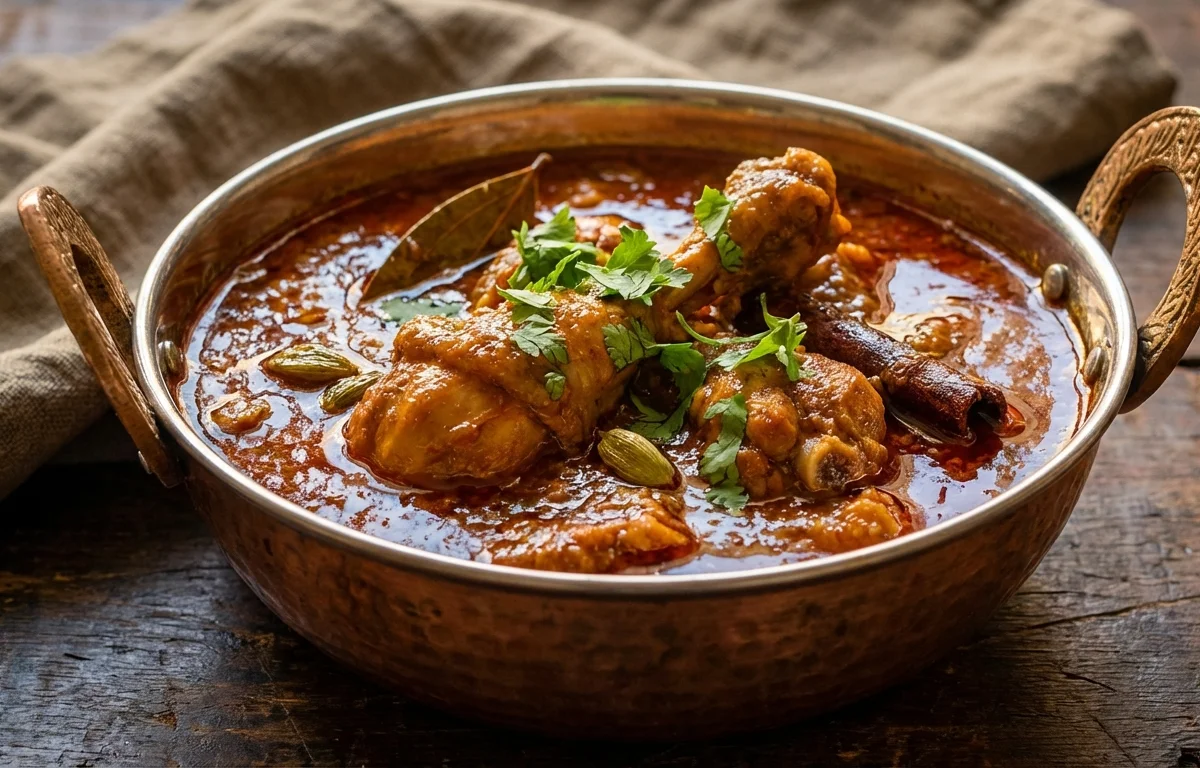
This homestyle North Indian chicken curry is all about a light, flavorful tari made with onion, tomato, and warm spices. It stays brothy rather than thick, making it perfect with roti or a small serving of rice.
For 4 servings
- prep · ~10 min
Prep the chicken and masala ingredients.
1.Wash the chicken pieces and drain well.2.Chop the onion and tomato finely.3.Crush the ginger and garlic together.4.Slit the green chilies and keep the coriander leaves ready. - temper · ~2 min
Heat the oil and crackle the whole spices.
Heat mustard oil in a kadai until lightly smoking, then lower the heat. Add cumin seeds and bay leaf and let them sizzle for a few seconds.
TIPLetting mustard oil reach the smoking point softens its sharp raw taste. - saute · ~8 min
Cook the onion, ginger, garlic, and chilies.
1.Add the chopped onion and cook until light golden (5-7 min).2.Add crushed ginger, garlic, and green chilies.3.Sauté until the raw smell goes away and the mixture smells fragrant (1-2 min). - saute · ~7 min
Cook the tomatoes and ground spices.
1.Add the chopped tomato and cook until soft and pulpy (4-5 min).2.Add turmeric powder, red chili powder, coriander powder, and salt.3.Mix well and cook until the masala looks glossy and leaves a little oil at the edges (2-3 min).TIPIf the masala starts sticking, splash in 1 or 2 tablespoons of water instead of adding more oil. - saute · ~8 min
Coat the chicken in the masala.
Add the chicken pieces and cook over medium heat, stirring often, until the pieces lose their raw pink color and are well coated with the masala.
- simmer · ~25 min
Add water and simmer the curry.
1.Pour in the hot water and stir well, scraping up any masala from the pan.2.Bring the curry to a gentle boil.3.Cover and cook on low heat until the chicken is tender and the tari is flavorful but still light (20-25 min).TIPTari wala chicken should have a thin, spoonable gravy, so do not reduce it too much. - garnish · ~1 min
Finish with garam masala and coriander leaves.
Sprinkle in the garam masala and chopped coriander leaves. Simmer for 1 minute more so the flavors settle.
- serve
Serve the tari wala chicken hot.
What to keep in mind.
7 tips from the recipe — small details that make a real difference to the final dish.
- 1Drain the chicken well before adding it, or the masala will steam instead of bhuno properly.
- 2Heat mustard oil until just smoking, then lower the flame before tempering so the curry keeps its classic flavor without bitterness.
- 3Cook the onions only to light golden, not deep brown, to keep the tari light and homestyle rather than dark and heavy.
- 4Use hot water for the gravy so the chicken keeps simmering steadily and the oil does not split suddenly.
- 5If the tari reduces too much, add a small splash of hot water and simmer briefly to restore the thin, spoonable consistency.
- 6Bone-in pieces give the broth more flavor; give larger pieces a few extra minutes until they are tender near the bone.
- 7Rest the curry for 10 minutes after finishing so the garam masala and coriander settle into the broth.
Adapt it for your goals.
Low-oil
Reduce mustard oil slightly and use small splashes of water while bhunoing the masala; good if you want the same homestyle flavor with a lighter finish.
spicierSpicier
Add an extra slit green chili or a little more red chili powder for a hotter tari that still stays thin and drinkable.
potato addedPotato-added
Add cubed potatoes with the chicken so they simmer in the broth and make the curry more filling, great with roti.
bonelessBoneless
Use boneless chicken for quicker cooking, but simmer a little less and expect a slightly less rich broth than bone-in pieces.
Why this is on our healthy list.
Protein-Rich Main Dish
Chicken makes this curry satisfying and rich in protein, helping turn a simple meal of roti or rice into a balanced main.
Lighter Brothy Gravy
Because the tari is thin and not cream- or butter-based, the dish feels lighter than many heavier restaurant-style chicken curries.
Aromatic Spice Support
Ginger, garlic, cumin, coriander, and turmeric add flavor depth along with beneficial plant compounds common in everyday Indian cooking.
Frequently asked questions
It usually means the curry reduced too much. Add a little hot water and simmer briefly to bring back the light, spoonable tari.

.webp)