Tidali Dal Gosht
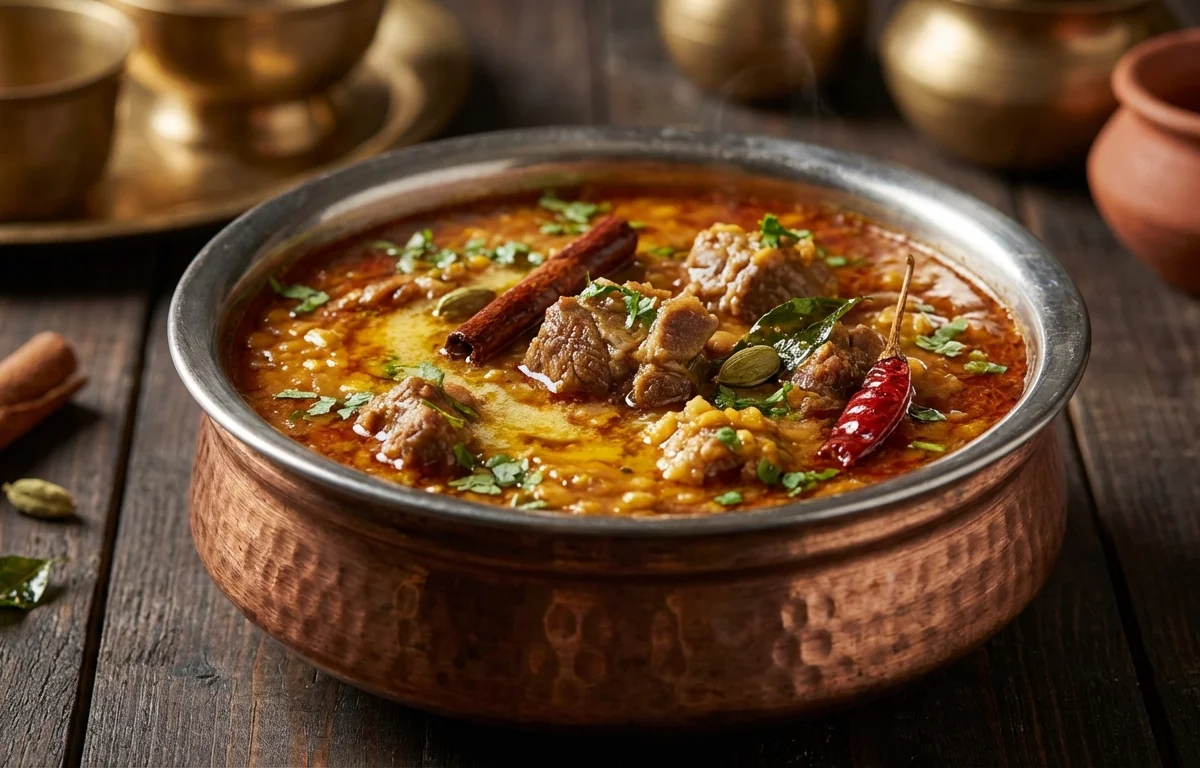
A hearty, slow-cooked Awadhi delight where tender mutton meets three distinct lentils in a fragrant onion-tomato gravy. The lentils melt into the gravy, thickening it naturally, while whole spices and a touch of ghee create a deeply comforting, rustic meal that pairs beautifully with naan or steamed rice.
For 4 servings
- prep
Soak lentils and marinate mutton.
1.Wash and soak chana dal, toor dal, and masoor dal together in water for 1 hour. Drain and set aside.2.In a bowl, mix mutton pieces with yogurt, turmeric powder, red chili powder, and half of the ginger-garlic paste. Set aside for 20 minutes. - pressure cook · ~20 min
Pressure cook mutton and lentils.
1.Transfer marinated mutton and soaked lentils into the pressure cooker.2.Add 1.5 cups of water and 0.25 tsp salt. Stir well.3.Close the lid and pressure cook on medium-high heat for 5-6 whistles or until the mutton is tender.4.Let the pressure release naturally. Open the lid and check the mutton for tenderness.TIPIf the mutton is not tender, add a splash of water and cook for another whistle. - temper · ~10 min
Make the tempering.
1.Heat ghee in a heavy-bottomed pan over medium heat.2.Add cumin seeds and let them crackle.3.Add bay leaf, cinnamon stick, green cardamom, and cloves. Sauté until fragrant (30 seconds).4.Add sliced onions and sauté until deep golden brown (8-10 minutes).TIPDon't rush the onions. A deep brown color builds the rich base flavor of the curry. - saute · ~7 min
Build the gravy base.
1.Add the remaining ginger-garlic paste and slit green chilies. Sauté until the raw smell disappears (1 minute).2.Add chopped tomatoes, coriander powder, and the remaining 0.25 tsp salt.3.Cook until the tomatoes turn soft and mushy, and the ghee begins to separate from the mixture (5-7 minutes). - simmer · ~20 min
Combine and slow cook.
1.Pour the cooked mutton-and-lentil mixture into the pan with the gravy base.2.Stir gently to mix everything without breaking the mutton pieces.3.Bring to a gentle simmer and cook uncovered for 15-20 minutes, stirring occasionally, until the gravy thickens to your desired consistency.4.If the gravy looks too thick, adjust with a splash of warm water.TIPThe lentils will naturally thicken the gravy as they break down. Stir gently from the bottom to prevent sticking. - garnish
Finish with garam masala and fresh coriander.
1.Sprinkle garam masala over the curry and stir once.2.Turn off the heat and garnish with freshly chopped coriander leaves.TIPAdding garam masala at the very end preserves its aromatic oils. - rest · ~5 min
Rest the curry before serving.
Cover the pan and let the curry rest for 5 minutes to allow the flavors to meld together.
TIPTidali Dal Gosht tastes even better the next day as the lentils and spices deepen in flavor.
What to keep in mind.
6 tips from the recipe — small details that make a real difference to the final dish.
- 1Deeply caramelize the onions until golden brown for a rich, sweet base that defines the gravy's flavor.
- 2Marinate the mutton in yogurt and spices for at least 20 minutes to tenderize and infuse flavor.
- 3Let the pressure release naturally after cooking mutton and lentils to keep the meat succulent.
- 4Cook the tomato-onion masala until the ghee visibly separates — this ensures the gravy is well-cooked and not raw.
- 5Add garam masala only at the end, off the heat, to preserve its volatile aromatic oils.
- 6Rest the finished curry for 5 minutes before serving to let the flavors meld; it tastes even better the next day.
Adapt it for your goals.
Vegetarian
Replace mutton with 300g of paneer or mixed vegetables (potatoes, carrots, and cauliflower). Skip the yogurt marinade; add a splash of cream or a spoonful of ghee at the end for richness.
low oilLow-oil
Reduce ghee to 1 teaspoon for sautéing and tempering. Use a non-stick pan and add splashes of water to prevent sticking while cooking onions and tomatoes.
pressure cooker shortcutPressure cooker shortcut
After tempering spices and cooking the masala directly in the pressure cooker, add the marinated mutton, soaked lentils, and water. Pressure cook everything together for 5-6 whistles for a one-pot version.
Why this is on our healthy list.
Rich in Plant Protein
Three types of lentils provide a diverse array of plant-based proteins and fibers, supporting muscle health and digestion.
Gut-Friendly Lentils
Chana dal, toor dal, and masoor dal are excellent sources of soluble fiber, which helps regulate blood sugar and promotes healthy gut bacteria.
Bone-In Mutton Nutrients
The bone-in mutton releases collagen and minerals like calcium and phosphorus into the gravy, supporting joint and bone health.
Anti-Inflammatory Spices
Turmeric, ginger, and garlic are known for their anti-inflammatory and antioxidant properties, which may support immune health.
Frequently asked questions
Yes, but bone-in mutton adds more flavor and richness to the gravy. If using boneless, reduce cooking time slightly and check tenderness earlier.