Udupi Kurma
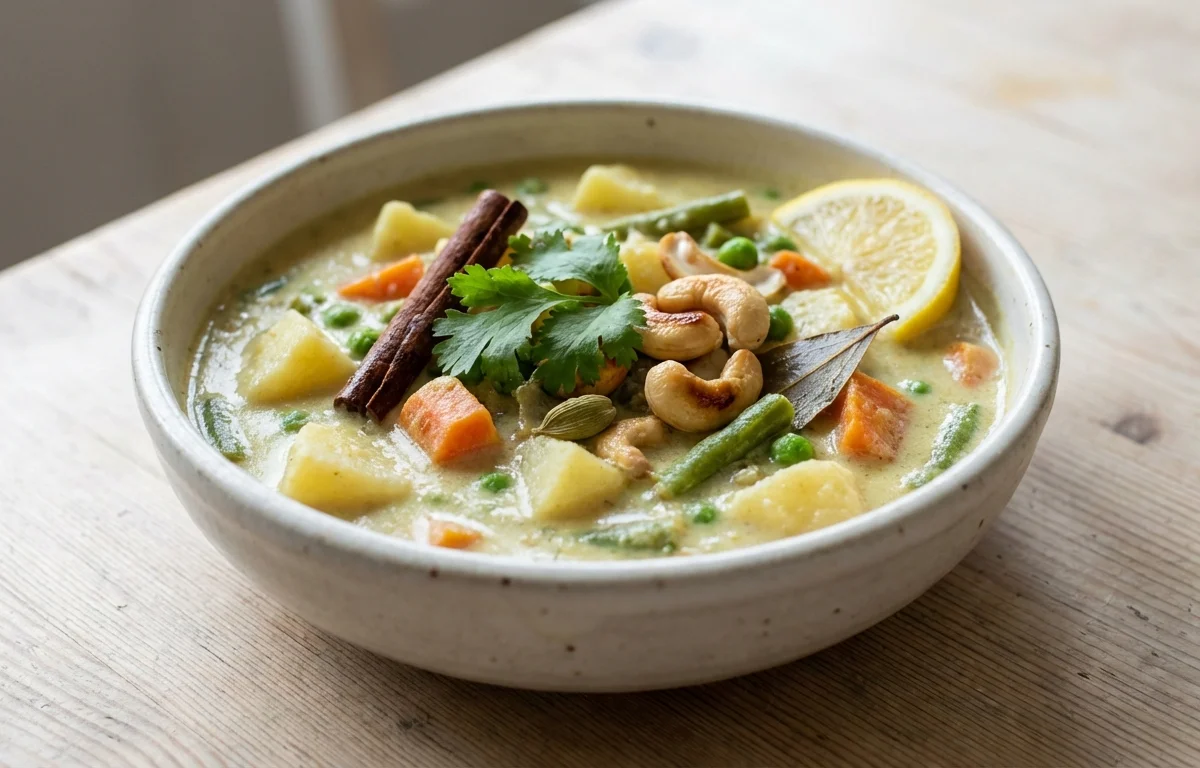
A fragrant vegetable curry from Karnataka's Udupi region, simmered in freshly ground coconut, roasted spices, and poppy seeds. Light yet deeply aromatic, this kurma pairs beautifully with parotta, neer dosa, or steamed rice for a comforting temple-style meal.
For 4 servings
- prep
Soak the poppy seeds and cashews.
Place poppy seeds and cashew nuts in a small bowl with warm water. Set aside for 15 minutes to soften.
- boil · ~7 min
Boil the vegetables until just tender.
1.Bring a pot of water to a rolling boil.2.Add diced carrots, potatoes, chopped green beans and green peas.3.Boil for 6-7 minutes until vegetables are fork-tender but still hold their shape.4.Drain and set aside.TIPDon't overcook the vegetables — they will simmer in the gravy later. - roast · ~2 min
Dry roast the whole spices for the masala paste.
1.Place a small pan over low heat.2.Add cinnamon stick, cloves, green cardamom and fennel seeds.3.Dry roast for 1-2 minutes until fragrant.4.Remove from heat and let cool completely.TIPLow heat is essential — burnt spices taste bitter. - mix · ~2 min
Grind a smooth masala paste.
In a blender jar, combine the roasted whole spices, soaked poppy seeds and cashew nuts (drain them first), grated coconut, ginger, and green chilies. Add a splash of water and grind to a smooth, fine paste.
TIPGrind in batches if needed — the paste should be silky with no grainy bits. - saute · ~8 min
Sauté the onions until golden.
1.Heat oil in a deep pan or kadhai over medium heat.2.Add sliced onions and sauté for 5-7 minutes until soft and golden brown.3.Add chopped tomatoes and cook until they turn mushy and release their juices.TIPStir occasionally to prevent onions from sticking. - saute · ~1 min
Cook the spice powders with the onion-tomato base.
Add turmeric powder and red chili powder to the pan. Sauté for 30 seconds until the raw smell disappears.
- simmer · ~12 min
Add the masala paste and simmer.
1.Pour the ground coconut-spice paste into the pan.2.Add 1.5 cups of water and stir well to combine.3.Bring to a gentle simmer and cook for 10-12 minutes, stirring occasionally.4.The gravy will thicken and tiny oil droplets will appear on the surface.TIPKeep the heat low — coconut-based gravies can scorch easily. - simmer · ~5 min
Add the boiled vegetables and finish cooking.
Gently fold in the boiled vegetables and salt. Simmer for another 5 minutes so the vegetables absorb the flavors and the gravy coats them well.
- temper · ~1 min
Make the final tempering.
1.Heat ghee in a small tadka pan over medium heat.2.Add cumin seeds and let them crackle and turn golden (15-20 seconds).3.Add curry leaves and fry until crisp (10 seconds).4.Immediately pour this tempering over the hot kurma.TIPPour the tempering while it's still sizzling — that's what infuses the kurma with its final burst of aroma. - garnish
Garnish with fresh coriander leaves and serve hot.
Mix gently, then transfer to a serving bowl and sprinkle chopped coriander leaves on top.
What to keep in mind.
7 tips from the recipe — small details that make a real difference to the final dish.
- 1Soak poppy seeds and cashews in warm water for at least 15 minutes to ensure a silky-smooth paste.
- 2Blanch vegetables just until fork-tender — they will cook further in the gravy and shouldn't turn mushy.
- 3Dry roast whole spices on low heat only; burnt spices will ruin the delicate aroma of the kurma.
- 4Grind the coconut-spice paste with a splash of water until absolutely smooth — no graininess should remain.
- 5Simmer the coconut gravy on low heat and stir often to prevent scorching or curdling.
- 6Pour the sizzling ghee tempering over the finished kurma immediately for maximum fragrance.
- 7This kurma thickens as it cools; adjust consistency with a splash of warm water when reheating.
Adapt it for your goals.
Vegan
Replace the ghee tempering with coconut oil for a fully plant-based version that still delivers richness and aroma.
low oilLow-oil
Skip the oil for sautéing onions — instead, cook them in a splash of water until translucent, then proceed as directed.
high proteinHigh-protein
Add ½ cup of cubed paneer or boiled chickpeas along with the vegetables for a more filling, protein-rich meal.
no allium (jain friendly)No-allium (jain-friendly)
Omit the onion and garlic entirely; add a pinch of asafoetida (hing) during tempering along with cumin seeds for a similar savory depth.
Why this is on our healthy list.
Rich in Healthy Fats
Coconut and cashews provide medium-chain triglycerides and unsaturated fats that support heart health and provide sustained energy.
Good Source of Dietary Fiber
Vegetables like carrots, beans, and peas supply natural fiber that aids digestion and promotes gut health.
Loaded with Antioxidants
Spices like turmeric, cinnamon, cloves, and curry leaves contain anti-inflammatory compounds that help protect cells from oxidative stress.
Dairy-Free & Naturally Gluten-Free
This kurma uses a coconut base with no cream or flour, making it suitable for lactose-intolerant and gluten-sensitive diets.
Frequently asked questions
Yes — use ¼ cup of desiccated coconut soaked in warm water for 20 minutes, then drain and grind as directed.