Udupi Vegetable Kurma
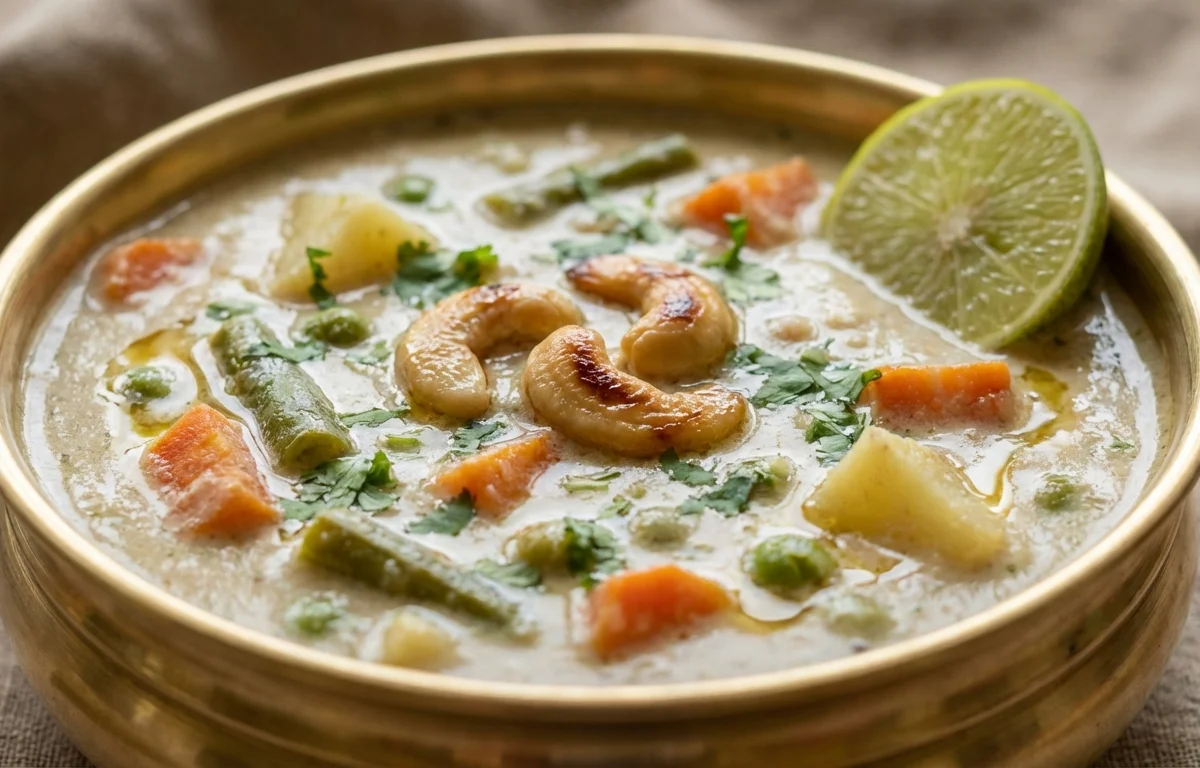
A fragrant, mildly spiced vegetable curry from Karnataka's Udupi cuisine, simmered in freshly ground coconut paste with whole spices. This creamy, dairy-free kurma is packed with mixed vegetables and a subtle hint of roasted poppy seeds, making it a beloved companion to soft parathas, pooris, or steamed rice.
For 4 servings
- prep · ~7 min
Dry roast the coconut paste ingredients.
1.Heat a small pan over medium-low heat. Add poppy seeds and coriander seeds. Roast until fragrant and coriander seeds turn golden (2-3 minutes). Transfer to a plate.2.Add cashews to the same pan and dry roast until light golden spots appear (2 minutes). Set aside.3.In a mixer grinder, add roasted poppy seeds, coriander seeds, cashews, fennel seeds, ginger, garlic, grated coconut, and a splash of water. Grind to a smooth, thick paste. Set aside. - saute · ~6 min
Saute the whole spices and onions.
1.Heat oil and ghee in a heavy bottomed pan over medium heat.2.Add bay leaf, cinnamon stick, cloves, green cardamom, star anise, and stone flower. Sauté until fragrant (30-45 seconds).3.Add sliced onions and slit green chilies. Cook until onions turn translucent and soft (4-5 minutes).TIPUse medium heat to avoid burning the whole spices while drawing out their essential oils. - saute · ~7 min
Add tomatoes and spices.
1.Add chopped tomatoes, a pinch of salt, turmeric powder, and red chili powder. Mix well.2.Cook until tomatoes turn soft, mushy, and the raw smell disappears (5-7 minutes). The mixture should look glossy.TIPA pinch of salt at this stage helps tomatoes break down faster. - simmer · ~15 min
Cook the vegetables in the gravy.
1.Add cubed potatoes, carrots, beans, cauliflower florets, and green peas to the pan. Stir to coat them with the masala.2.Pour in 1 cup of water. Mix again. Cover the pan and let it simmer on medium-low heat until vegetables are fork-tender (12-15 minutes).TIPCheck vegetables halfway through; if water dries up, add a splash more. - simmer · ~10 min
Add the coconut paste and finish the kurma.
1.Once vegetables are cooked, lower the heat to the minimum. Stir in the ground coconut-spice paste and gently mix.2.Add about 0.25 cup warm water to the grinder jar, swirl to collect the remaining paste, and pour it into the pan.3.Adjust the consistency with a little more water if needed. Simmer on low heat for 8-10 minutes to let the flavors meld. Do not let it boil vigorously after the paste is added.4.Taste and adjust salt if necessary. Sprinkle garam masala and mix.TIPNever boil coconut-based curries vigorously after adding the paste — it can split the gravy. - garnish
Garnish with fresh coriander leaves and serve hot.
Transfer the Udupi Vegetable Kurma to a serving bowl. Garnish generously with chopped coriander leaves. Serve immediately with pooris, parathas, or steamed rice.
What to keep in mind.
7 tips from the recipe — small details that make a real difference to the final dish.
- 1Cut vegetables into uniform 1-inch pieces to ensure even cooking.
- 2If using frozen peas, add them in the last 5 minutes to keep them bright and tender.
- 3Roast the coconut paste ingredients until fragrant but not burnt for a deeper, nuttier flavour.
- 4Do not boil vigorously after adding coconut paste—gentle simmer keeps the gravy creamy and prevents curdling.
- 5Add a splash of warm water when grinding coconut paste for a smooth, lump-free consistency.
- 6For a richer taste, substitute the water used for cooking vegetables with thin coconut milk.
- 7Stone flower (dagad phool) adds a unique earthy aroma—don't skip it if available.
Adapt it for your goals.
Vegan
Replace ghee with an extra teaspoon of oil—the kurma is already dairy-free except for a small amount of ghee used for tempering; this makes it fully plant-based.
low oilLow-oil
Reduce oil to 1 tablespoon and dry roast the whole spices in a pan before adding them to the water—this cuts fat while retaining the aroma.
high proteinHigh-protein
Add 1/2 cup of cubed paneer or firm tofu along with the vegetables for a protein boost that pairs beautifully with the creamy coconut gravy.
gluten freeGluten-free
This dish is naturally gluten-free; just ensure your garam masala and poppy seeds are from a certified gluten-free source.
Why this is on our healthy list.
Rich in Fiber from Vegetables
The mix of potatoes, carrots, beans, cauliflower, and peas provides a good amount of dietary fiber, supporting digestive health and satiety.
Healthy Fats from Coconut and Cashews
Fresh coconut and cashew nuts supply medium-chain triglycerides and monounsaturated fats, which can support heart health when consumed in moderation.
Antioxidant Properties of Spices
Turmeric, coriander seeds, and fennel seeds are rich in antioxidants like curcumin and quercetin, which help fight oxidative stress.
Naturally Dairy-Free and Low in Cholesterol
This kurma uses coconut paste instead of cream or yogurt, making it suitable for lactose-intolerant individuals and naturally low in dietary cholesterol.
Frequently asked questions
Yes, substitute 3/4 cup fresh grated coconut with 1/2 cup thick coconut milk and reduce the water in the recipe slightly; adjust consistency at the end.