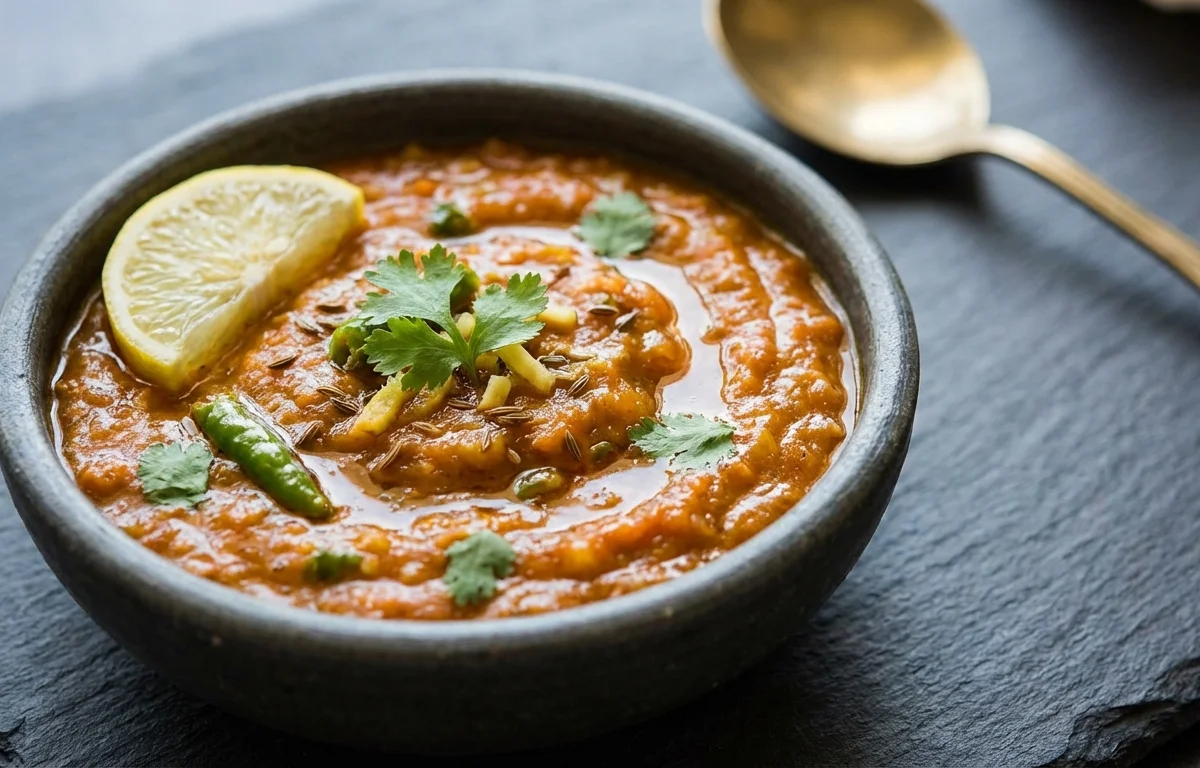
Vegetable Bhaji
A simple mixed vegetable bhaji with soft potatoes, peas, carrots, and capsicum cooked in a lightly spiced onion-tomato masala. It is comforting, homestyle, and easy to pair with roti, puri, or bread for a complete Indian meal.
For 4 servings
- prep · ~15 min
Prep the vegetables.
1.Peel and cube the potato into small even pieces.2.Peel and dice the carrot small so it cooks quickly.3.Chop the onion, tomato, and bell pepper.4.Mince the garlic, chop the ginger, slit the green chili, and chop the coriander leaves. - boil · ~12 min
Boil the harder vegetables.
Add potato, carrot, green peas, and water to a pan. Cover and cook until the vegetables are just tender but not mushy.
TIPKeep the pieces small and even so the bhaji cooks uniformly. - saute · ~8 min
Cook the masala base.
1.Heat oil in a wide pan over medium heat.2.Add cumin seeds and let them sizzle for a few seconds.3.Add onion and cook until soft and light golden.4.Add ginger, garlic, and green chili, then cook for 1 minute.TIPUse medium heat so the garlic cooks gently and does not burn. - saute · ~6 min
Add tomato and spices.
1.Add tomato and cook until soft and pulpy.2.Add turmeric powder, red chili powder, coriander powder, garam masala, and salt.3.Mix well and cook until the masala looks glossy and smells fragrant. - simmer · ~7 min
Finish the bhaji.
1.Add the boiled potato, carrot, green peas, and any remaining cooking water.2.Add bell pepper and mix well.3.Lightly mash a few potato pieces with the spoon to bind the bhaji.4.Cook uncovered until the vegetables are coated and the bhaji turns semi-dry. - garnish · ~1 min
Add coriander leaves and lemon juice.
- serve · ~1 min
Serve the vegetable bhaji hot.
Spoon into small bowls and serve with roti, puri, or bread.
What to keep in mind.
8 tips from the recipe — small details that make a real difference to the final dish.
- 1Boil the potato and carrot only until just tender; they will cook again in the masala and can turn mushy fast.
- 2Keep the potato and carrot pieces small and even so the bhaji finishes at the same time without hard bits.
- 3Cook the onion until light golden, not deeply browned, to keep the bhaji soft and homestyle rather than heavy.
- 4Let the tomato masala turn glossy before adding the vegetables; this prevents a raw tomato taste in the finished bhaji.
- 5Mash only a few potato cubes at the end so the bhaji binds together while still keeping visible vegetable pieces.
- 6Add the bell pepper near the end as written so it stays slightly sweet and does not disappear into the gravy.
- 7Stir in lemon juice off the heat or right at the end to keep its fresh brightness noticeable.
- 8This bhaji reheats well; add a splash of water while warming if it has tightened too much in the fridge.
Adapt it for your goals.
Low-oil
Use less oil and a splash of water while sautéing the onions and masala for a lighter everyday bhaji.
veganVegan
The recipe is already vegan; just serve it with vegan bread or roti for a fully plant-based meal.
spicierSpicier
Increase green chili and red chili powder for a sharper heat that pairs especially well with bread or pav.
pav bhaji stylePav-bhaji-style
Mash more of the vegetables and add a little extra water for a softer, scoopable bhaji closer to pav bhaji texture.
Why this is on our healthy list.
Vegetable-Rich Meal
This bhaji combines potatoes, carrots, peas, tomatoes, onion, and bell pepper, giving the dish a broad mix of plant nutrients.
Contains Fiber
The mixed vegetables and peas contribute fiber, which helps make the bhaji filling when served with roti or bread.
Plant-Based Comfort Food
Made entirely from vegetables, spices, and oil, this is a satisfying plant-based option for an everyday Indian meal.
Includes Antioxidant-Rich Ingredients
Tomatoes, bell pepper, coriander leaves, ginger, garlic, and spices like turmeric add naturally protective plant compounds.
Frequently asked questions
You can, but the bhaji will take longer and the masala may overcook. Pre-cooking the potato, carrot, and peas helps everything finish evenly.