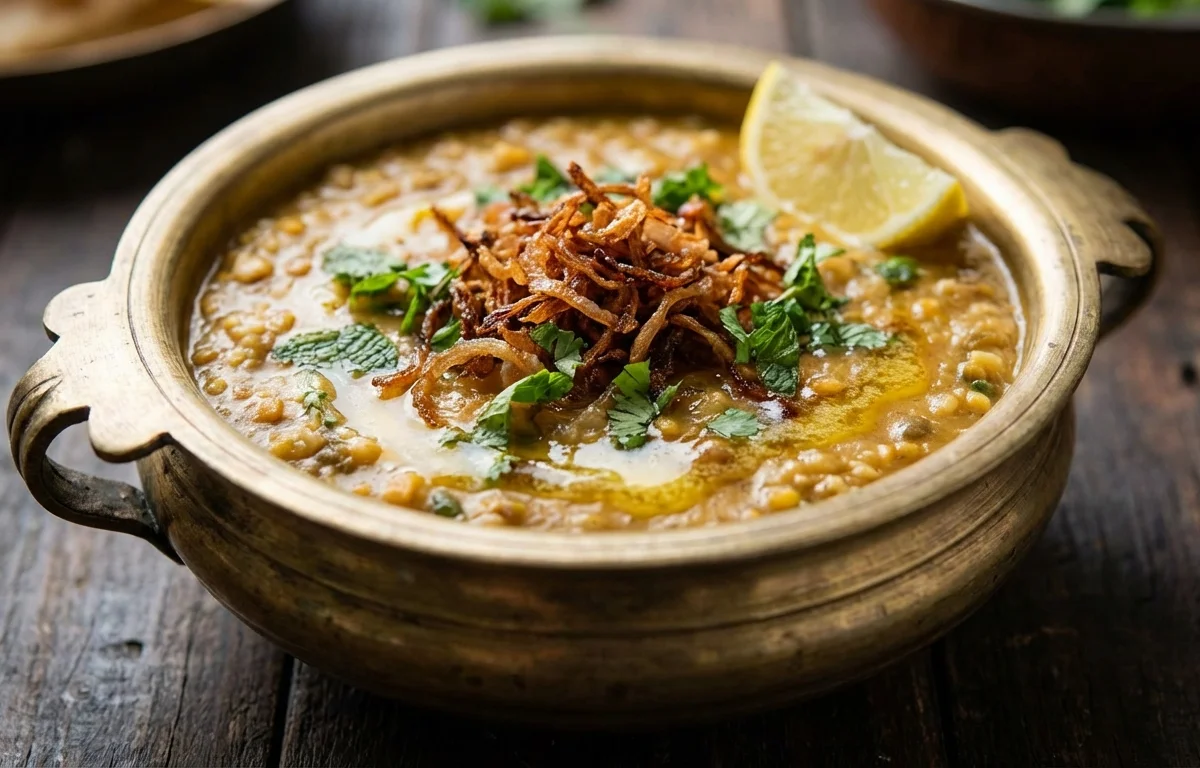
Vegetable Haleem
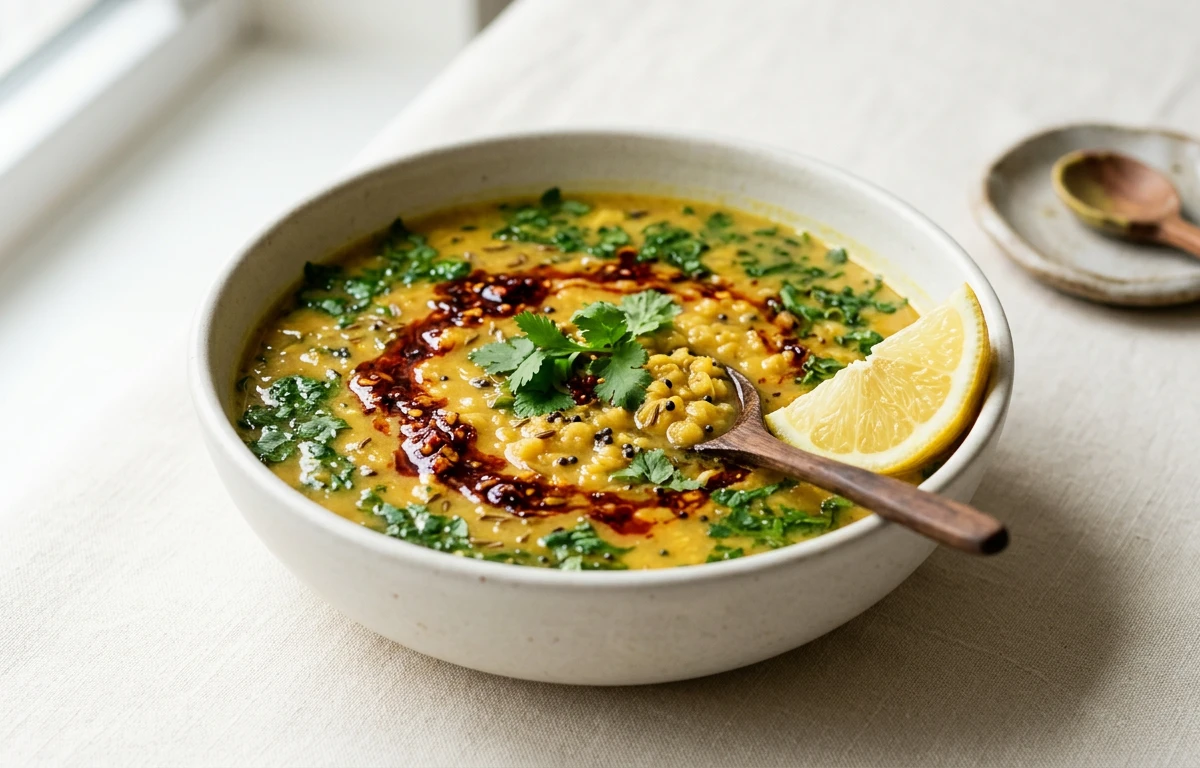
A comforting, porridge-like haleem made with lentils, broken wheat, rice, and mixed vegetables. Slow-cooked until thick and hearty, it has deep spice, a silky texture, and the kind of warmth that makes it perfect for a satisfying Indian meal.
For 4 servings
- prep · ~30 min
Soak the grains and lentils.
Wash the broken wheat, rice, moong dal, masoor dal, and chana dal well. Soak them together in water for 30 minutes, then drain.
- pressure cook · ~25 min
Pressure cook the base.
1.Add the soaked broken wheat, rice, moong dal, masoor dal, and chana dal to a pressure cooker.2.Add carrot, potato, green peas, cauliflower, turmeric powder, salt, and 4 cups water.3.Mix well and cook on medium heat for 5 to 6 whistles until everything turns very soft.TIPThe grains and lentils should be soft enough to mash easily for the classic haleem texture. - mix · ~5 min
Mash the cooked mixture.
Open the cooker once the pressure drops. Mash the cooked grains, lentils, and vegetables with a masher or the back of a ladle until thick and porridge-like.
- saute · ~15 min
Cook the masala base.
1.Heat oil and ghee in a heavy pan over medium heat.2.Add cumin seeds and let them sizzle for a few seconds.3.Add sliced onion and cook until light golden, 6 to 8 minutes.4.Add ginger, garlic, and green chili. Sauté for 1 minute.5.Add tomato, red chili powder, coriander powder, garam masala, and black pepper. Cook until the tomatoes turn soft and pulpy, 4 to 5 minutes.TIPCook the onions slowly so they sweeten and deepen the flavor without burning. - simmer · ~15 min
Slow cook the haleem.
Add the mashed grain and vegetable mixture to the pan. Pour in the remaining 1 cup water and cook on low heat, stirring often, until the haleem turns thick, smooth, and well blended, about 12 to 15 minutes.
TIPStir often, especially near the bottom of the pan, because haleem thickens quickly and can catch. - garnish · ~1 min
Finish with herbs and lemon.
Stir in coriander leaves, mint, and lemon juice. Mix well and cook for 1 minute more.
- serve
Serve the vegetable haleem hot.
What to keep in mind.
7 tips from the recipe — small details that make a real difference to the final dish.
- 1Soak the broken wheat and dals the full 30 minutes so the chana dal softens evenly with the quicker-cooking lentils.
- 2After pressure cooking, mash while the mixture is still hot; it breaks down faster and gives a silkier haleem texture.
- 3Cook the onions only to light golden, not dark brown, so the vegetable flavors stay balanced and the masala doesn't turn bitter.
- 4If the haleem gets too thick while simmering, loosen it with hot water, not cold, to keep the texture smooth.
- 5Stir right along the base and corners of the pan during the final simmer, since the wheat and lentils catch easily as they thicken.
- 6Add the mint, coriander, and lemon at the end only; long cooking dulls their freshness and can make the lemon taste flat.
- 7This haleem thickens as it rests, so serve it slightly looser than you want in the bowl.
Adapt it for your goals.
Vegan
Skip the ghee and use all oil for the tadka. You still get a rich masala base while keeping the dish fully plant-based.
jainJain
Omit onion, garlic, and potato; increase cauliflower and peas, and use ginger, tomato, cumin, and coriander for flavor.
spicierSpicier
Add extra green chili and a little more black pepper for a hotter, more peppery haleem without changing the texture.
high proteinHigh-protein
Increase the moong and masoor slightly and reduce the rice a bit for a more lentil-forward, heartier bowl.
Why this is on our healthy list.
Rich in Plant Protein
Moong dal, masoor dal, and chana dal make this haleem filling and help turn it into a satisfying vegetarian main dish.
Good Fiber Mix
Broken wheat, lentils, peas, cauliflower, and carrot provide fiber that supports fullness and gives the dish its hearty body.
Vegetable-Packed Comfort Food
With carrot, peas, potato, cauliflower, tomato, mint, and coriander, this haleem includes a broad mix of vegetables and herbs.
Balanced Slow Energy
The combination of grains, rice, and lentils creates a steady, sustaining meal rather than a light soup.
Frequently asked questions
Yes. Simmer the soaked grains, dals, and vegetables in a heavy pot until very soft, then mash well; it will just take longer than pressure cooking.