
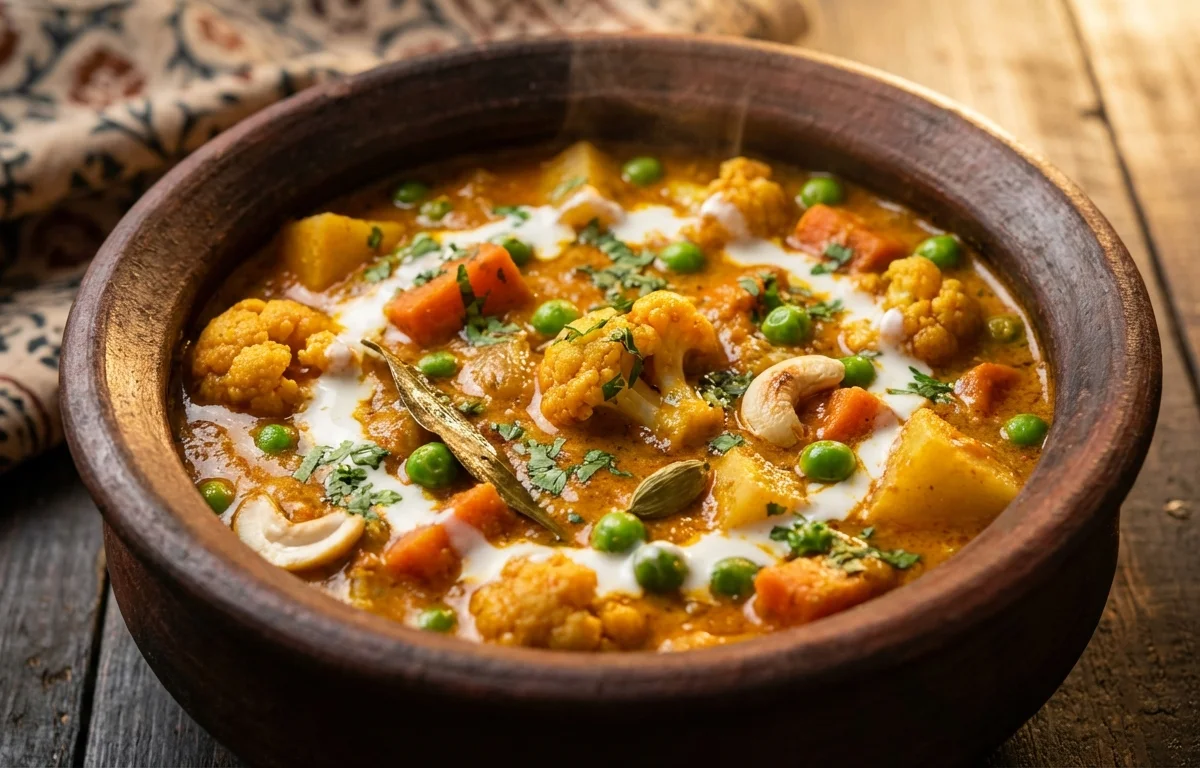
Vegetable Handi
A medley of garden-fresh vegetables cooked in a rich, creamy tomato-cashew gravy. This restaurant-style Vegetable Handi is finished with a touch of cream and a gentle smoke, bringing that signature dhaba flavor right to your kitchen. It's the perfect vegetarian main dish for special occasions.
For 4 servings
- prep · ~10 min
Blanch the vegetables and prepare the cashew paste.
1.Bring 3 cups water to a rolling boil and add a pinch of salt.2.Blanch cauliflower and green beans for 2 minutes, then drain and plunge into ice water.3.Boil diced carrots and peas until just tender, about 4-5 minutes, then drain.4.Drain the soaked cashews and blend with the chopped tomatoes into a smooth paste. Set aside.TIPBlanching keeps the vegetables vibrant and slightly crisp — don't overcook them now, they'll finish cooking in the gravy. - temper · ~2 min
Make the tempering for the gravy.
1.Heat oil and butter in a handi over medium heat.2.Add cumin seeds and let them splutter for 30 seconds.3.Add bay leaf and dried red chilies; sauté until fragrant, about 20 seconds. - saute · ~9 min
Sauté the aromatics.
1.Add finely chopped onions and slit green chilies.2.Sauté until onions turn deep golden brown, about 7-8 minutes.3.Add ginger paste and garlic paste, and cook for 1 minute until the raw smell disappears.TIPTake your time browning the onions — a deep golden color is the secret to a rich, flavorful gravy. - saute · ~10 min
Cook the tomato-cashew masala.
1.Add turmeric powder, red chili powder, and coriander powder to the pan.2.Add the tomato-cashew paste and stir well.3.Cook the masala on medium-low heat, stirring occasionally, until the oil begins to separate from the sides, about 8-10 minutes. - simmer · ~9 min
Simmer the gravy with the vegetables.
1.Add the blanched vegetables (cauliflower, carrots, beans, peas) and cubed paneer.2.Add salt and mix gently to coat everything with the masala.3.Pour in 1 cup of water and stir. Bring to a gentle simmer.4.Cover and cook on low heat for 7-8 minutes, allowing the vegetables to absorb the flavors. - simmer · ~4 min
Finish the handi with cream and final spices.
1.Add diced bell pepper and mix. Cook uncovered for 2 minutes.2.Sprinkle garam masala and crushed kasuri methi over the gravy.3.Stir in fresh cream and simmer for a final 1-2 minutes until the gravy is thick and creamy.TIPAdding bell pepper late keeps its crunch and fresh flavor, providing a nice texture contrast. - other · ~5 min
Infuse the handi with a smoky flavor.
1.Heat a small piece of charcoal over an open flame until red hot.2.Place a small steel bowl in the center of the handi and place the hot charcoal in it.3.Pour a few drops of ghee or oil on the charcoal; immediately cover the handi tightly for 4-5 minutes.TIPThe dhungar method of smoking is optional but gives your Vegetable Handi an irresistible barbecued aroma just like a dhaba. - garnish · ~1 min
Garnish with fresh coriander leaves and serve hot.
Remove the bowl with the charcoal, discard it safely, and give the handi a gentle stir. Garnish generously with chopped coriander leaves and serve directly from the handi with naan or roti.
TIPA final drizzle of fresh cream or a small pat of butter on top just before serving adds a beautiful richness.
What to keep in mind.
7 tips from the recipe — small details that make a real difference to the final dish.
- 1Blanch veggies in salted water to lock in color and crunch.
- 2Brown onions until deep golden for a richer gravy base.
- 3Cook the tomato-cashew paste until oil separates for a smooth, non-acidic gravy.
- 4Add bell pepper at the end to retain its crunch and fresh flavor.
- 5Use the dhungar (charcoal smoking) method for an authentic dhaba-style smoky aroma.
- 6Crush kasuri methi between your palms before adding to release its full fragrance.
- 7Let the handi rest for 5 minutes after smoking to let the flavors meld.
Adapt it for your goals.
Vegan
Replace paneer with firm tofu (cubed) and use coconut cream or cashew cream instead of dairy cream. Skip the butter and use oil. This keeps the dish creamy and rich while being fully plant-based.
high proteinHigh-protein
Add boiled chickpeas or soy chunks (after rehydrating) along with the vegetables. This boosts protein content without altering the core flavor profile, making it a more filling main dish.
low oilLow-oil
Reduce oil to 1 tbsp and butter to 1 tsp; sauté onions in a non-stick pan with a splash of water. Skip the cream or use low-fat yogurt instead. The gravy will be lighter but still flavorful.
jainJain
Omit onion, garlic, and ginger. Use asafoetida (hing) in the tempering and add a pinch of dry ginger powder. Replace paneer with potatoes or raw banana. This keeps the dish Jain-friendly while retaining its creamy texture.
Why this is on our healthy list.
Rich in Plant Protein
Cashews and paneer provide a good source of plant-based protein, supporting muscle repair and satiety.
Packed with Fiber
Cauliflower, carrots, green beans, and peas deliver dietary fiber that aids digestion and promotes gut health.
High in Antioxidants
Tomatoes, bell peppers, and turmeric are rich in antioxidants like lycopene and curcumin, which help combat oxidative stress.
Good Source of Vitamin C
Bell peppers and tomatoes contribute a significant amount of vitamin C, supporting immune function and skin health.
Frequently asked questions
Yes, replace cashews with 2 tablespoons of raw melon seeds (magaz) or blanched almonds for a similar creamy texture, or use 3 tablespoons of fresh cream.


