
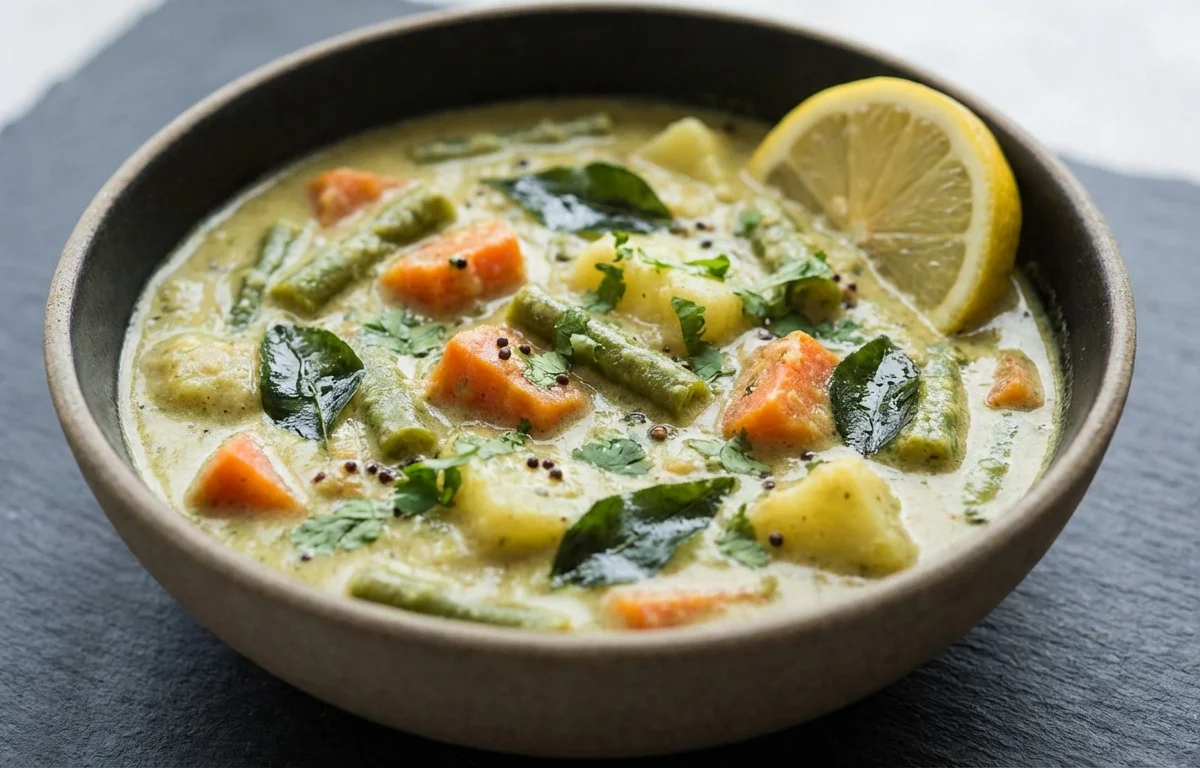
Vegetable Saagu
A gentle South Indian mixed vegetable curry with a coconut and spice base that turns everyday vegetables into something comforting and full of flavor. It tastes especially good with poori, dosa, chapati, or set dosa.
For 4 servings
- prep · ~10 min
Prep the vegetables and aromatics.
1.Peel and cube the potato and carrot into small even pieces.2.Chop the beans, slice the onion, and chop the tomato.3.Roughly chop the ginger and keep the garlic and green chili ready. - boil · ~12 min
Cook the mixed vegetables.
Add potato, carrot, beans, green peas, 1 cup water, turmeric powder, and a small pinch of salt to a pot. Cover and cook until the vegetables are tender but still hold their shape.
TIPKeep the vegetables just cooked. Overcooking makes the saagu mushy. - mix · ~4 min
Grind the coconut masala.
1.Add fresh coconut, roasted chana dal, poppy seeds, fennel seeds, coriander seeds, cinnamon, cloves, cardamom, ginger, garlic, and green chili to a blender.2.Pour in 0.5 cup water.3.Blend to a smooth paste. - temper · ~7 min
Make the tempering.
1.Heat oil in a pan over medium heat.2.Add mustard seeds and let them splutter.3.Add cumin seeds and curry leaves and cook for a few seconds.4.Add sliced onion and cook until soft and light golden.TIPUse medium heat so the whole spices release flavor without burning. - saute · ~5 min
Cook the tomato base.
Add the chopped tomato to the pan and cook until soft and pulpy. Stir well so it blends into the onions.
- simmer · ~7 min
Combine the masala and vegetables.
1.Add the ground coconut masala to the onion-tomato base and cook for 2 minutes.2.Pour in the cooked vegetables with their cooking liquid.3.Add the remaining water and the rest of the salt.4.Mix well and bring the curry to a gentle simmer. - simmer · ~6 min
Simmer until the saagu thickens lightly.
Cook uncovered, stirring now and then, until the gravy is smooth and lightly thick. Finish with lemon juice.
- garnish
Garnish with cilantro.
- serve
Serve hot with poori, dosa, or chapati.
What to keep in mind.
7 tips from the recipe — small details that make a real difference to the final dish.
- 1Cut the potato and carrot to a similar small size so all the vegetables turn tender at the same time.
- 2Cook the vegetables only until just done; they should hold their edges and not collapse into the gravy.
- 3Blend the coconut masala very smooth, or the saagu will taste coarse instead of silky.
- 4Let the onions turn light golden, not dark brown, so the curry keeps its gentle South Indian flavor.
- 5After adding the ground masala, keep the simmer gentle and stir often to prevent the coconut from catching at the bottom.
- 6Add the lemon juice at the end, off or just below a boil, to keep the fresh brightness noticeable.
- 7If making ahead, loosen the saagu with a splash of hot water while reheating since coconut and roasted chana dal thicken as they sit.
Adapt it for your goals.
Vegan
This recipe is already vegan; just pair it with dosa, poori, or chapati for a fully plant-based South Indian meal.
jain styleJain-style
Skip onion, garlic, and ginger, and increase tomato and coconut slightly for a milder but still fragrant saagu.
no poppy seedNo-poppy-seed
Replace poppy seeds with a little extra roasted chana dal or coconut when poppy seeds are unavailable.
hotel styleHotel-style
Add a few mint leaves and a small piece of fried khus khus-free bread or extra coconut while grinding for a richer, more restaurant-like body.
Why this is on our healthy list.
Vegetable-Rich Comfort Dish
Potato, carrot, beans, peas, onion, and tomato bring a mix of plant nutrients and fiber in one curry.
Contains Healthy Fats
Fresh coconut and the tempered spices provide satisfying fats that also help carry the aroma of the masala.
Plant-Based Protein Support
Green peas and roasted chana dal add some plant protein, making the saagu more filling than a plain vegetable stew.
Frequently asked questions
Yes, frozen peas work very well. Add them with the other vegetables and cook only until they are just tender.


