
Loading...
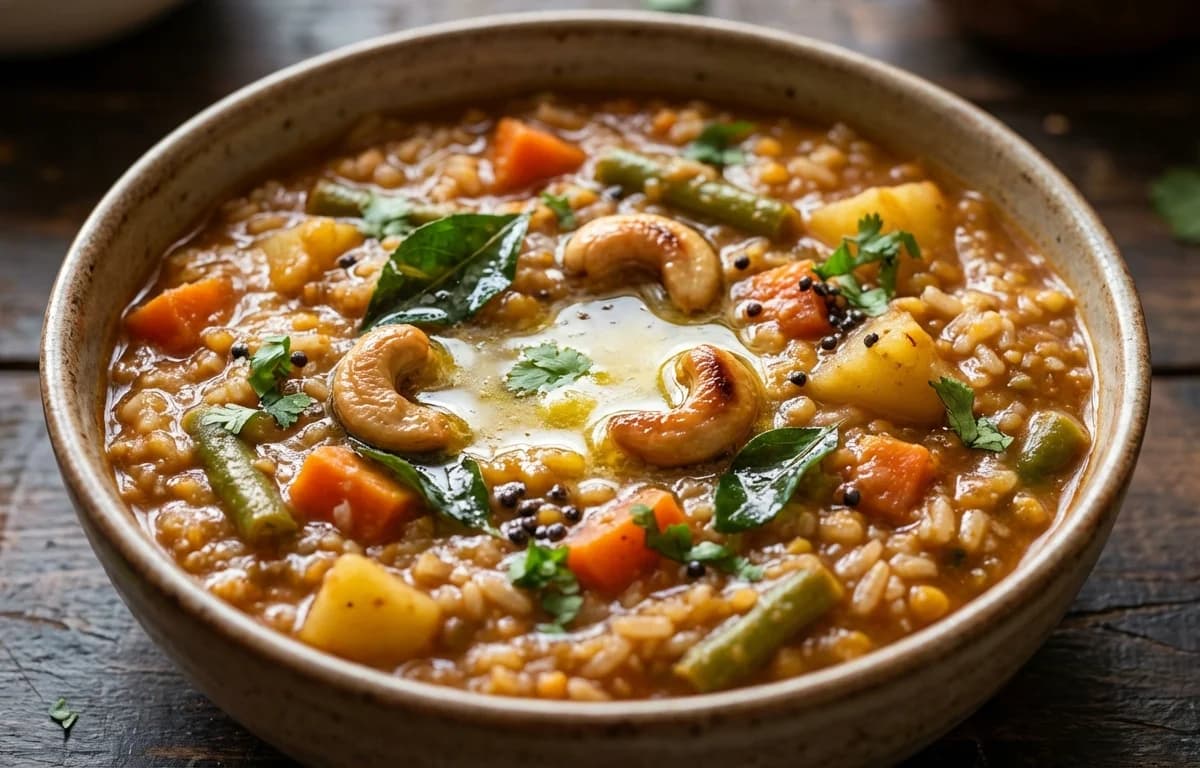
Aromatic and flavorful, this one-pot meal from Karnataka is a wholesome blend of rice, lentils, and mixed vegetables, all simmered in a tangy tamarind broth with a special, freshly ground spice mix. It's the ultimate South Indian comfort food.
Prepare the Bisibelebath Masala
Cook the Rice and Dal
Crisp green beans stir-fried with mustard seeds, lentils, and fresh coconut. This simple South Indian side dish, known as poriyal, is light, flavorful, and comes together in just 15 minutes.
A classic Karnataka one-pot meal, reimagined for a low-glycemic diet. This version uses wholesome foxtail millet instead of rice, combined with lentils and vegetables in a fragrant, spicy tamarind broth. It's comfort food that's both hearty and healthy.
A wholesome and savory South Indian pancake made with a low-glycemic blend of millets, brown rice, and mixed lentils. Packed with fiber and protein, this diabetic-friendly adai is a delicious and guilt-free choice for breakfast or dinner.
Crispy, golden crepes made from a fermented rice and lentil batter, filled with a savory spiced potato mixture. A beloved South Indian classic, perfect for a hearty breakfast or light dinner, best served with sambar and coconut chutney.
Aromatic and flavorful, this one-pot meal from Karnataka is a wholesome blend of rice, lentils, and mixed vegetables, all simmered in a tangy tamarind broth with a special, freshly ground spice mix. It's the ultimate South Indian comfort food.
This south_indian recipe takes 70 minutes to prepare and yields 4 servings. At 657.84 calories per serving with 20.56g of protein, it's a moderately challenging recipe perfect for lunch or dinner or brunch.
Cook the Vegetables
Combine and Simmer
Prepare the Tempering (Tadka)
Serve
Replace white rice with brown rice, quinoa, or millets like foxtail millet for a higher fiber and more nutrient-dense version. Adjust water and cooking time accordingly.
Incorporate other traditional vegetables like brinjal (eggplant), pumpkin, chayote squash (chow chow), or bell peppers for different flavors and textures.
For a sattvic version, simply omit the shallots. The dish will still be flavorful due to the aromatic masala.
Increase the number of Byadgi or Guntur red chilies in the masala powder, or add a pinch of red chili powder along with the turmeric for extra heat.
The combination of rice (a cereal) and toor dal (a lentil) provides all the essential amino acids, forming a complete protein. This is particularly beneficial for vegetarian and plant-based diets.
Loaded with lentils and a variety of vegetables, this dish is high in dietary fiber, which aids digestion, promotes gut health, prevents constipation, and helps in maintaining stable blood sugar levels.
The complex carbohydrates from rice and lentils are digested slowly, providing a steady release of energy. This helps in keeping you feeling full and energized for a longer period, preventing energy slumps.
The diverse range of vegetables contributes essential vitamins (like A and C) and minerals (like potassium and iron). Spices like turmeric add anti-inflammatory properties, boosting overall health.
Yes, Bisibelebath is a well-balanced and nutritious one-pot meal. It provides a good mix of complex carbohydrates from rice, protein from lentils, and essential vitamins, minerals, and fiber from the variety of vegetables. Using ghee in moderation adds healthy fats.
A standard serving of about 2 cups (approx. 480g) contains around 480-550 calories. The exact count can vary based on the amount of ghee, cashews, and specific vegetables used.
Absolutely. You can cook the rice and dal together in a deep, heavy-bottomed pot with sufficient water. It will take longer, about 40-50 minutes, and you'll need to stir occasionally. Cook until the mixture is very soft and easily mashable.
The ideal consistency is that of a thick, spoonable porridge. It should not be runny like sambar or dry like pulao. Remember that it thickens significantly as it cools, so it's best to keep it slightly looser than your desired final consistency.
Yes, using a good quality store-bought masala powder is a convenient option and a great time-saver. The flavor will be slightly different from homemade, but still delicious. Adjust the quantity based on the brand's instructions and spice level.