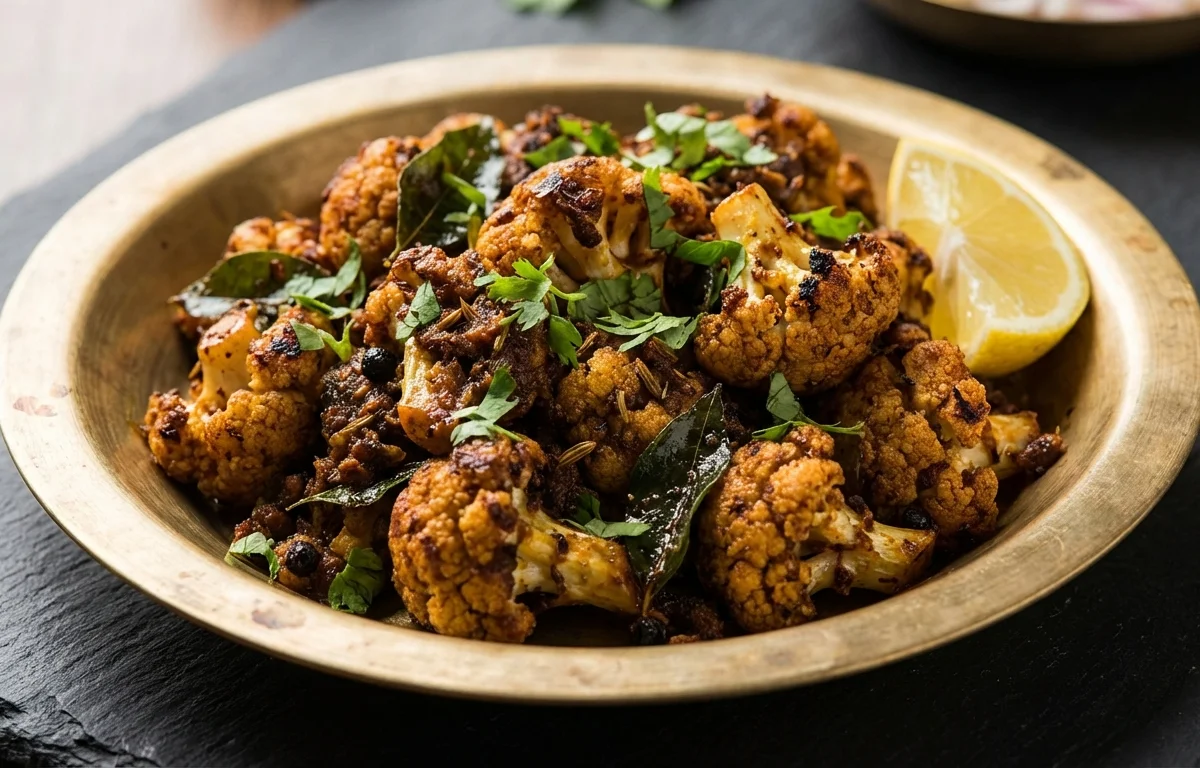
Chettinad Cauliflower Varuval
This dry Chettinad-style cauliflower fry is packed with bold South Indian spices, curry leaves, and a gentle heat. The florets stay tender inside with lightly crisp edges, making it a great side for rice or roti.
For 4 servings
- boil · ~5 min
Blanch the cauliflower.
1.Bring water to a boil in a pot.2.Add cauliflower florets and the pinch of salt.3.Cook for 2 minutes until just slightly tender.4.Drain well and let the florets sit for a few minutes so excess moisture evaporates.TIPWell-drained florets fry better and do not turn soggy in the pan. - temper · ~1 min
Make the Chettinad tempering.
1.Heat oil in a wide pan over medium heat.2.Add fennel seeds and cumin seeds and let them sizzle for a few seconds.3.Add curry leaves and stir briefly until fragrant. - saute · ~6 min
Cook the onion and aromatics.
1.Add onion and cook until soft and lightly golden.2.Add ginger, garlic, and green chili.3.Cook for 1 minute until the raw smell fades. - saute · ~5 min
Build the masala base.
1.Add tomato and cook until soft.2.Add turmeric powder, red chili powder, coriander powder, black pepper, and salt.3.Mix well and cook until the masala looks thick and coats the onion.TIPKeep the heat medium so the spices toast gently without burning. - saute · ~8 min
Fry the cauliflower with the masala.
1.Add the blanched cauliflower florets to the pan.2.Toss gently so the masala coats every piece.3.Cook uncovered, stirring now and then, until the edges turn lightly crisp and the cauliflower is tender. - garnish
Finish with lemon juice and coriander leaves.
- serve
Serve hot as a side with rice or roti.
What to keep in mind.
7 tips from the recipe — small details that make a real difference to the final dish.
- 1Do not blanch the florets beyond 2 minutes; they should be only slightly tender so they can crisp in the pan.
- 2After draining, spread the cauliflower out for a few minutes so steam escapes and the masala sticks better.
- 3Use a wide pan rather than a deep kadai so the florets fry instead of steaming.
- 4Let the onion turn lightly golden before adding ginger and garlic; this gives the varuval a deeper savoury base.
- 5Cook the tomato-spice mixture until it looks thick and no longer wet, or the fry can turn pasty.
- 6Stir gently while finishing so the florets keep their shape and the crisp edges are not broken off.
- 7Add the lemon juice only after switching off the heat to keep its brightness fresh and sharp.
Adapt it for your goals.
High-protein
Add cubed paneer or firm tofu along with the cauliflower for a heartier side that can double as a main.
low oilLow-oil
Use a well-seasoned nonstick pan and reduce the oil slightly; keep the pan wide so the cauliflower still dries out and browns.
extra spicyExtra-spicy
Increase the green chilies and black pepper for a fiercer Chettinad heat that pairs especially well with plain rice.
no onion no garlicNo-onion-no-garlic
Skip onion and garlic, then build flavour with extra curry leaves, fennel, ginger, and a slightly longer tomato masala cook.
Why this is on our healthy list.
Vegetable-Forward Side
Cauliflower makes this dish naturally rich in vegetables while still feeling satisfying because of the robust spice tempering.
Digestive Spice Support
Fennel, cumin, ginger, garlic, and curry leaves bring traditional aromatic depth and are commonly used to make vegetable dishes feel lighter.
Moderate Oil Cooking
The recipe uses a small amount of oil for tempering and pan-frying rather than deep-frying the cauliflower.
Frequently asked questions
It was likely over-blanched or not drained well enough. Let the florets dry after blanching and cook them uncovered in a wide pan.