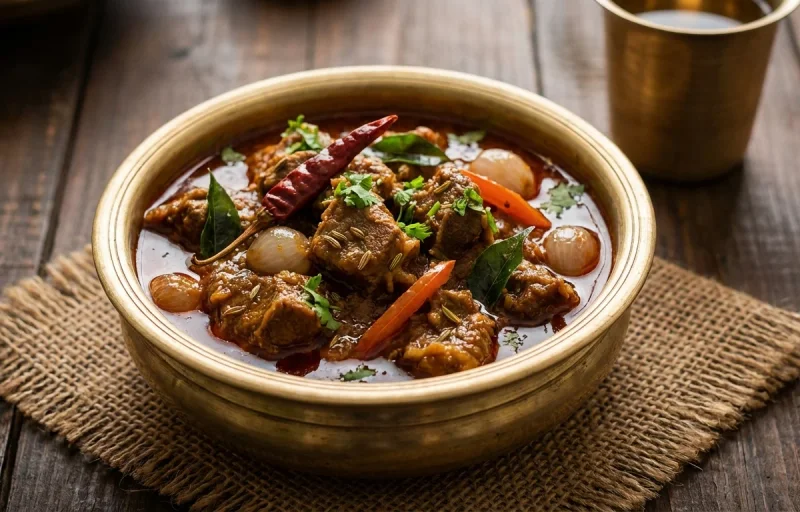
Chettinad Chicken Varuval
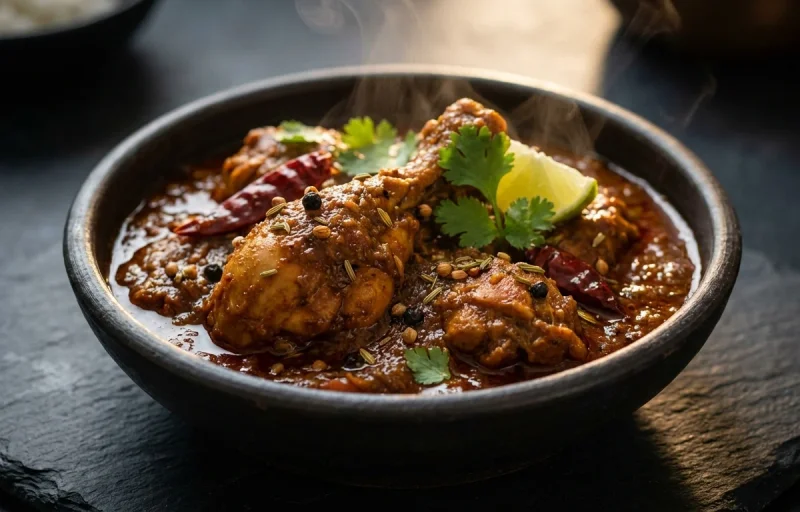
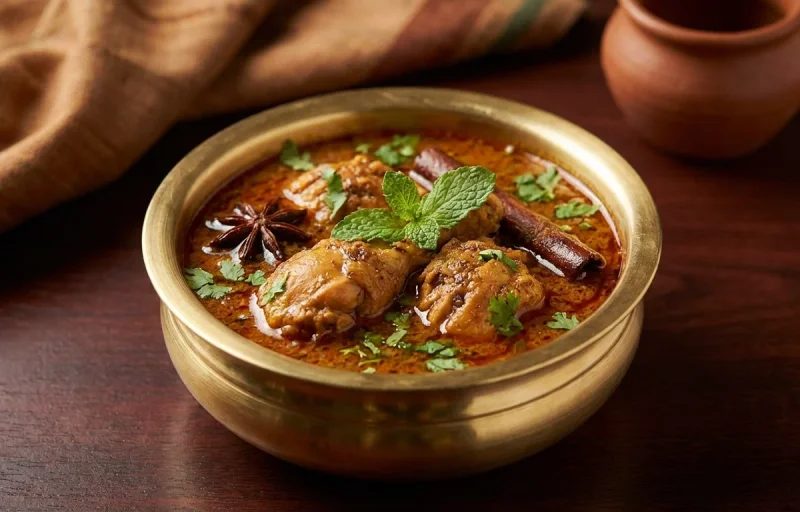
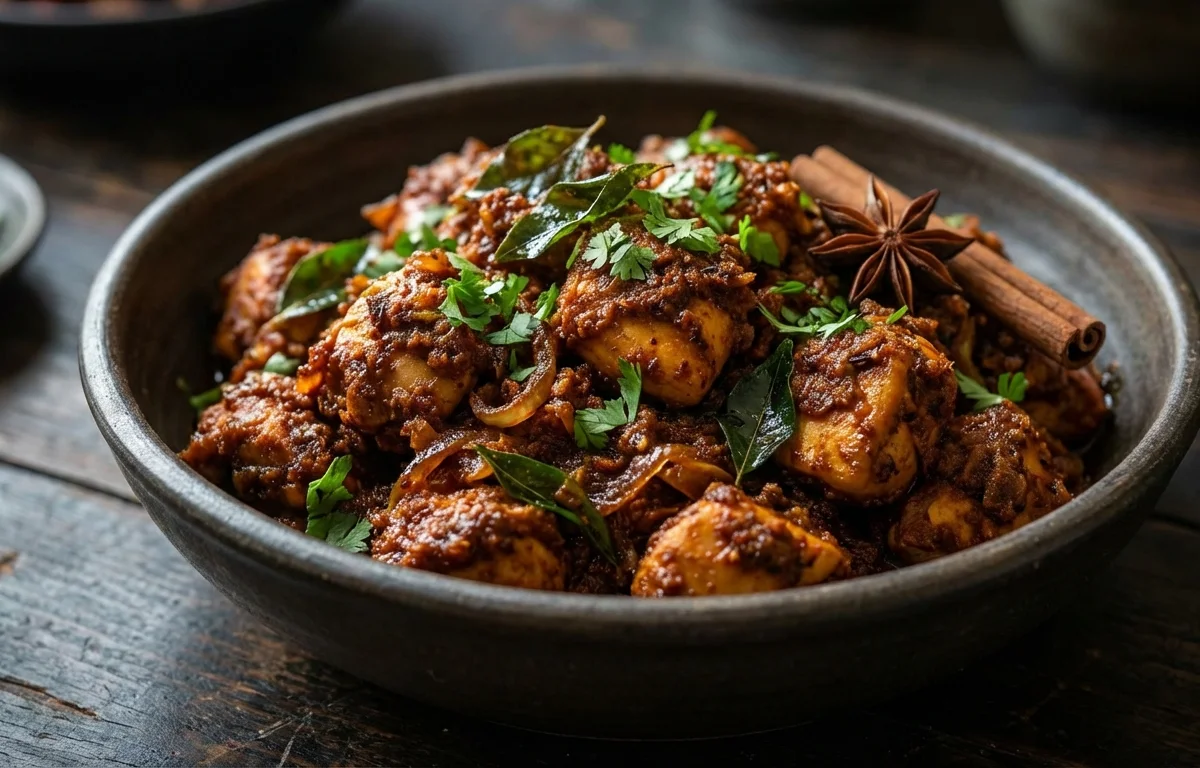
A bold, spicy Tamil Nadu chicken fry with black pepper, fennel, curry leaves, and a rich roasted masala. It cooks down to a thick, clingy coating that tastes wonderful with rice, rasam, or parotta.
For 4 servings
- prep · ~10 min
Prepare the chicken and aromatics.
1.Wash and drain the chicken pieces well.2.Slice the onion finely and chop the tomato.3.Crush the ginger and garlic together to a coarse paste.4.Slit the green chili and keep the curry leaves ready. - roast · ~4 min
Roast the Chettinad spices.
1.Heat a small pan on low heat.2.Add fennel seeds, cumin seeds, black peppercorns, coriander seeds, dried red chili, cinnamon, cloves, and cardamom.3.Roast until fragrant and slightly darker, stirring often so the spices do not burn.4.Cool the spices completely.TIPKeep the heat low while roasting. Burnt pepper and fennel will make the varuval bitter. - mix · ~2 min
Grind the roasted spices.
Grind the cooled roasted spices to a fairly fine powder. Set it aside for the masala base.
- saute · ~8 min
Cook the onion base.
1.Heat oil in a wide pan over medium heat.2.Add curry leaves and green chili; cook for a few seconds.3.Add sliced onion and cook until lightly golden.4.Add the crushed ginger and garlic and cook until the raw smell disappears. - saute · ~5 min
Add tomato and spice powders.
1.Add chopped tomato and cook until soft and pulpy.2.Add turmeric powder, red chili powder, and salt.3.Stir well and cook until the masala looks thick and glossy. - saute · ~5 min
Coat the chicken in the masala.
Add the chicken pieces and stir well so every piece is covered with the onion-tomato masala. Cook on medium heat for 4 to 5 minutes, stirring often.
- simmer · ~20 min
Cook the chicken until tender.
Add water and the roasted spice powder. Mix well, cover, and cook on low heat until the chicken is tender and the liquid reduces, stirring now and then to prevent sticking.
TIPUse a wide pan so the masala reduces properly and clings to the chicken instead of turning watery. - saute · ~4 min
Finish the varuval.
Uncover and cook for a few more minutes until the masala thickens and coats the chicken well. Add lemon juice and mix once.
- garnish
Garnish with coriander leaves.
- serve
Serve hot with rice, rasam, or parotta.
What to keep in mind.
7 tips from the recipe — small details that make a real difference to the final dish.
- 1Roast the whole spices only until aromatic; over-roasted pepper and fennel can turn the varuval bitter.
- 2Use a wide, heavy pan so the liquid evaporates quickly and the masala clings to the chicken instead of stewing.
- 3Cook the onions to light golden before adding ginger-garlic; this gives the fry a deeper, sweeter base.
- 4Let the tomatoes turn fully soft and glossy before the chicken goes in, or the masala will taste sharp.
- 5Bone-in pieces work best here because they stay juicy during the longer covered simmer and add flavor to the masala.
- 6Add the lemon juice only at the end to keep its brightness; cooking it too long dulls the finish.
- 7This dish tastes even better after a short rest, when the roasted spice powder settles into the chicken.
Adapt it for your goals.
Low-oil
Use 1 tbsp oil and a good heavy pan, then reduce uncovered a little longer. You still get a clingy masala with less fat.
bonelessBoneless
Use boneless chicken thigh pieces for quicker cooking and easier serving; reduce simmer time so the meat stays tender.
extra pepperExtra-pepper
Increase black pepper slightly for a more classic pepper-forward Chettinad profile and a hotter, sharper finish.
dry varuvalDry-varuval
Cook uncovered longer after the chicken is done to make a drier fry-style version that pairs especially well with parotta.
Why this is on our healthy list.
Protein-Rich Main Dish
Chicken makes this a satisfying, protein-rich curry that can help make the meal more filling.
Spice-Driven Flavor
Black pepper, fennel, cumin, coriander, ginger, and garlic bring strong flavor without relying on heavy cream or butter.
Aromatics and Herbs
Onion, tomato, curry leaves, coriander leaves, ginger, and garlic add plant compounds and freshness to the dish.
Frequently asked questions
Yes. Crush the roasted spices in a mortar and pestle or use pre-ground spices in a pinch, though the flavor will be less vibrant.