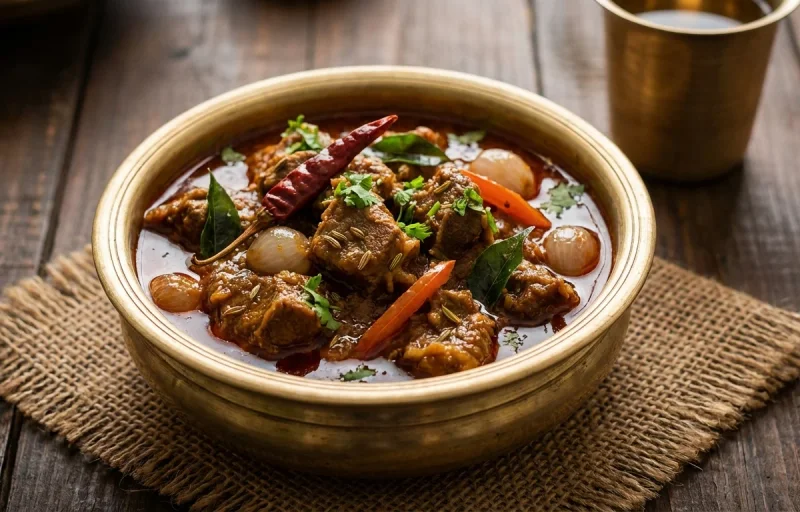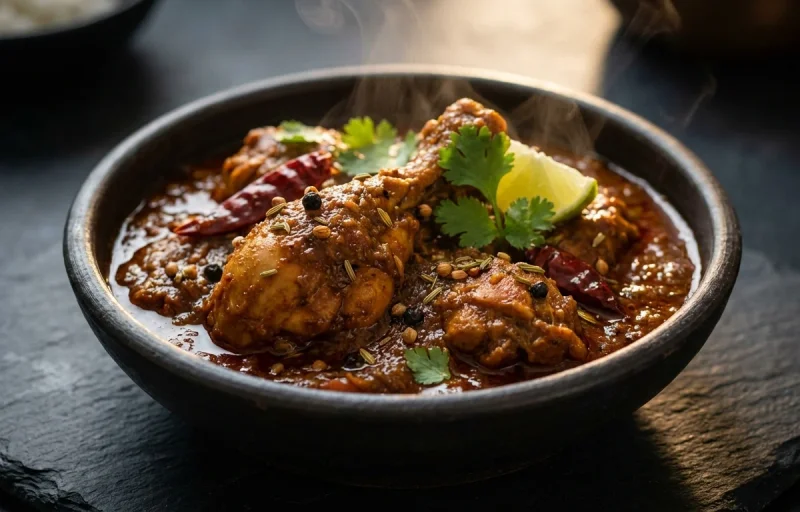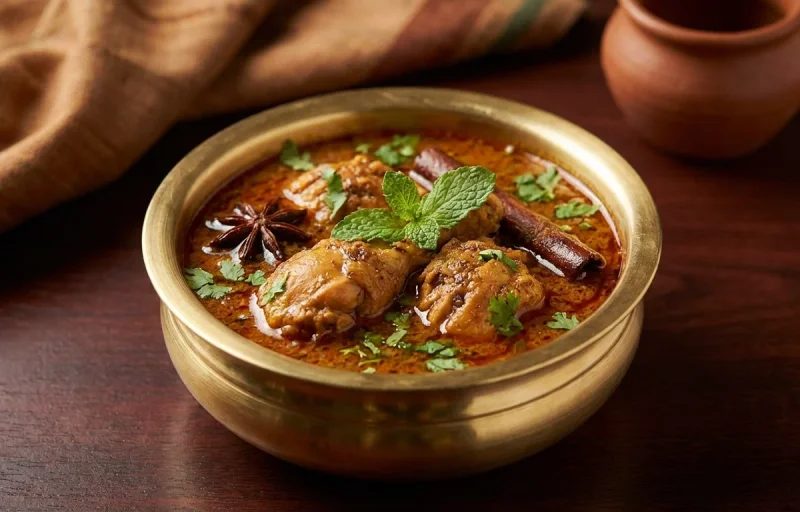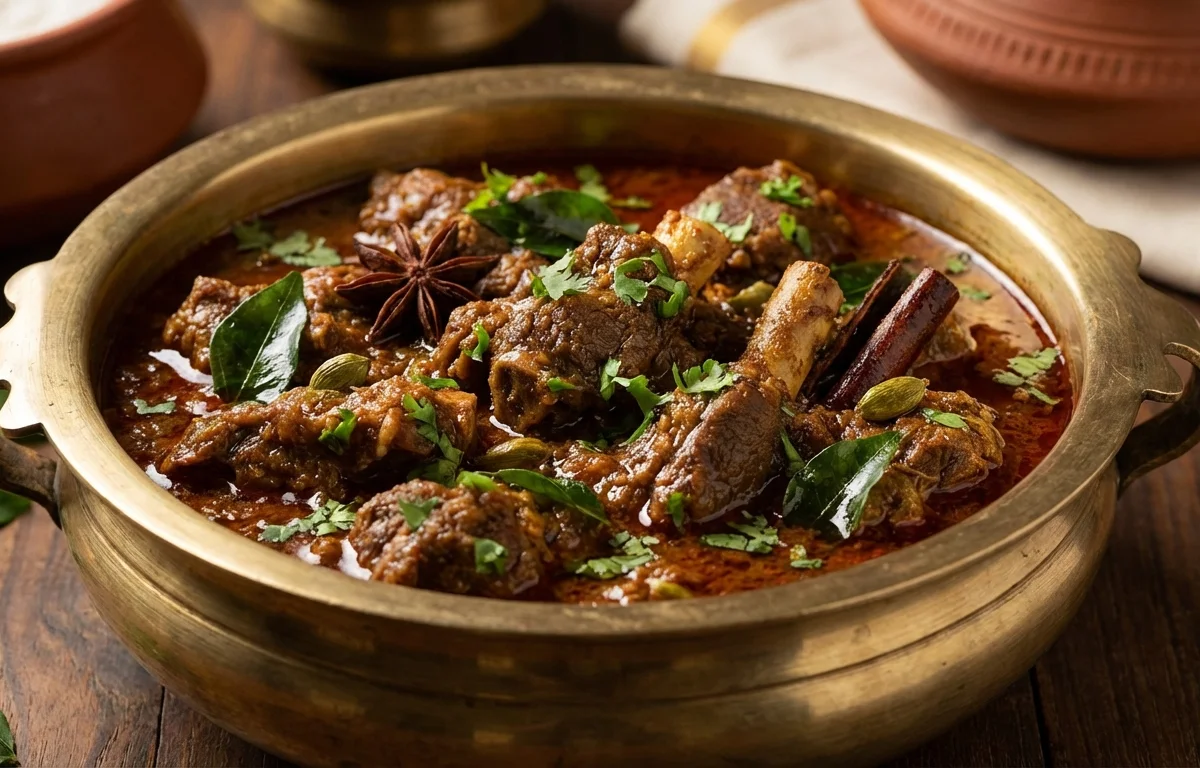
Chettinad Mutton Kaari
A fiery, aromatic mutton curry from the Chettinad region of Tamil Nadu, slow-cooked with roasted spices, coconut, and tender bone-in mutton. Deep, dark, and intensely flavorful with pepper heat and fennel sweetness – a true South Indian classic best mopped up with appam or steamed rice.
For 4 servings
- prep · ~15 min
Wash and marinate the mutton pieces.
1.Wash 600g bone-in mutton pieces thoroughly under cold running water.2.Drain completely and place in a bowl.3.Sprinkle 1 pinch turmeric powder and 0.5 tsp salt over the mutton.4.Mix well to coat all pieces and set aside for 15 minutes.TIPBone-in pieces are essential for the rich, gelatinous body of a true Chettinad Kaari. - roast · ~3 min
Dry roast the signature Chettinad spice blend.
1.Heat a small pan over low heat.2.Add 6 dried red chilies, 3 tbsp coriander seeds, 1 tsp fennel seeds, 1 tsp cumin seeds, 1 tsp black peppercorns, and 1 tsp poppy seeds.3.Dry roast the spices, stirring constantly, until they darken slightly and release a smoky aroma (about 2-3 minutes).4.Transfer immediately to a plate to cool. Do not burn them.TIPKeep the heat on low. If the spices burn even slightly, the gravy will turn bitter — discard and start again. - prep · ~5 min
Grind the spices into a masala paste.
1.Once cooled, transfer the roasted spices to a spice grinder or mortar-pestle.2.Add 1 inch piece of crushed ginger, 10 garlic cloves, and 0.25 cup grated fresh coconut.3.Grind to a smooth, thick paste using just a few tablespoons of water.4.Set the Chettinad masala paste aside. - pressure cook · ~25 min
Pressure cook the mutton until tender.
1.Place the marinated mutton pieces in a pressure cooker.2.Add 0.5 cup water.3.Close the lid and cook on medium-high heat until the first whistle.4.Lower the heat and continue cooking for 5-6 more whistles or until the mutton is fork-tender.5.Turn off the heat and let the pressure release naturally.TIPGoat meat varies; add an extra whistle or two if your mutton is tough. Do not quick-release steam — it tightens the meat. - temper · ~10 min
Begin the base with whole spices and shallots.
1.Heat 2 tbsp oil in a heavy-bottomed pan or kadai over medium heat.2.Add 2 bay leaves, 1 inch cinnamon stick, 4 green cardamoms, 1 star anise, and 2 sprigs of curry leaves.3.Let them crackle and sizzle for about 30 seconds until fragrant.4.Add 15 peeled small shallots and sauté until they turn deep golden brown (about 8-10 minutes).TIPDo not rush the shallots. Deep browning is where much of the sweet, caramelized flavor of the curry comes from. - saute · ~12 min
Cook the masala base until oil separates.
1.Add 2 finely chopped tomatoes to the pan with the browned shallots.2.Cook on medium heat until the tomatoes soften and become mushy.3.Add the ground Chettinad masala paste along with 2-3 tablespoons of water to rinse out the grinder jar into the pan.4.Sauté the masala vigorously for 8-10 minutes, stirring often, until the raw smell fades and oil starts to glisten on the surface.TIPThe 'oil separation' visual cue is critical — it tells you the raw spice paste is fully cooked and ready for the mutton. - simmer · ~20 min
Combine mutton and simmer to meld flavors.
1.Add the pressure-cooked mutton along with all its cooking stock into the pan.2.Add 1 tsp tamarind paste (soaked in warm water and strained) to the curry.3.Add the remaining 1.5 cups of water if you prefer a thinner gravy, or less for a thicker kaari.4.Check salt and adjust if needed.5.Bring to a boil, then lower heat, cover, and let it simmer gently for 15-20 minutes.TIPA slow simmer on low heat allows the mutton to absorb the deep roasted spice flavors. The curry will darken and thicken naturally. - garnish
Finish and serve the Chettinad Mutton Kaari.
1.Taste and adjust salt and tamarind for a balance of heat, tang, and salt.2.Garnish generously with 3 tbsp chopped fresh cilantro.3.Serve hot in a katori alongside steamed rice, appam, or dosa.
What to keep in mind.
7 tips from the recipe — small details that make a real difference to the final dish.
- 1Use bone-in goat shoulder or leg for the richest, gelatinous gravy.
- 2Dry-roast spices on low heat until fragrant; burnt spices will ruin the curry.
- 3Brown the shallots until deep golden for a sweet, caramelized base.
- 4Do not quick-release the pressure cooker; natural release keeps meat tender.
- 5Cook the masala paste until oil separates to eliminate raw flavors.
- 6Simmer the curry covered on low heat so the meat absorbs the spice blend.
- 7Tamarind paste adds tanginess; adjust to balance the pepper heat.
Adapt it for your goals.
Low-oil
Reduce oil to 1 tablespoon and sauté shallots in a non-stick pan with a splash of water; the gravy retains its depth with less fat.
high proteinHigh-protein
Add 200g of cubed paneer or chickpeas alongside the mutton for an extra protein boost without altering the spice profile.
jainJain
Omit garlic and onion; replace with asafoetida (hing) and fennel seeds for a similar aromatic base, and use only tomato and coconut for sweetness.
veganVegan
Substitute bone-in mutton with 500g of king oyster mushrooms or seitan, and use a splash of soy sauce for umami; the masala works beautifully with plant-based proteins.
Why this is on our healthy list.
Rich in Iron
Bone-in goat meat is a natural source of heme iron, which supports healthy blood oxygen transport and energy levels.
Antioxidant Spices
Coriander seeds, cumin, and black peppercorns contain antioxidants that help reduce inflammation and support digestion.
Healthy Fats from Coconut
Fresh grated coconut provides medium-chain triglycerides (MCTs) that may aid metabolism and provide quick energy.
Low-Carb Gravy
This curry has minimal carbohydrates due to the absence of heavy cream or flour, making it suitable for low-carb diets when served without rice.
Frequently asked questions
Yes, but bone-in pieces are strongly recommended for the rich, gelatinous body of a true Chettinad Kaari. If using boneless meat, reduce cooking time slightly.