Chettinad Vegetable Curry
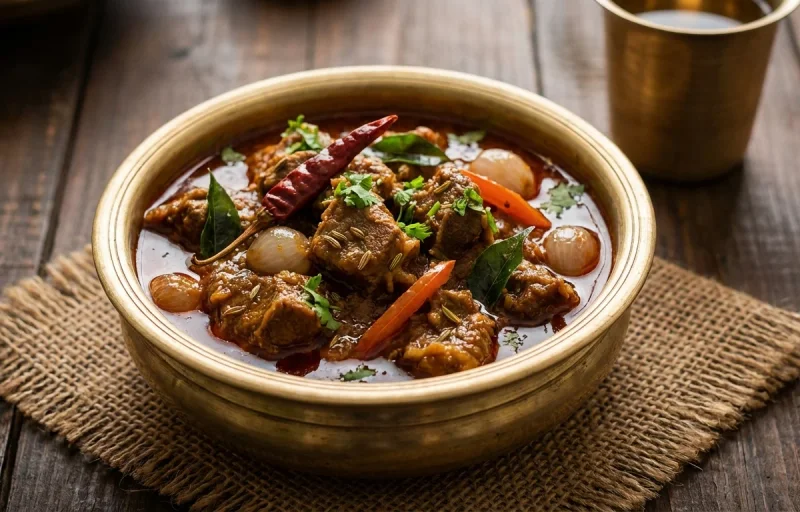
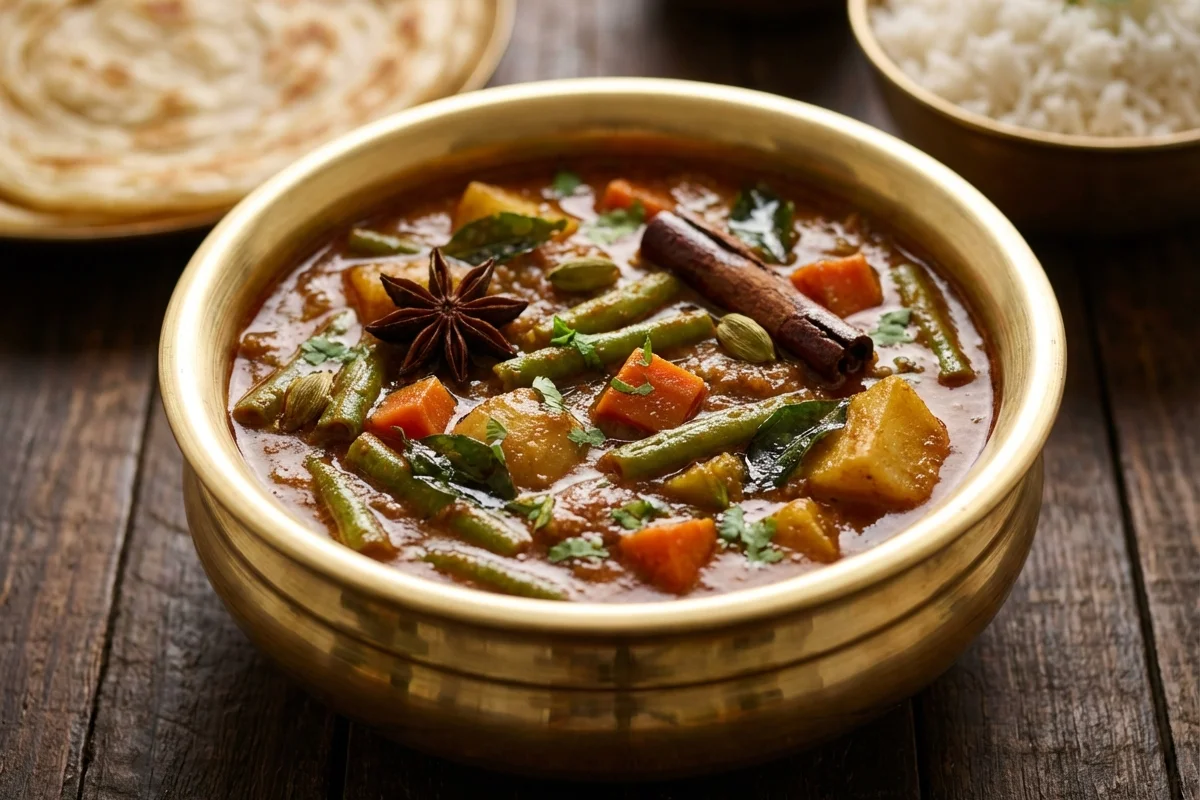
A bold South Indian curry packed with mixed vegetables and a freshly roasted Chettinad masala. It has warm spice, gentle heat, and a rich coconut finish that goes beautifully with rice, dosa, or chapati.
For 4 servings
- prep · ~10 min
Prep the vegetables and aromatics.
1.Peel and cube the carrot and potato into bite-size pieces.2.Cut the beans into small pieces and break the cauliflower into small florets.3.Finely chop the onion and tomato.4.Roughly chop the ginger and peel the garlic. - roast · ~5 min
Roast the Chettinad masala ingredients.
1.Heat a small pan on low heat.2.Add fresh coconut, fennel seeds, cumin seeds, black peppercorns, dried red chili, coriander seeds, cinnamon, cloves, green cardamom, and star anise.3.Roast, stirring often, until the coconut turns lightly golden and the spices smell fragrant.4.Take the pan off the heat and cool slightly.TIPKeep the heat low so the coconut browns gently and the spices do not taste bitter. - mix · ~3 min
Grind the masala paste.
Transfer the roasted mixture to a grinder with ginger, garlic, and 0.5 cup water. Grind to a smooth, thick paste.
- saute · ~8 min
Cook the base.
1.Heat oil in a kadai or deep pan over medium heat.2.Add bay leaf and curry leaves and cook for a few seconds.3.Add chopped onion and cook until soft and light golden.4.Add chopped tomato and cook until soft and pulpy. - saute · ~5 min
Add the masala and spices.
Add the ground Chettinad paste, turmeric powder, red chili powder, and salt. Cook for 4 to 5 minutes, stirring often, until the masala thickens and smells rich.
TIPIf the masala starts sticking, splash in a little water and keep stirring. - simmer · ~15 min
Cook the vegetables in the gravy.
1.Add carrot, potato, beans, cauliflower, and green peas to the pan.2.Mix well so the vegetables are coated in the masala.3.Pour in the remaining 1 cup water and bring to a gentle simmer.4.Cover and cook until the vegetables are tender and the curry thickens slightly. - garnish · ~1 min
Finish with coriander leaves.
Taste and adjust the consistency with a small splash of water if needed. Stir in coriander leaves and turn off the heat.
- serve
Serve hot with rice, dosa, or chapati.
What to keep in mind.
8 tips from the recipe — small details that make a real difference to the final dish.
- 1Cube the potato and carrot to a similar size so they finish cooking together.
- 2Roast the coconut-spice mix on low heat only; dark coconut will make the curry taste bitter.
- 3Cool the roasted masala slightly before grinding so it blends smoother and stays aromatic.
- 4Cook the onion until light golden, not deeply browned, to keep the Chettinad gravy balanced.
- 5After adding the ground paste, saute until the raw garlic smell disappears and oil starts to separate slightly.
- 6Add peas toward the later part of simmering if using tender fresh peas, so they stay bright and sweet.
- 7This curry tastes even better after 20 to 30 minutes of resting, when the roasted spices settle into the vegetables.
- 8Refrigerate leftovers for up to 2 days; reheat gently with a splash of water to loosen the thickened gravy.
Adapt it for your goals.
Vegan
This recipe is naturally vegan as written, making it a good option for a dairy-free South Indian curry.
low oilLow-oil
Reduce the oil slightly and add small splashes of water while sauteing the masala to prevent sticking while keeping the spice profile intact.
jainJain
Skip onion, garlic, and ginger; use extra tomato and a little more roasted coconut for body, though the flavour will be different from the classic version.
mixed veg plusMixed-veg-plus
Add vegetables like capsicum, chow chow, or mushrooms for more variety while keeping the same Chettinad masala base.
Why this is on our healthy list.
Vegetable-Rich Meal
Carrot, beans, cauliflower, peas, tomato, and potato make the curry varied and filling, with a broad mix of plant nutrients.
Contains Fiber
The mixed vegetables and fresh coconut contribute fiber, which helps make the dish more satisfying.
Plant-Based Fats and Flavor
Fresh coconut provides richness and natural fat, so the curry gets body and mouthfeel without dairy.
Spice-Forward Cooking
Fennel, cumin, pepper, coriander, curry leaves, and ginger add strong flavour, allowing a deeply seasoned curry without relying on heavy sauces.
Frequently asked questions
Yes. Add them after the masala is cooked, but reduce simmering time so the vegetables do not turn mushy.