Hyderabadi Vegetable Haleem
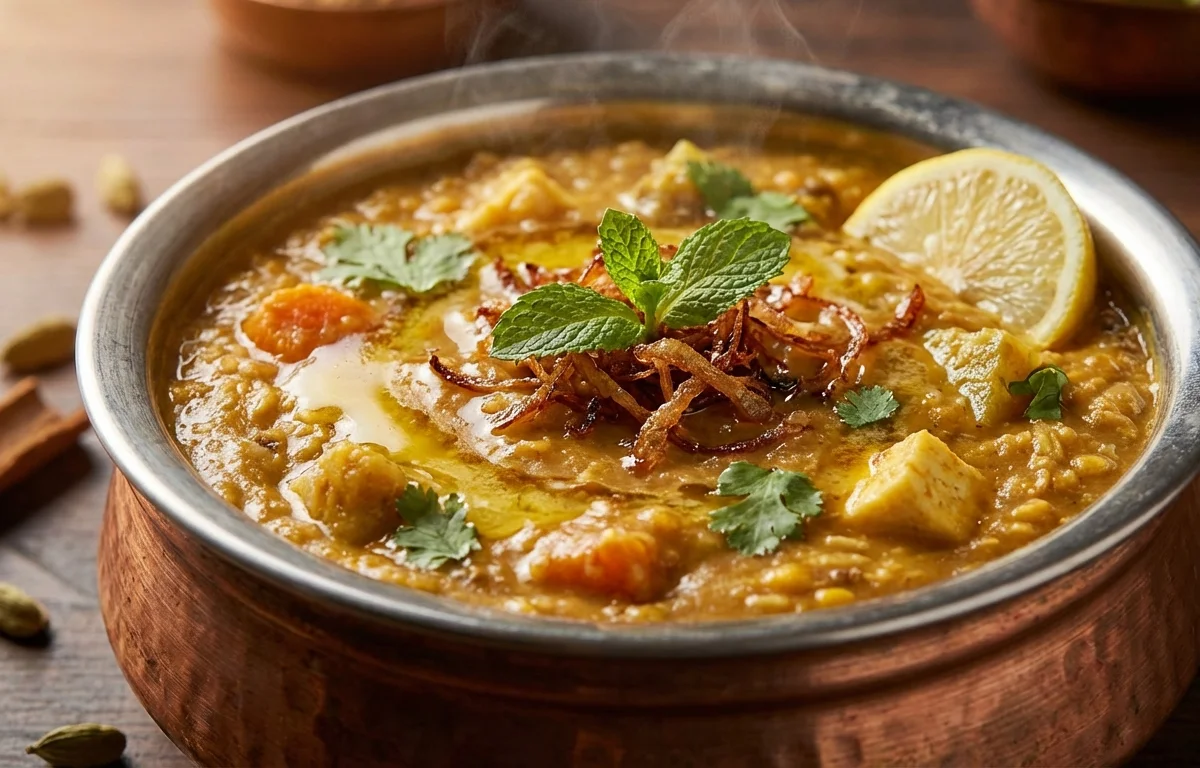
A hearty Hyderabadi-style haleem made with wheat, lentils, vegetables, warm spices, and slow-cooked richness. It turns silky, savory, and deeply comforting, with fried onions, mint, and lemon bringing the bowl to life.
For 4 servings
- prep · ~8 min
Soak the wheat and lentils.
Wash the broken wheat, toor dal, chana dal, moong dal, and masoor dal well. Soak them together in enough water overnight, then drain before cooking.
TIPA long soak helps the haleem break down into its classic smooth, thick texture. - pressure cook · ~30 min
Pressure cook the base.
1.Add the drained broken wheat and lentils to a pressure cooker.2.Add carrot, potato, green peas, cauliflower, 3 cups water, and 0.25 tsp salt.3.Cook on medium heat for 6 to 7 whistles until everything is very soft.4.Let the pressure drop naturally before opening the cooker. - mix · ~5 min
Mash the cooked mixture.
Mash the pressure-cooked wheat, lentils, and vegetables with a masher until thick and mostly smooth. Add a little water if the mixture feels too tight.
TIPThe more you mash, the closer the texture gets to traditional haleem. - fry · ~10 min
Fry the onions.
1.Heat the oil in a heavy pan over medium heat.2.Add the sliced onions and fry until deep golden and crisp.3.Remove half the onions and keep them aside for garnish.TIPKeep the heat medium so the onions brown evenly without turning bitter. - saute · ~12 min
Build the masala base.
1.To the same pan, add ghee, cumin seeds, cinnamon, cardamom, cloves, and bay leaf.2.Add ginger-garlic paste and green chili, then cook until the raw smell fades.3.Add tomatoes and cook until soft and pulpy.4.Stir in yogurt, red chili powder, turmeric powder, coriander powder, garam masala, black pepper, and the remaining salt. - simmer · ~20 min
Slow cook the haleem.
1.Add the mashed wheat and lentil mixture to the pan.2.Pour in the remaining 1 cup water and mix well.3.Add mint, cilantro, and the fried onions left in the pan.4.Cook on low heat, stirring often, until the haleem turns thick and silky.TIPStir from the bottom every few minutes so the haleem does not catch on the pan. - garnish · ~2 min
Finish with lemon and garnishes.
Stir in lemon juice. Top each serving with the reserved fried onions, extra mint, and extra cilantro.
- serve · ~1 min
Serve hot.
Serve the Hyderabadi Vegetable Haleem hot in katoris with extra lemon juice on the side.
What to keep in mind.
7 tips from the recipe — small details that make a real difference to the final dish.
- 1Soak the broken wheat and all dals overnight so they collapse fully and give haleem its signature body.
- 2Pressure-cook until the vegetables are very soft; any firmness left now will show up as lumps later.
- 3Mash while the cooked mixture is still hot for the smoothest, most cohesive texture.
- 4Fry the onions to a deep golden brown, not just light gold, for the classic sweet-savory haleem depth.
- 5Lower the heat before adding whisked yogurt so it blends into the masala without splitting.
- 6Stir frequently from the bottom during the final simmer because thick haleem catches and scorches fast.
- 7If the haleem tightens as it sits, loosen it with hot water and simmer briefly before serving.
Adapt it for your goals.
Vegan
Replace yogurt with a few spoonfuls of cashew paste or plant yogurt and swap ghee for more oil for a fully dairy-free version.
spicierSpicier
Add extra green chilies and a little more black pepper for a sharper Hyderabadi-style heat without changing the texture.
jain styleJain-style
Skip onion and ginger-garlic, then build flavor with extra whole spices, mint, cilantro, and a touch more pepper.
no pressure cookerNo-pressure-cooker
Simmer the soaked wheat, dals, and vegetables in a heavy pot until completely soft, then mash and proceed as written.
Why this is on our healthy list.
Fiber-Rich Base
Broken wheat, lentils, peas, and vegetables make this haleem filling and supportive of steady digestion.
Plant Protein from Lentils
Toor dal, chana dal, moong dal, and masoor dal add satisfying plant protein that makes the dish hearty enough for a meal.
Vegetable-Packed Comfort Food
Carrot, potato, peas, cauliflower, tomato, mint, and cilantro bring a range of plant nutrients and freshness.
Warming Spice Support
Ginger, garlic, cumin, pepper, cinnamon, cloves, and cardamom add aroma and depth while keeping the dish lively rather than heavy.
Frequently asked questions
You can, but the texture will be less smooth and the cooking time will increase noticeably. Overnight soaking helps everything break down properly.