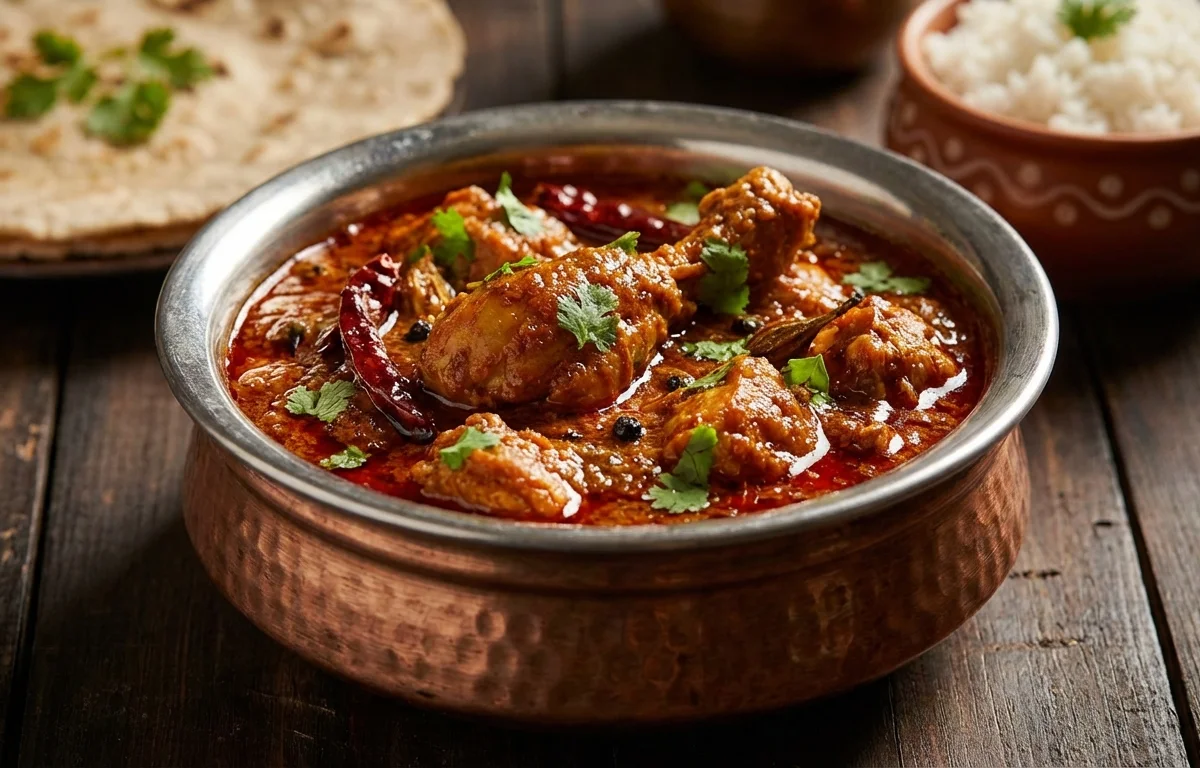
Kolhapuri Chicken
A fiery, robust chicken curry from Kolhapur, Maharashtra, known for its deep red color and intense heat from a special blend of roasted spices and dried red chilies. The gravy is rich, slightly oily, and packed with layers of smoky, earthy flavors that will warm you from the inside out. A true treat for spice lovers, best mopped up with soft chapatis or steamed rice.
For 4 servings
- roast · ~6 min
Roast the Kolhapuri masala spices.
1.In a dry pan over medium heat, add dried red chilies, coriander seeds, cumin seeds, black peppercorns, cloves, cinnamon, and cardamom.2.Roast for 2-3 minutes, shaking the pan, until spices release their aroma and darken slightly.3.Add the grated fresh coconut and roast for another 1-2 minutes until it turns golden brown.4.Remove from heat and let the mixture cool completely.TIPKeep the heat medium-low — burnt spices will make the gravy taste harsh and bitter. - mix · ~2 min
Grind the masala paste.
1.Transfer the cooled roasted spices and coconut to a blender.2.Add the soaked poppy seeds, ginger, and garlic.3.Add 2-3 tablespoons of water and grind to a smooth, thick paste.4.Set the Kolhapuri masala paste aside. - fry · ~7 min
Sear the chicken.
1.Heat 2 tablespoons of oil in a heavy-bottomed pan over medium-high heat.2.Add the chicken pieces and a pinch of turmeric powder.3.Sear for 5-7 minutes, turning occasionally, until the chicken is lightly browned on all sides.4.Remove the chicken to a plate and set aside.TIPDon't crowd the pan. Brown the chicken in batches if necessary — it's key to locking in flavor. - saute · ~12 min
Caramelize the onions.
1.In the same pan, add the remaining 2 tablespoons of oil.2.Add the finely chopped onions and a pinch of salt to help them sweat.3.Sauté on medium heat for 10-12 minutes, stirring frequently, until a deep golden brown.TIPA deep, dark caramelization of the onions gives the curry its characteristic rich base. Don't rush this step. - saute · ~15 min
Cook the masala base.
1.Add the ground Kolhapuri masala paste to the caramelized onions.2.Sauté on low-medium heat for 5-6 minutes, stirring continuously to prevent sticking.3.Add the chopped tomatoes and continue cooking until they turn soft and mushy, and the oil begins to separate from the mixture (about 7-8 minutes).TIPPersistent sautéing of the masala paste is crucial to mellow the pungent raw flavors. Look for the oil to leave the sides of the pan. - simmer · ~25 min
Simmer the curry.
1.Add the seared chicken pieces to the masala and stir to coat them well.2.Pour in 1 cup of water and add salt. Stir well.3.Bring the curry to a boil, then reduce the heat to low, cover the pan, and let it simmer for 20-25 minutes, or until the chicken is tender and cooked through.4.Stir occasionally to prevent the gravy from sticking to the bottom. - mix · ~2 min
Finish with garam masala.
1.Once the chicken is cooked and the gravy has thickened to your liking, sprinkle the garam masala over the top.2.Gently stir it in and let the curry simmer for another 1-2 minutes.3.Taste and adjust salt if needed.TIPAdding garam masala at the end preserves its aromatic oils, giving the curry a final burst of fragrance. - garnish
Garnish with fresh coriander leaves and serve hot.
Garnish with chopped cilantro and serve hot with bhakri, chapatis, or steamed rice.
What to keep in mind.
7 tips from the recipe — small details that make a real difference to the final dish.
- 1Toast the poppy seeds and coconut separately until just golden to avoid burning.
- 2Use chicken on the bone for deeper flavor and moisture during the long simmer.
- 3If the gravy is too spicy, balance with a spoon of yogurt or fresh cream at the end.
- 4Make the masala paste a day ahead to let the flavors meld — store it in the fridge.
- 5Deglaze the pan with a splash of water after searing chicken to lift fond into the gravy.
- 6Cook the gravy until oil visibly separates from the masala for a rich, non-raw taste.
- 7Let the curry rest for 15 minutes after cooking — the flavors deepen and chicken absorbs the masala.
Adapt it for your goals.
Vegetarian
Replace chicken with 400g of paneer or mixed vegetables (potato, cauliflower, peas), and use the same masala. Sear paneer pieces until golden before adding to the gravy for texture. Ideal for a meatless weeknight dinner.
low oilLow-oil
Reduce total oil to 2 tbsp by searing the chicken without oil (use non-stick pan) and skipping the final tempering. The masala's moisture will still create a rich gravy. Perfect for those watching their fat intake.
high proteinHigh-protein
Use chicken breast (diced) and add 2 tbsp of roasted chickpea flour (besan) to the masala paste for extra protein and to thicken the gravy. This boosts satiety and suits fitness-oriented diets.
jainJain
Omit garlic and onion; replace with asafoetida (hing) and fennel seeds (saunf) for the base. Use ginger and green chilies for heat, and skip the poppy seeds if not permitted. Follows Jain dietary restrictions while retaining the spicy Kolhapuri essence.
Why this is on our healthy list.
Rich in Anti-inflammatory Spices
Coriander, cumin, turmeric, and cloves in this dish have natural anti-inflammatory properties that can support joint health and digestion.
Good Source of Lean Protein
Chicken provides high-quality, lean protein essential for muscle repair, immune function, and satiety.
Contains Healthy Fats from Coconut
Fresh coconut in the masala offers medium-chain triglycerides (MCTs), which may support metabolism and provide quick energy.
Packed with Antioxidants
Dried red chilies, black peppercorns, and cinnamon are rich in antioxidants that help combat oxidative stress and support overall cellular health.
Digestive Aid from Spices
Cardamom, cumin, and ginger traditionally aid digestion by stimulating enzyme activity and reducing bloating.
Frequently asked questions
Yes, reduce the dried red chilies to 4-5 and replace 2 with Kashmiri chilies for color. The roasted spice blend still delivers complexity.



.webp)