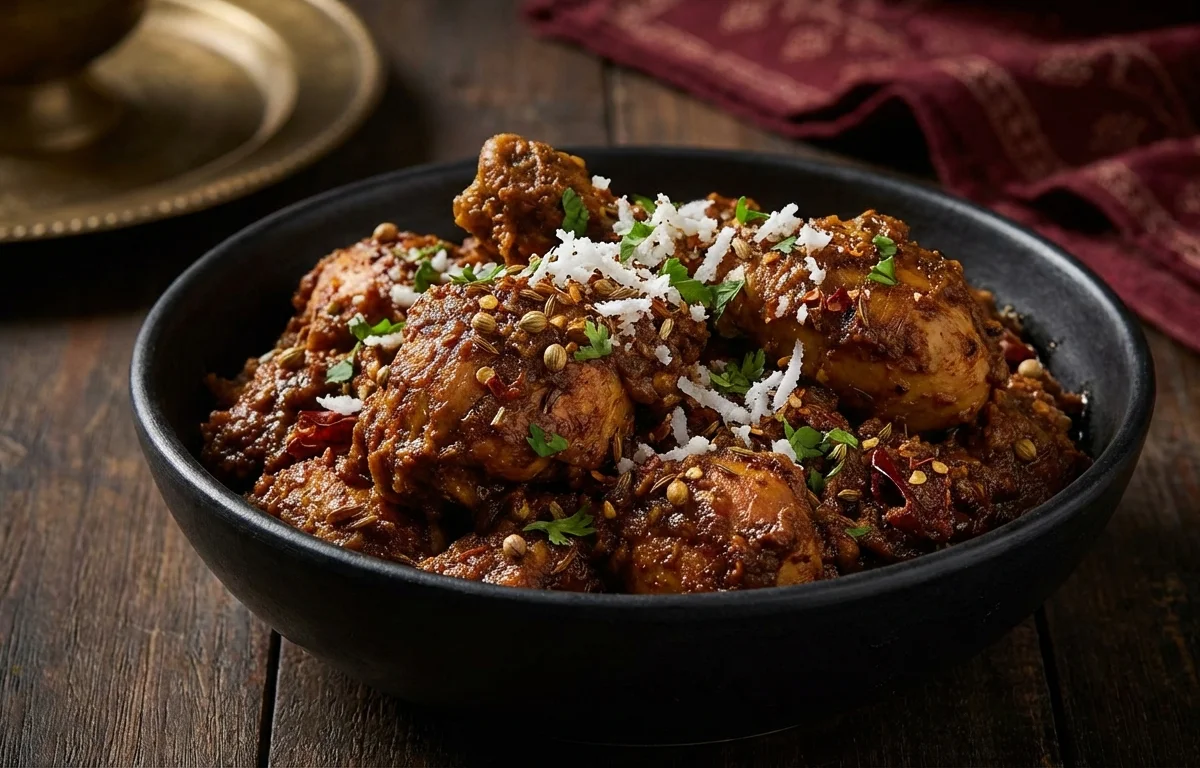
Kolhapuri Chicken Sukka
A bold, spicy Maharashtrian chicken dish where bone-in chicken cooks down with roasted coconut, onions, and a fragrant Kolhapuri masala. It turns rich, dry, and deeply flavorful, perfect with bhakri or simple rice.
For 4 servings
- roast · ~5 min
Roast the coconut and whole spices.
1.Heat a pan over medium heat.2.Add grated coconut, dry red chili, coriander seeds, cumin seeds, black peppercorns, cloves, cinnamon, and green cardamom.3.Roast, stirring often, until the coconut turns golden and the spices smell fragrant, 4 to 5 minutes.4.Take off the heat and let the mixture cool slightly.TIPKeep the heat medium and stir often so the coconut browns evenly without burning. - mix · ~3 min
Grind the Kolhapuri masala.
Blend the roasted coconut and spices with ginger, garlic, and a little water to make a thick, coarse paste.
- saute · ~15 min
Cook the onions and tomatoes.
1.Heat oil in a heavy pan over medium heat.2.Add sliced onion and cook until deep golden, 8 to 10 minutes.3.Add chopped tomato and cook until soft and pulpy, 4 to 5 minutes.4.Add turmeric powder, red chili powder, and salt, then mix well.TIPWell-browned onions give this sukka its depth, so do not rush this step. - saute · ~6 min
Coat the chicken with the masala.
Add the chicken pieces and cook for 5 to 6 minutes, stirring well so the chicken is fully coated and lightly sealed with the onion mixture.
- simmer · ~25 min
Cook the chicken with the ground masala.
1.Add the ground Kolhapuri masala and mix well.2.Pour in the remaining water and stir to loosen the masala.3.Cover and cook on low heat until the chicken is tender, 18 to 20 minutes.4.Open the lid and cook a few more minutes until the masala turns thick and clings to the chicken.TIPThe dish should finish fairly dry, not saucy, so uncover it at the end and let the moisture cook off. - garnish
Garnish with coriander leaves.
- serve
Serve hot with bhakri, chapati, or rice.
What to keep in mind.
7 tips from the recipe — small details that make a real difference to the final dish.
- 1Roast the coconut only to deep golden, not dark brown, or the sukka can taste bitter.
- 2Keep the masala paste slightly coarse rather than silky; that texture helps it cling to the chicken.
- 3Brown the onions patiently until deep golden, because they form the sweet, rich base of this dry-style dish.
- 4Use a heavy kadhai or thick pan so the masala reduces evenly without catching at the bottom.
- 5If the masala looks dry before the chicken is tender, sprinkle in a few spoonfuls of water instead of adding a big splash.
- 6Cook uncovered at the end until oil begins to separate and the masala coats each piece rather than pooling in the pan.
- 7This sukka tastes even better after a short rest, as the roasted coconut and spice flavours settle into the chicken.
Adapt it for your goals.
Extra-spicy
Increase the dried red chilies or red chili powder for a fiercer Kolhapuri heat that suits spice lovers.
gravy styleGravy-style
Add a little more water and stop before the masala fully dries if you want a version that pairs better with rice.
bonelessBoneless
Use boneless chicken for quicker cooking and easier serving, though bone-in gives a fuller, richer flavour.
mutton sukkaMutton-sukka
Make the same masala with goat meat for a heartier variation; simmer longer until the meat turns tender.
Why this is on our healthy list.
Protein-Rich Main Dish
Chicken provides substantial protein, making this sukka a satisfying centerpiece meal.
Spice-Forward Without Heavy Cream
The dish gets richness from coconut, onions, and spices instead of cream or butter-heavy gravy.
Aromatic Whole Spices
Coriander, cumin, pepper, cloves, and ginger-garlic add strong flavour, so the dish stays bold without needing much sauce.
Frequently asked questions
Yes, but the flavour will be slightly less sweet and juicy. Lightly roast it and add a bit more water while grinding to make the masala paste.

.webp)