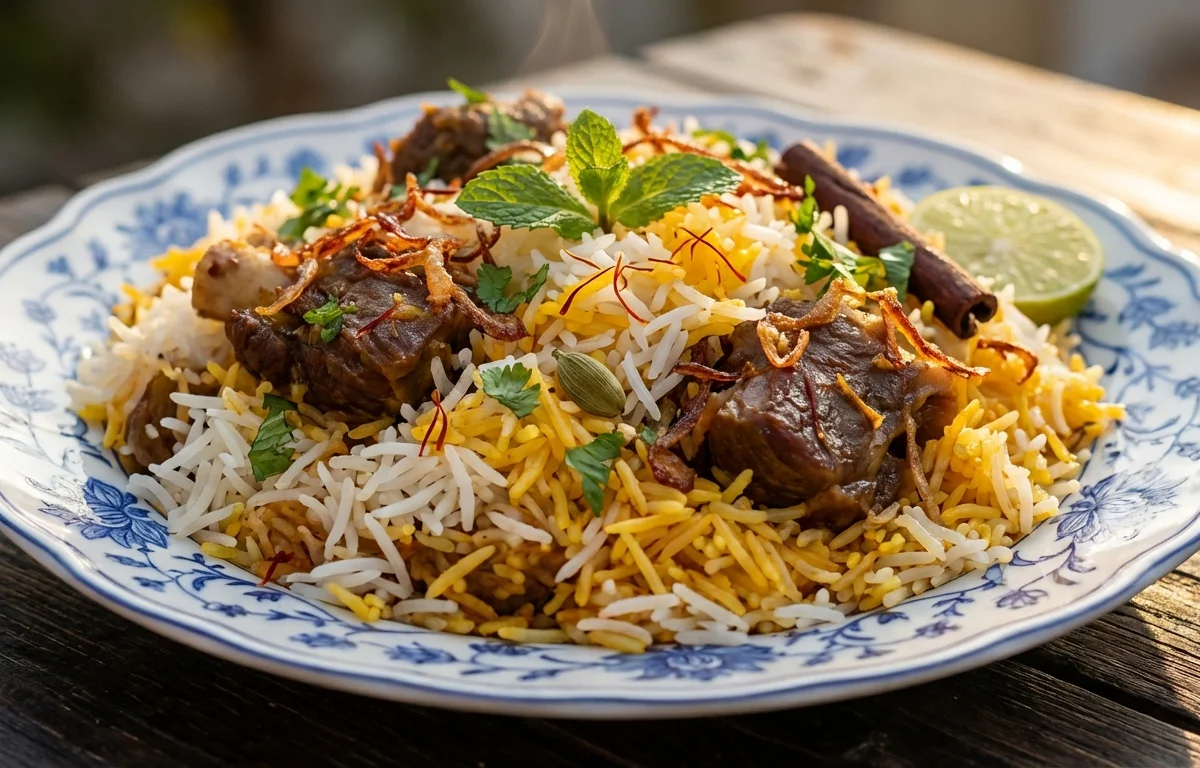
Lucknowi Mutton Biryani
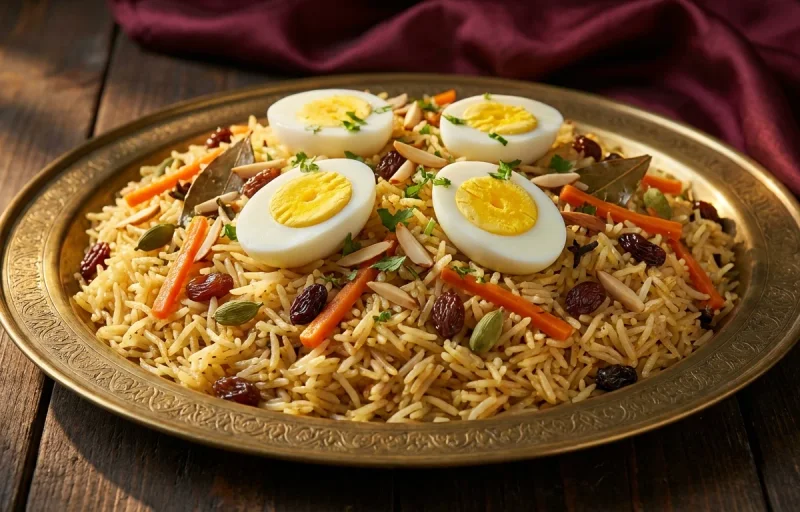
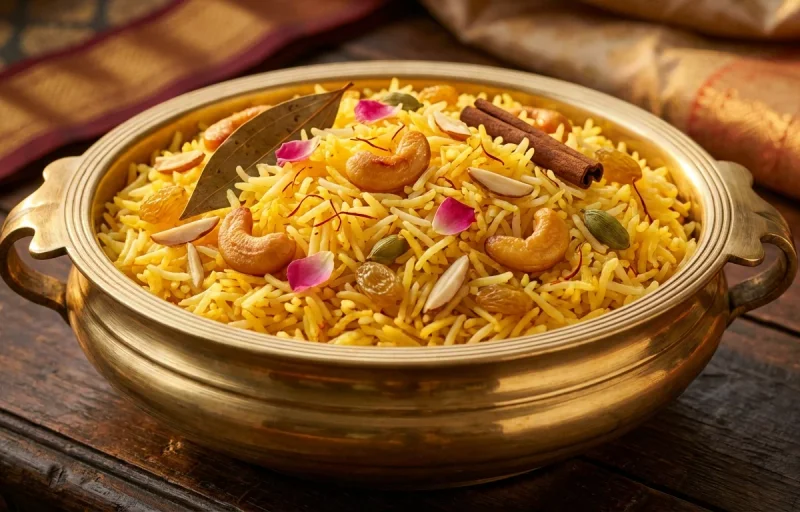
Fragrant long-grain basmati rice layered with tender slow-cooked mutton in a delicate blend of whole spices, saffron, and yogurt. This Awadhi dum-style biryani steams to perfection, filling the kitchen with the aroma of kewra and rose water.
For 6 servings
- prep
Soak the rice and saffron.
1.Wash 3 cups basmati rice gently, then soak in ample water for 30 minutes. Drain completely.2.Soak 10 saffron strands in 3 tbsp warm milk and set aside. - fry · ~30 min
Crisp the onions for birista.
1.Heat 1 cup oil in a kadai over medium heat.2.Fry the sliced onions in batches, stirring often, until deep golden and crisp (8-10 min per batch).3.Drain on paper towels. Crush lightly once cooled — save 2 tbsp for garnish.TIPFry on medium heat so the onions dry out fully rather than burning on the edges. They should shatter when pressed. - mix · ~20 min
Marinate the mutton.
1.In a large bowl, combine mutton pieces with whisked yogurt, ginger-garlic paste, red chili powder, garam masala, nutmeg, and 1 pinch of salt.2.Add three-quarters of the crushed fried onions, half the mint, and half the coriander leaves.3.Mix well, cover, and rest for 20 minutes.TIPMassage the marinade into the meat thoroughly so the yogurt tenderizes every piece. - pressure cook · ~30 min
Cook the mutton.
1.Transfer the marinated mutton to a pressure cooker.2.Add 6 cups water and all whole spices: bay leaves, both cardamoms, cloves, cinnamon, mace, star anise, and cumin seeds.3.Pressure cook on medium heat for 5-6 whistles or until mutton is tender (about 25-30 min).4.Let pressure release naturally. Separate mutton, keep the stock warm.TIPDon't rush the pressure release — slow cooling keeps the meat moist and tender. - boil · ~10 min
Parboil the basmati rice.
1.Bring 8 cups of water to a rolling boil in a large pot.2.Add the drained rice and 1 pinch of salt.3.Boil until rice is 70% cooked — grains should still have a bite (about 5-6 min).4.Drain immediately and spread on a tray so grains stay separate.TIPCook only until the rice grain breaks when pressed between fingers but is still firm in the center. Overcooking here means mushy biryani. - assemble · ~10 min
Layer the biryani for dum.
1.Smear 1 tbsp ghee at the bottom of a heavy-bottomed pot.2.Spread a thin layer of parboiled rice.3.Arrange the cooked mutton pieces along with just the mutton (reserve stock).4.Drizzle 2 tbsp ghee, sprinkle green chilies, some mint, and coriander.5.Cover with all the remaining rice in an even mound.6.Pour the warm saffron milk, kewra water, and rose water over the rice.7.Drizzle 1 tbsp ghee on top. Sprinkle the reserved crushed fried onions, remaining mint, and remaining coriander.TIPCreate a slight mound of rice in the center so the steam circulates properly from the sides. - mix · ~3 min
Seal the pot with dough.
1.Mix wheat flour with just enough water to make a stiff dough.2.Roll into a rope and press it around the edge of the pot lid to create an airtight seal.3.Alternatively, cover with foil first, then place the lid on top.TIPThe seal must be tight — any steam escaping means lost aroma and dry biryani. - steam · ~35 min
Cook biryani on dum.
1.Place a flat griddle or tawa under the sealed pot.2.Start on high heat for 5 minutes, then reduce to the lowest possible flame.3.Let it steam undisturbed for 25 to 30 minutes.4.Turn off heat and let it rest, sealed, for another 10 minutes.TIPThe griddle underneath diffuses direct heat so the bottom layer doesn't burn. Never open the lid during dum. - serve · ~2 min
Open the biryani and serve.
1.Break the dough seal and lift the lid carefully — the aroma will be intense.2.Gently fluff the rice from the sides with a wide spatula, folding the meat layer into the rice.3.Mix only at the table or serve by digging deep to get all layers on one plate.TIPMix gently from bottom to top in one section at a time, never stir the whole pot — you want streaks of white rice and spiced meat visible on the plate.
What to keep in mind.
6 tips from the recipe — small details that make a real difference to the final dish.
- 1Sauté birista over medium heat until they turn deep golden — they will continue to darken from residual heat after draining.
- 2Parboil the basmati rice to 70% doneness; a grain should break when pressed but still have a firm white core.
- 3Naturally release the pressure on the mutton to retain juices and prevent the meat from drying out.
- 4Let the assembled biryani rest, sealed, for 10 minutes after dum so the grains finish steaming and settle.
- 5Use a heavy-bottomed pot and a tawa underneath to diffuse heat evenly and prevent the bottom layer of rice from burning.
- 6Fluff the biryani from the sides using a wide spatula, folding layers gently — avoid stirring the whole pot to preserve distinct layers.
Adapt it for your goals.
Chicken Biryani
Replace mutton with bone-in chicken thighs or drumsticks. Reduce pressure-cooking time to 2-3 whistles to keep the chicken moist and tender.
Vegetable BiryaniVegetable Biryani
Swap mutton for mixed vegetables like potatoes, carrots, peas, and cauliflower. Skip the pressure-cooking step; sauté vegetables with the marinade and build layers directly.
Low Oil BiryaniLow-Oil Biryani
Reduce oil for frying onions by using an air-fryer or oven-roasting sliced onions until crisp. Cut ghee to 2 tbsp for layering. This makes a lighter yet flavorful biryani.
High Protein BiryaniHigh-Protein Biryani
Add 200g of paneer cubes (marinated in yogurt and spices) along with the mutton for an extra protein boost. Sear the paneer lightly before layering.
Why this is on our healthy list.
High-Quality Protein
Mutton provides complete protein, essential for muscle repair and overall body function.
Rich in Iron and Zinc
Red meat in this biryani is an excellent source of heme iron and zinc, supporting immunity and oxygen transport.
Digestive Spices
Cumin, cardamom, and cloves in the recipe aid digestion and can reduce bloating.
Frequently asked questions
No — basmati's long grains and distinct fragrance are essential for authentic Lucknowi biryani. Regular rice will turn mushy and lack the characteristic aroma.