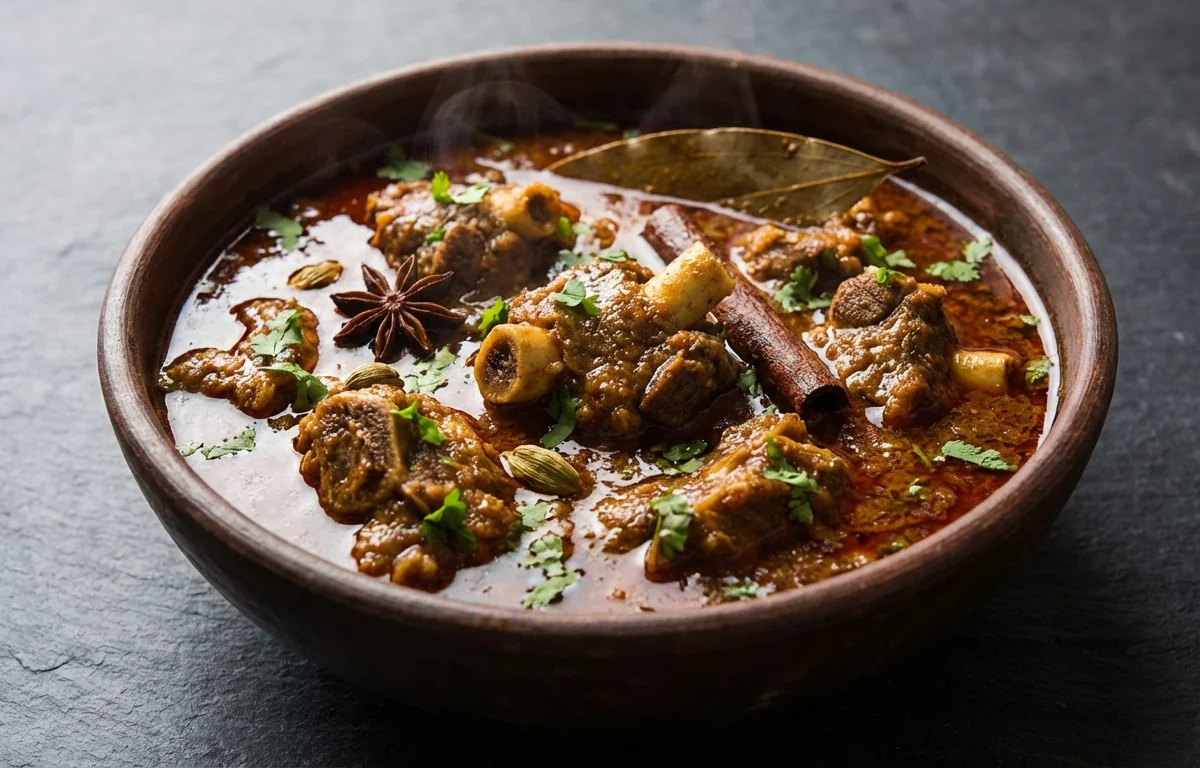
Nagpuri Saoji Mutton
A fiery Vidarbha-style mutton curry with deep roasted spices, plenty of black pepper, and a dark, rich gravy. This Saoji classic is bold, rustic, and made for small portions alongside bhakri, rice, or chapati.
For 4 servings
- prep · ~10 min
Prepare the mutton and vegetables.
1.Wash the mutton and drain well.2.Slice the onions thinly and chop the tomatoes.3.Peel the garlic and chop the ginger. - roast · ~8 min
Roast the Saoji spices.
1.Heat a heavy pan over low heat.2.Add dry coconut, sesame seeds, poppy seeds, coriander seeds, cumin seeds, black peppercorns, fennel seeds, cloves, green cardamom, black cardamom, cinnamon, bay leaf, dagad phool, and dried red chili.3.Roast slowly, stirring often, until fragrant and the coconut turns deep golden.4.Take the pan off the heat and cool the mixture completely.TIPKeep the heat low so the coconut and chilies darken evenly without turning bitter. - mix · ~3 min
Grind the masala.
Transfer the cooled roasted spices to a grinder with ginger, garlic, and a little water. Grind to a smooth, thick paste.
- saute · ~15 min
Cook the onions and tomatoes.
1.Heat oil in a pressure cooker over medium heat.2.Add sliced onions and cook until deep golden brown.3.Add chopped tomatoes and cook until soft and pulpy.4.Add turmeric powder and red chili powder, then mix well.TIPThe dark onion base gives Saoji curry its color, so let the onions brown well. - saute · ~10 min
Bhuno the masala with the mutton.
Add the ground Saoji masala and cook for 4 to 5 minutes, stirring often. Add the mutton and salt, then cook until the meat is well coated and the masala smells rich.
- pressure cook · ~30 min
Pressure cook until the mutton is tender.
Pour in water and scrape the bottom well. Lock the cooker and cook on medium heat for 25 to 30 minutes, or until the mutton is tender.
TIPCooking time can vary with the cut and age of the meat; the pieces should yield easily when pressed. - simmer · ~10 min
Simmer the curry to finish.
Let the pressure drop naturally, then open the cooker. Simmer the curry uncovered for 8 to 10 minutes until the gravy is thick, glossy, and well blended.
- garnish
Garnish with coriander leaves.
- serve
Serve hot.
What to keep in mind.
7 tips from the recipe — small details that make a real difference to the final dish.
- 1Roast the coconut and whole spices on low heat only; if the chilies blacken too fast, the curry turns harsh instead of deep and smoky.
- 2Grind the roasted masala after it cools fully, or steam trapped in the grinder can make the paste taste dull and slightly bitter.
- 3Take the onions to a deep brown, not just soft golden; that dark base is key to Saoji color and body.
- 4After adding water, scrape the cooker bottom well so the thick masala does not catch during pressure cooking.
- 5If the gravy looks oily after cooking, simmer uncovered rather than adding more water; Saoji should be thick, glossy, and cling to the mutton.
- 6This curry tastes even better after a few hours of rest, when the pepper, dagad phool, and roasted coconut settle into the meat.
- 7Bone-in pieces work best here because the bones enrich the gravy during pressure cooking and balance the intense spice.
Adapt it for your goals.
Less-spicy
Reduce the dried red chilies and black pepper for a gentler heat while keeping the roasted spice profile and dark Saoji character.
chicken saojiChicken-saoji
Use bone-in chicken instead of mutton for a quicker version; pressure cook for less time and simmer until the gravy coats the pieces.
stovetopStovetop
Cook in a heavy pot instead of a pressure cooker if preferred; simmer covered until the mutton is tender and finish uncovered to thicken.
extra richExtra-rich
Add a little more dry coconut for a thicker, nuttier gravy that pairs especially well with bhakri.
Why this is on our healthy list.
Protein-Rich Main Dish
Mutton provides substantial protein, making this curry filling and helpful for a hearty meal.
Spice-Loaded Aromatics
Black pepper, ginger, garlic, coriander, cumin, and fennel add intense flavor along with beneficial plant compounds.
Mineral Support from Seeds
Sesame seeds and poppy seeds contribute natural minerals and add richness without relying only on cream or butter.
Frequently asked questions
Usually the coconut or dried chilies were roasted on too high a flame. Roast slowly until deep golden and fragrant, not dark brown or black.



.webp)