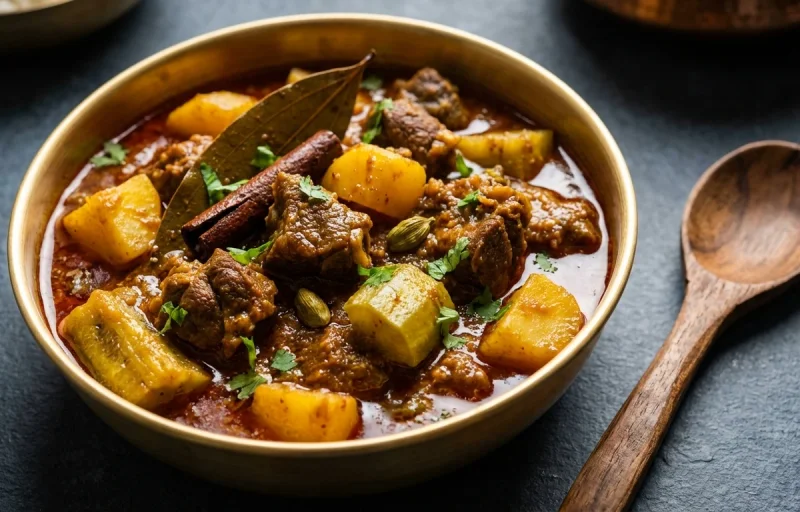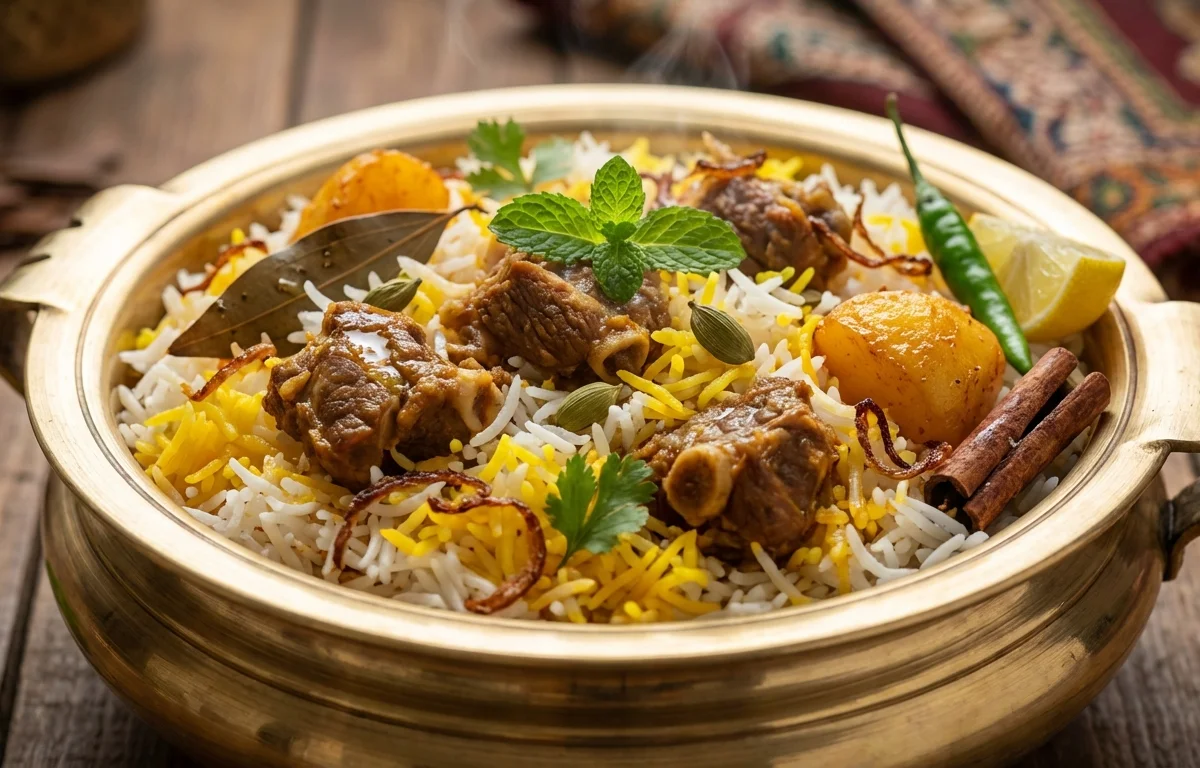
Odia Mutton Biryani
Fragrant basmati rice and tender mutton come together in this Odia-style biryani with yogurt, warm spices, potato, and a gentle dum finish. It is rich, festive, and deeply comforting without being overly heavy.
For 4 servings
- prep · ~30 min
Soak the rice and prep the biryani ingredients.
1.Wash the basmati rice until the water runs mostly clear, then soak it in fresh water for 30 minutes.2.Slice the onions thinly, halve the potatoes, slit the green chilies, and whisk the yogurt.3.Soak the saffron in warm milk and keep it aside.TIPSoaked rice cooks more evenly and is less likely to break while parboiling. - pressure cook · ~30 min
Pressure cook the mutton.
1.Add mutton, 1 tbsp ginger-garlic paste, turmeric powder, red chili powder, coriander powder, 0.25 tsp salt, and 2 cups water to a pressure cooker.2.Mix well and cook on medium heat until the mutton is just tender, about 5-6 whistles.3.Let the pressure drop naturally and keep the mutton with its cooking liquid aside.TIPDo not overcook the mutton here; it will cook again on dum and should still hold its shape. - fry · ~12 min
Fry the potatoes and brown part of the onions.
1.Heat the oil and 1 tbsp ghee in a heavy pot over medium heat.2.Add the potato halves and fry until light golden on the edges, then remove.3.Add about half the sliced onions and cook until golden brown, then remove and keep aside.TIPKeep the heat moderate so the onions brown evenly instead of burning at the edges. - saute · ~15 min
Cook the mutton masala.
1.In the same pot, add the remaining ghee, bay leaf, cardamom, cloves, cinnamon, black peppercorns, and cumin seeds.2.When fragrant, add the remaining onions and sauté until soft and light golden.3.Add the remaining ginger-garlic paste and green chilies, then cook for 1 minute.4.Add the yogurt and stir well until the masala looks smooth.5.Add the pressure-cooked mutton with 0.5 cup of its cooking liquid and simmer until the masala coats the meat.TIPCook the yogurt on medium-low heat and stir steadily so it does not split. - boil · ~10 min
Parboil the rice.
1.Bring 8 cups water to a boil in a large pot.2.Add 0.5 tsp salt, then drain the soaked rice and add it to the boiling water.3.Cook until the rice is about 70 percent done and still has a firm center.4.Drain the rice right away and let the steam escape for 2 minutes.TIPStop at 70 percent cooked rice; fully cooked rice will turn soft during dum. - assemble · ~5 min
Layer the biryani.
1.Spread the mutton masala evenly in the heavy pot.2.Arrange the fried potatoes over the mutton.3.Top with the parboiled rice in an even layer.4.Scatter the browned onions, mint, and coriander leaves over the rice.5.Drizzle the saffron milk and lemon juice on top. - rest · ~5 min
Seal and rest the pot briefly before dum.
Cover the pot with a tight lid and let it sit for 5 minutes so the layers settle and the steam begins to build gently inside.
- simmer · ~30 min
Cook the biryani on dum.
Set the pot over very low heat and cook for 20 minutes until the rice is fully done and the aromas meld together. Turn off the heat and let it stand, covered, for 10 minutes.
TIPUse the lowest heat possible to keep the bottom from catching while the top finishes steaming. - serve
Fluff the biryani and serve hot.
What to keep in mind.
6 tips from the recipe — small details that make a real difference to the final dish.
- 1Keep the mutton only just tender in the pressure cooker so the pieces stay intact during dum.
- 2Drain the parboiled rice as soon as the grain has a firm white core; carryover heat keeps cooking it.
- 3If your pot is thin-bottomed, place a tawa underneath during dum to prevent the masala layer from scorching.
- 4Brown the first batch of onions evenly and reserve them dry; they add sweetness and texture to the final layer.
- 5Let the biryani rest covered after dum, then fluff from the sides with a flat spoon to keep the layers distinct.
- 6For make-ahead cooking, prepare the mutton masala a day early; the spiced gravy deepens and assembles more easily.
Adapt it for your goals.
Low-oil
Shallow-brown the potatoes, use fewer fried onions, and cut back slightly on ghee for a lighter but still fragrant biryani.
spicierSpicier
Add extra slit green chilies and a little more red chili powder if you want a sharper heat without changing the core Odia profile.
bonelessBoneless
Use boneless mutton for easier serving; reduce pressure-cooking slightly so the meat does not dry out on dum.
chickenChicken
Swap mutton for chicken for a quicker festive biryani; shorten the initial cooking time because chicken tenderizes much faster.
Why this is on our healthy list.
Protein-Rich Main Dish
Mutton and yogurt make this biryani satisfying and substantial, helping turn it into a filling one-pot meal.
Herbs and Spices Add More Than Aroma
Mint, coriander, ginger, garlic, cumin, pepper, and saffron bring flavor depth along with plant compounds from whole and ground spices.
Balanced With Potato and Rice
The combination of potato and basmati rice provides comforting carbohydrates, while the meat and yogurt add richness and staying power.
Frequently asked questions
Yes, but simmer it covered until just tender before layering. You may need more time and a little extra water compared with pressure cooking.