Loading...
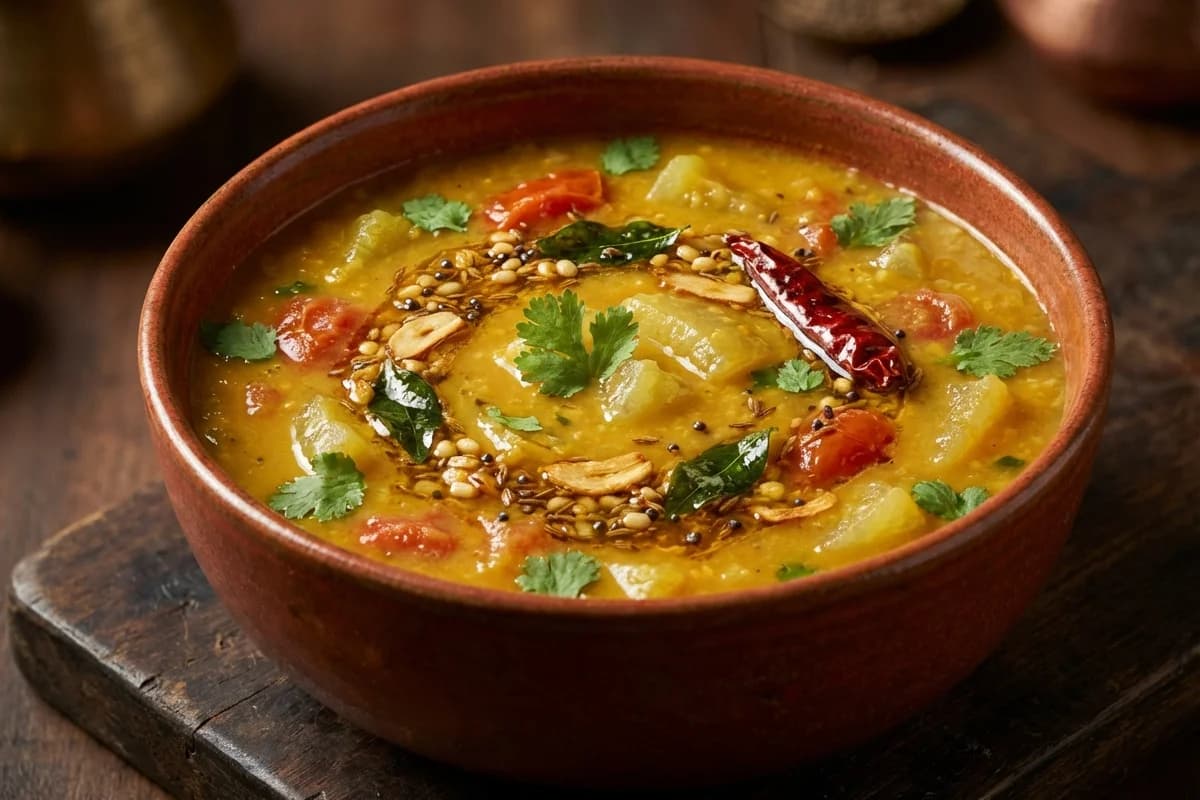
A tangy and slightly sweet lentil stew from Andhra Pradesh, made with pigeon peas, tamarind, and a mix of vegetables. This comforting dish, balanced with a hint of jaggery, is a staple in South Indian homes and pairs perfectly with steamed rice and ghee.
For 4 servings
Cook the Dal: Rinse the toor dal thoroughly. Place it in a pressure cooker with 3 cups of water and 1/4 tsp of the turmeric powder. Secure the lid and cook on medium-high heat for 4-5 whistles, or until the dal is completely soft and mushy (about 15 minutes). Once the pressure releases naturally, open the cooker, mash the dal with the back of a ladle until smooth, and set aside.
Prepare Tamarind Base: While the dal cooks, soak the tamarind in 1 cup of warm water for 15 minutes. Squeeze the tamarind well to extract all the pulp. Strain this liquid into a large pot, discarding the fibrous solids. Add 1 more cup of water to the pot.
Cook the Vegetables: To the pot with tamarind water, add the chopped onion, tomato, drumstick pieces, bottle gourd cubes, and slit green chilies. Stir in the remaining turmeric powder, red chili powder, sambar powder, jaggery, and salt. Bring the mixture to a boil, then reduce the heat to medium and cook for 10-12 minutes, until the vegetables are tender but still hold their shape.
Combine and Simmer: Gently pour the mashed dal into the pot with the cooked vegetables. Whisk well to combine everything smoothly, ensuring there are no lumps. Bring to a gentle simmer and cook on low heat for 5-7 minutes, allowing the flavors to meld. If the pulusu is too thick, add a little hot water to reach your desired consistency.
Prepare the Tempering (Tadka): Heat ghee in a small pan or tadka pan over medium heat. Once hot, add the mustard seeds and let them splutter.
A tangy and slightly sweet lentil stew from Andhra Pradesh, made with pigeon peas, tamarind, and a mix of vegetables. This comforting dish, balanced with a hint of jaggery, is a staple in South Indian homes and pairs perfectly with steamed rice and ghee.
This andhra recipe takes 45 minutes to prepare and yields 4 servings. At 313.36 calories per serving with 13.37g of protein, it's a moderately challenging recipe perfect for lunch or dinner.
Discover authentic recipes from cuisines around the world.
Find recipes that fit your dietary preferences.
Find recipes optimized for your goal.
Finish and Serve: Pour the hot tempering over the simmering pappu pulusu. Stir gently to incorporate. Garnish with freshly chopped coriander leaves. Serve hot with steamed rice, a dollop of ghee, and a side of papad or fryums.
Feel free to use other vegetables like yellow pumpkin (gummadikaya), eggplant (vankaya), okra (bendakaya), or sweet potatoes. Adjust cooking time accordingly.
If you prefer a thicker stew, you can mix 1 teaspoon of rice flour with 2 tablespoons of water to form a slurry and add it to the pulusu during the final 2 minutes of simmering.
For a sattvic version, you can omit the onion and garlic. The dish will still be flavorful from the other spices and tamarind.
While traditionally made with toor dal, you can also make this with a mix of toor dal and masoor dal (red lentils) for a different texture.
Toor dal is an excellent source of plant-based protein and essential amino acids, which are crucial for muscle repair, growth, and overall body function.
The combination of lentils and various vegetables provides a significant amount of dietary fiber, which aids digestion, promotes gut health, and helps in maintaining stable blood sugar levels.
Ingredients like turmeric (with its active compound curcumin), garlic, and tomatoes are rich in antioxidants and anti-inflammatory properties that help strengthen the immune system.
Spices like hing (asafoetida) and cumin, along with the fiber content, help prevent bloating and indigestion, promoting a healthy digestive system. Tamarind is also known to have mild laxative properties.
One serving of Pappu Pulusu (approximately 1 cup or 425g) contains around 290-320 calories. This can vary based on the amount of ghee and vegetables used.
Yes, Pappu Pulusu is a very healthy and balanced dish. It's rich in plant-based protein and fiber from the lentils, packed with vitamins and minerals from the vegetables, and uses wholesome spices with various health benefits.
While similar, they have key differences. Pappu Pulusu is typically simpler, with a more pronounced tangy and sweet flavor profile from tamarind and jaggery. Sambar often uses a more complex spice blend (sambar powder is key), can have a wider variety of vegetables, and is generally thicker in consistency.
Absolutely. You can cook the toor dal in a regular pot. Soak the dal for at least 1 hour, then cook it with water in a covered pot over medium-low heat for 45-60 minutes, or until it's completely soft and mashable. The rest of the steps remain the same.
Pappu Pulusu stores well in an airtight container in the refrigerator for up to 3-4 days. The flavors often become more intense the next day. Reheat gently on the stovetop, adding a splash of water if it has thickened too much.
This recipe goes great with these complete meals
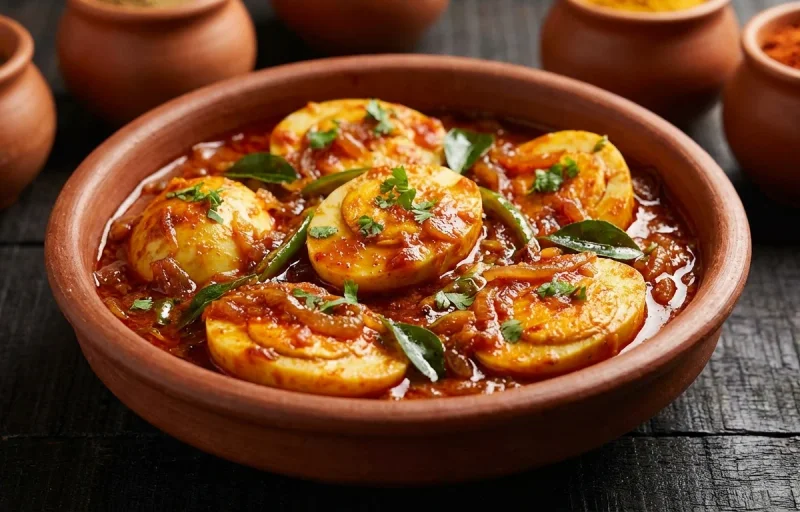
A fiery and aromatic egg fry from Andhra Pradesh, where hard-boiled eggs are tossed in a spicy onion-tomato masala with plenty of green chilies. A quick and delicious side dish for rice or roti.
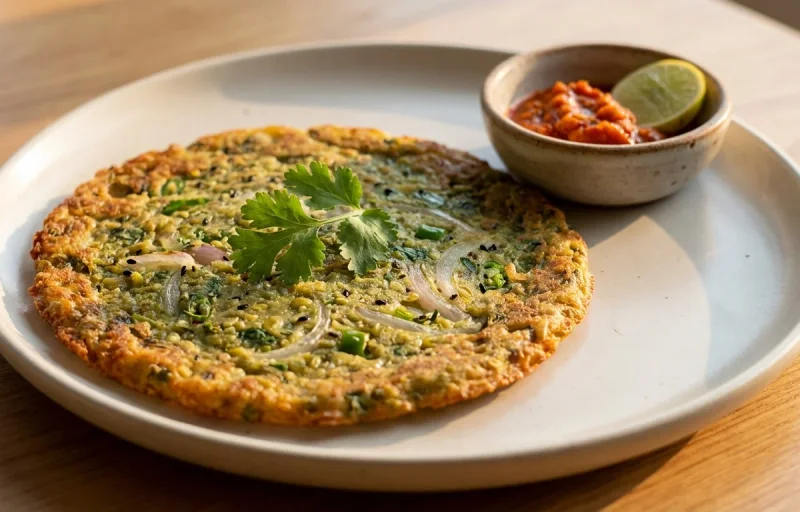
Pesarattu, popularly known as Moong Dal Polo in the Andhra region, is a classic breakfast crepe. Made from a simple batter of whole green moong lentils and rice, these savory pancakes are crispy on the outside, soft inside, and packed with protein. Often topped with chopped onions and served with a spicy ginger chutney (Allam Pachadi), it's a healthy and delicious start to the day.
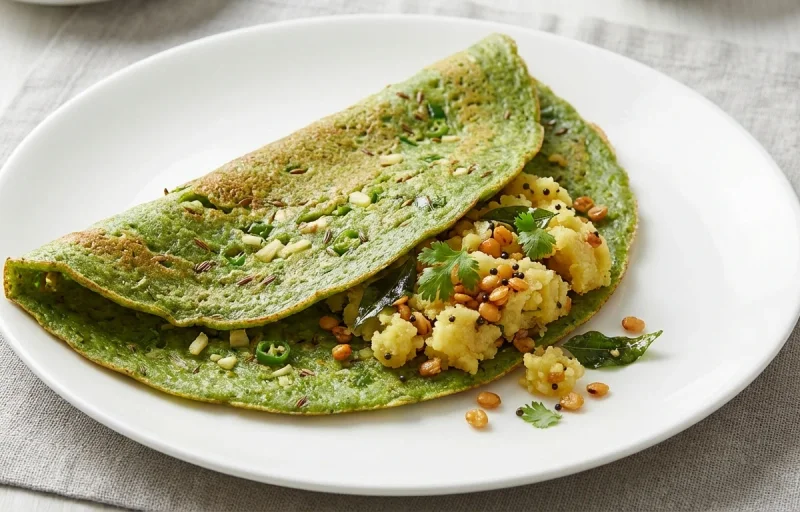
A classic Andhra breakfast combining a crispy green moong dal dosa (Pesarattu) with a savory semolina filling (Upma). This wholesome and protein-rich dish is a complete meal in itself, best enjoyed with ginger chutney.
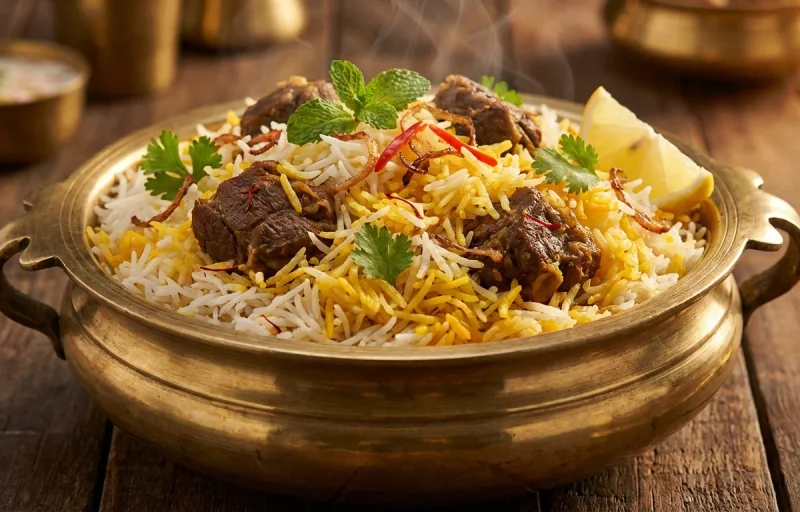
A fiery and aromatic biryani from the heart of Andhra Pradesh. Tender mutton pieces are cooked with fragrant basmati rice and a bold, spicy masala made with green chilies and fresh herbs. A true feast for spice lovers.