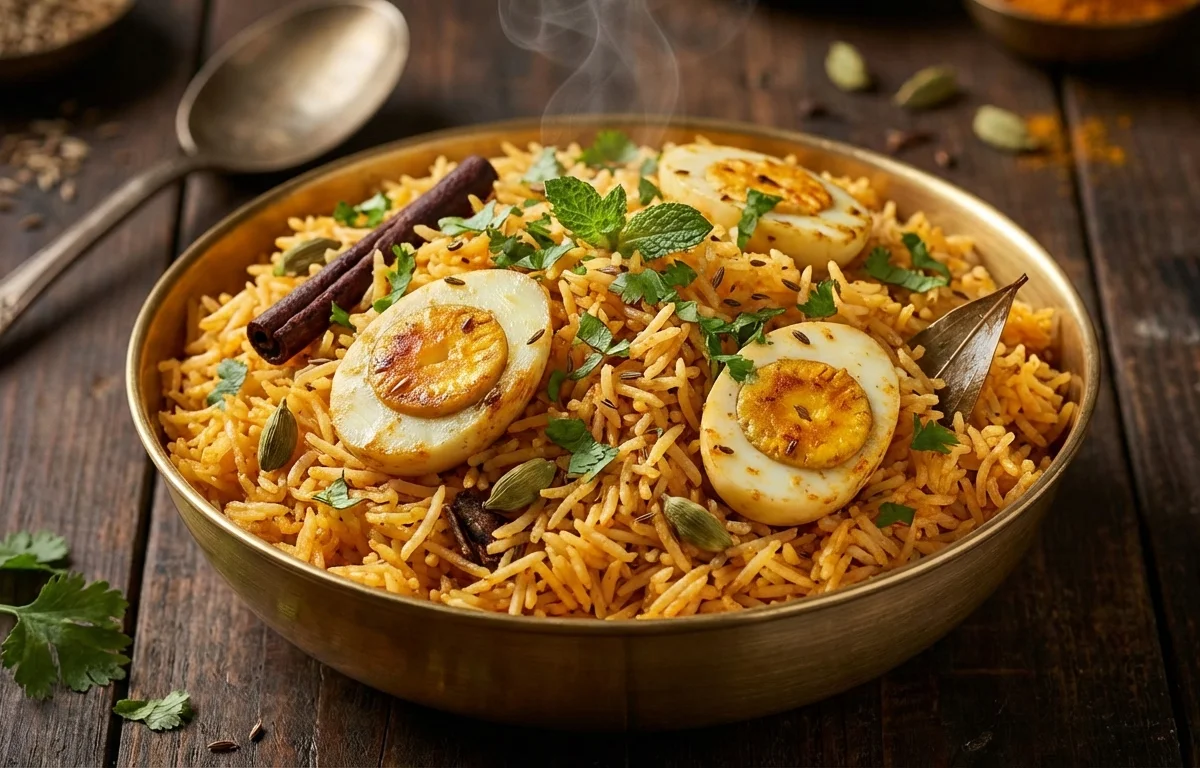
Sindhi Egg Pulao
Fragrant basmati rice cooked with boiled eggs, onions, tomatoes, herbs, and warm whole spices makes this Sindhi-style pulao comforting and festive at the same time. It is flavorful enough to enjoy with just raita or a simple salad.
For 4 servings
- prep · ~20 min
Soak the rice and prep the eggs.
1.Wash the basmati rice until the water runs mostly clear, then soak it in fresh water for 20 minutes.2.Boil the eggs until hard-boiled, peel them, and make 2-3 light slits on each egg.3.Sprinkle the eggs with a little black pepper and set aside.TIPSlitting the eggs helps them absorb the masala without breaking apart later. - saute · ~9 min
Cook the whole spices and onions.
1.Heat oil in a heavy pot over medium heat.2.Add cumin seeds, bay leaf, cinnamon, green cardamom, and cloves; cook until fragrant, about 30 seconds.3.Add sliced onion and cook until light golden, 6-8 minutes.TIPKeep the onions light golden, not dark brown, so the pulao stays fragrant and balanced. - saute · ~7 min
Build the masala base.
1.Add green chili and ginger-garlic paste; cook for 1 minute until the raw smell fades.2.Add tomato and cook until soft and pulpy, 4-5 minutes.3.Add turmeric powder, red chili powder, coriander powder, garam masala, and salt; mix well.4.Lower the heat and stir in the yogurt until the masala looks smooth. - mix · ~3 min
Add the eggs, herbs, and rice.
1.Add the boiled eggs and turn them gently in the masala for 1-2 minutes.2.Add mint and coriander leaves, saving a little for the end.3.Drain the soaked rice and fold it in gently so the grains stay whole. - boil · ~5 min
Add water and bring the pulao to a boil.
Pour in the hot water and add lemon juice. Bring everything to a gentle boil over medium heat, then check the seasoning quickly without stirring too much.
- steam · ~16 min
Cover and cook the pulao on low heat.
Cover the pot tightly and cook on very low heat until the rice is tender and the water is absorbed, 15-18 minutes.
TIPUse the lowest heat once covered so the bottom does not catch and the rice cooks evenly. - rest · ~10 min
Rest the pulao before fluffing.
Turn off the heat and let the pulao rest, covered, for 10 minutes. Fluff gently with a fork so the eggs stay intact and the grains remain separate.
- garnish
Garnish with the remaining herbs and serve.
What to keep in mind.
7 tips from the recipe — small details that make a real difference to the final dish.
- 1Drain the soaked basmati very well before adding it, so the rice stays fluffy instead of turning soft.
- 2Make only shallow slits in the boiled eggs; deep cuts can make them split and crumble in the pot.
- 3Lower the heat before adding whisked yogurt to the masala, or it may split and look grainy.
- 4Cook the tomatoes until the oil starts separating slightly; that is your cue the masala base is ready.
- 5Use a heavy-bottomed pot and keep the final cook on very low heat to prevent the bottom layer from scorching.
- 6After resting, fluff from the sides inward with a fork or flat spoon so the eggs remain whole and the grains stay separate.
- 7Leftovers reheat best with a spoonful of water sprinkled over the rice, covered, so the pulao steams back to softness.
Adapt it for your goals.
Spicier
Add an extra green chili and a little more red chili powder for a hotter pulao that still keeps the same masala profile.
vegetable loadedVegetable-loaded
Stir in peas, diced carrots, or potatoes with the masala for a heartier one-pot meal with more texture.
ghee richGhee-rich
Replace part of the oil with ghee for a fuller, more festive aroma that pairs especially well with whole spices and eggs.
brown riceBrown-rice
Use brown basmati for a nuttier version, but increase water and cooking time since it needs longer to soften.
Why this is on our healthy list.
Protein from Eggs
Boiled eggs add satisfying protein, making this pulao more filling than plain rice dishes.
Herb-Forward Freshness
Mint and coriander bring freshness and plant compounds while balancing the richness of the masala and eggs.
Gentler with Yogurt
A small amount of yogurt adds body and tang to the masala without relying on heavy cream or butter.
Frequently asked questions
Usually the rice was not drained well, got stirred too much after adding water, or cooked with heat that was too high during the covered stage.