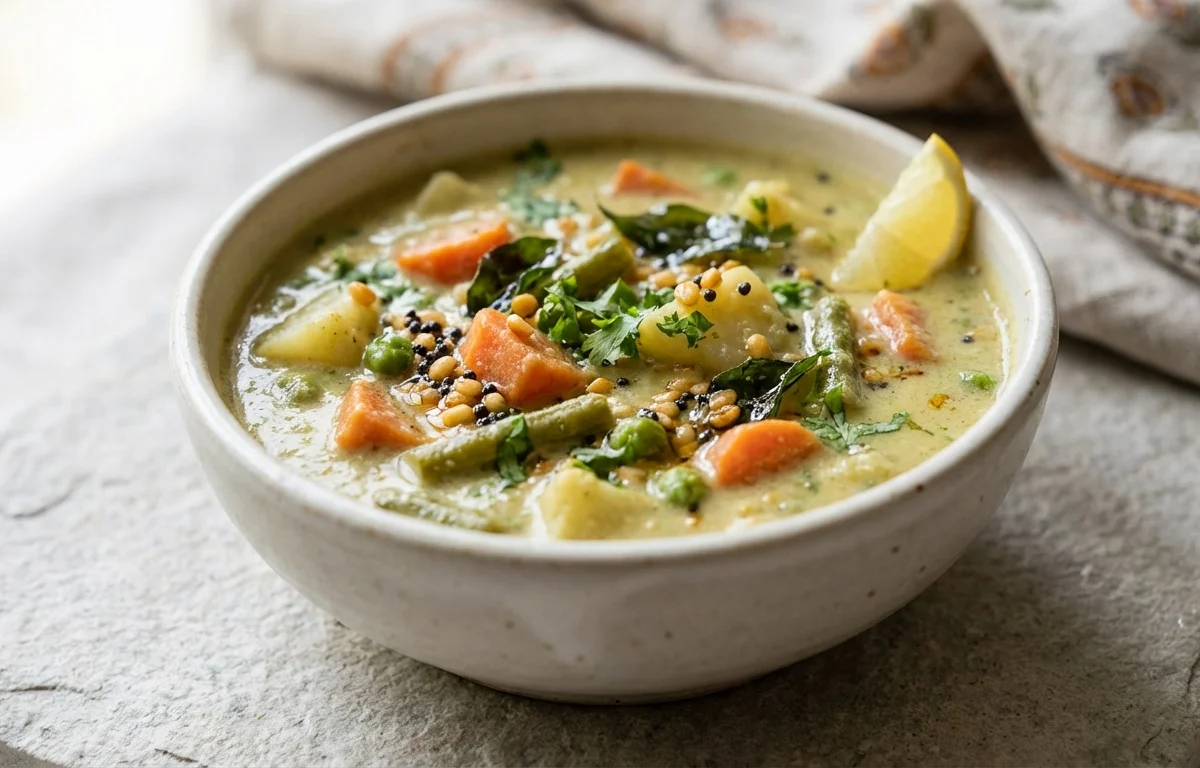
Vegetable Sagu
A gently spiced Karnataka-style mixed vegetable curry with a light coconut and poppy seed masala. It turns soft, fragrant, and mildly creamy, making it a lovely match for poori, set dosa, chapati, or idiyappam.
For 4 servings
- prep · ~15 min
Prep the vegetables and soak the poppy seeds.
1.Cube the potato and carrot into small even pieces.2.Chop the beans and keep the peas ready.3.Slice the onion, chop the tomato, slit the green chilies, and chop the ginger and garlic.4.Soak the poppy seeds in a little water for 15 minutes. - boil · ~12 min
Cook the mixed vegetables.
Add potato, carrot, beans, peas, 1 cup water, turmeric powder, and 0.25 tsp salt to a pan. Cover and cook until the vegetables are tender but still hold their shape.
TIPKeep the vegetables slightly firm so they do not turn mushy when simmered in the masala. - saute · ~2 min
Toast the spices for the masala.
Heat 1 tsp oil in a small pan. Add coriander seeds, cumin seeds, fennel seeds, cinnamon, cloves, and cardamom; cook on low heat until fragrant.
TIPUse low heat here. The whole spices should smell warm and sweet, not darken too much. - mix · ~3 min
Grind the coconut masala.
Blend the toasted spices with fresh coconut, soaked poppy seeds, roasted chana dal, ginger, garlic, and a little water to make a smooth paste.
- temper · ~7 min
Make the tempering.
1.Heat the remaining oil in a pan over medium heat.2.Add mustard seeds and let them splutter.3.Add curry leaves and green chilies and cook for a few seconds.4.Add the sliced onion and cook until soft.5.Add the chopped tomato and cook until it breaks down. - simmer · ~5 min
Cook the masala with the tempering.
Add the ground coconut paste to the pan and cook for 2 to 3 minutes, stirring often. Pour in the remaining 1 cup water and bring it to a gentle simmer.
- simmer · ~7 min
Finish the sagu.
Add the cooked vegetables and remaining salt. Simmer for 5 to 7 minutes until the gravy turns lightly thick and the flavors come together. Stir in lemon juice.
- garnish
Garnish with cilantro.
- serve
Serve the vegetable sagu hot.
What to keep in mind.
7 tips from the recipe — small details that make a real difference to the final dish.
- 1Cut the potato, carrot, and beans to a similar small size so they finish cooking together and keep a neat texture in the gravy.
- 2Do not brown the whole spices while toasting; stop as soon as they smell sweet and aromatic or the masala can turn bitter.
- 3Grind the coconut-poppy seed paste very smooth, adding water little by little, for the classic light, creamy Karnataka-style sagu texture.
- 4Cook the vegetables only until just tender before adding them to the masala, since they will soften further during the final simmer.
- 5Let the tomato fully break down in the tempering before adding the ground paste so the gravy loses any raw tang.
- 6Add the lemon juice only at the end and off the heat or the fresh brightness can dull and the coconut gravy may taste flat.
- 7If the sagu thickens as it sits, loosen it with a splash of hot water before serving with poori or dosa.
Adapt it for your goals.
No-garlic
Skip the garlic for a cleaner, more temple-style flavor while keeping the ginger, coconut, and whole-spice profile intact.
jainJain
Omit onion, garlic, and potato; use extra carrot, beans, peas, and perhaps chow chow for a Jain-friendly version.
spicierSpicier
Add an extra green chili or a small piece while grinding the masala if you want more heat without changing the curry's basic character.
more vegetablesMore-vegetables
Include cauliflower, knol khol, or chow chow for a fuller mixed-veg sagu that pairs especially well with set dosa.
Why this is on our healthy list.
Loaded with Mixed Vegetables
Potato, carrot, beans, peas, onion, and tomato bring a range of fiber, plant compounds, and everyday nourishment to the curry.
Contains Healthy Plant Fats
Fresh coconut and poppy seeds contribute satisfying natural fats that help carry the spice flavors and make the dish more filling.
Includes Digestive Spices
Cumin, fennel, ginger, curry leaves, and coriander seeds add aroma while traditionally supporting easier digestion in rich gravies.
Frequently asked questions
Yes. It keeps well for about 2 days refrigerated. Reheat gently and add a little hot water if the coconut gravy has thickened.