
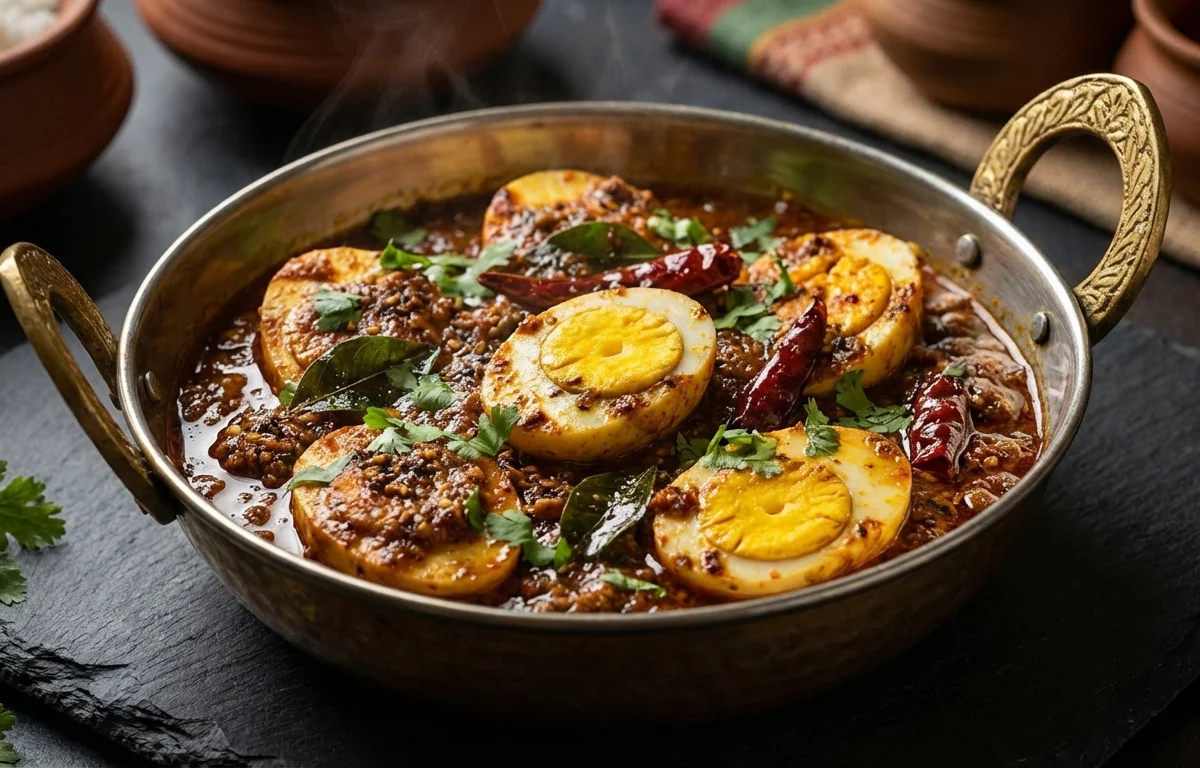
Chettinad Egg Masala Roast
Hard-boiled eggs coated in a bold Chettinad masala with onions, tomatoes, curry leaves, and warm spices. This semi-dry South Indian side is deeply savory, peppery, and perfect with rice, dosa, or parotta.
For 4 servings
- boil · ~12 min
Boil and peel the eggs.
Place the eggs in a pot, cover with water, and boil until hard-cooked. Cool, peel, and make 2-3 light slits on each egg so the masala can coat well.
TIPLight slits help the spices cling to the eggs without breaking them. - temper · ~1 min
Start the tempering.
1.Heat oil in a wide pan over medium heat.2.Add mustard seeds and let them splutter.3.Add fennel seeds and curry leaves.4.Cook for a few seconds until fragrant. - saute · ~9 min
Cook the onion base.
1.Add sliced onion and green chili to the pan.2.Cook until the onions turn soft and lightly golden, 6-8 minutes.3.Add crushed ginger and garlic.4.Cook for 1 minute until the raw smell fades.TIPKeep the heat at medium so the onions brown evenly and the spices do not burn. - saute · ~6 min
Make the masala.
1.Add chopped tomato and salt.2.Cook until the tomatoes soften and turn pulpy, 4-5 minutes.3.Add red chili powder, coriander powder, cumin powder, turmeric powder, garam masala, and crushed black pepper.4.Mix well and cook for 1 minute. - simmer · ~5 min
Cook the masala to a roast consistency.
Pour in water and stir well to loosen the masala. Cook on low heat until the mixture thickens, the oil begins to show at the edges, and the masala turns semi-dry.
TIPAdd only a little water; this dish should roast, not stay gravy-like. - saute · ~4 min
Roast the eggs in the masala.
Add the boiled eggs and turn gently to coat them well in the masala. Cook for 3-4 minutes, rolling the eggs carefully so they pick up flavor on all sides.
- garnish
Finish with coriander leaves.
- serve
Serve hot with rice, dosa, or parotta.
What to keep in mind.
7 tips from the recipe — small details that make a real difference to the final dish.
- 1Make only shallow slits in the eggs; deep cuts can cause them to split while roasting.
- 2Use a wide pan so the eggs can roll in the masala without tearing the onion-tomato base.
- 3Cook the onions to light golden, not dark brown, so the Chettinad spices stay balanced and not bitter.
- 4Let the tomatoes turn fully pulpy before adding spice powders, or the masala will taste raw.
- 5Stop reducing when oil shows at the edges and the masala looks semi-dry; that is the right roast stage.
- 6Rest the dish for 5 minutes before serving so the peppery masala clings better to the eggs.
- 7Leftovers keep well refrigerated for a day; reheat gently in a covered pan so the masala does not dry out.
Adapt it for your goals.
Spicier
Add extra crushed black pepper and one more green chili for a hotter, more traditional pepper-forward Chettinad profile.
low oilLow-oil
Use a nonstick pan and slightly reduce the oil; cook the onions slowly so the masala still roasts without turning greasy.
gravy styleGravy-style
Add a little more water and stop reducing earlier if you want a looser masala to serve with idiyappam or rice.
paneerPaneer
Replace eggs with paneer cubes for a vegetarian roast that carries the same bold onion-tomato spice coating.
Why this is on our healthy list.
Protein-Rich Main Ingredient
Eggs make this roast filling and satisfying, helping turn a side dish into a more substantial meal.
Aromatic Spice Benefits
Ginger, garlic, black pepper, cumin, and fennel add depth while bringing traditional digestive and warming qualities.
Tomato and Onion Base
The onion-tomato masala adds plant compounds and savory body without needing heavy cream or rich sauces.
Frequently asked questions
Light slits help the masala adhere to the eggs and let some of the spice mixture season the surface more deeply.


