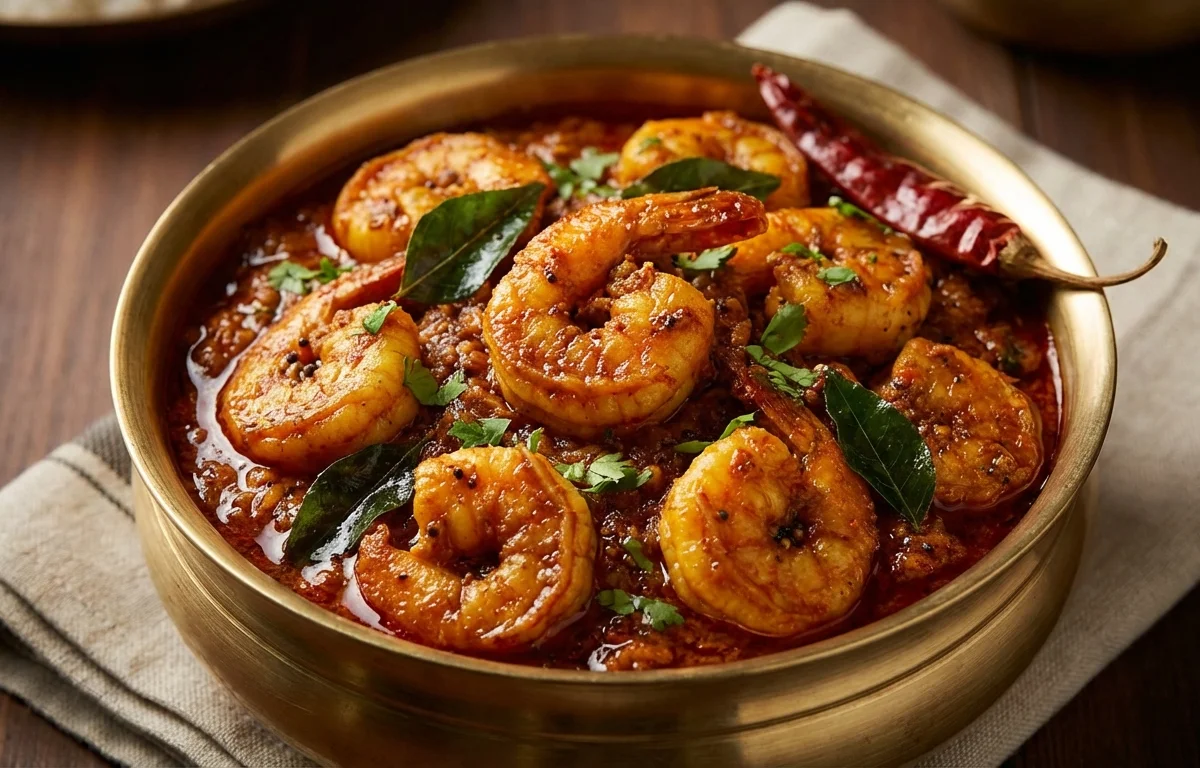
Chettinad Eral Masala
A bold South Indian prawn dish with black pepper, fennel, curry leaves, and a roasted coconut-spice masala. It cooks quickly, tastes deeply savory, and pairs beautifully with rice, dosa, or simple rasam on the side.
For 4 servings
- prep · ~10 min
Marinate the prawns.
1.Place the cleaned prawns in a bowl.2.Add turmeric powder, lemon juice, and a little of the salt.3.Mix well and set aside for 10 minutes.TIPKeep the marination short so the lemon does not start curing the prawns. - roast · ~4 min
Roast the Chettinad masala ingredients.
1.Heat a dry pan over low heat.2.Add coconut, coriander seeds, fennel seeds, cumin seeds, black peppercorns, dried red chili, cinnamon, and cloves.3.Roast gently until the coconut turns light golden and the spices smell fragrant.TIPRoast on low heat and keep stirring so the coconut browns evenly without burning. - mix · ~2 min
Grind the roasted masala.
Cool the roasted ingredients slightly, then grind them to a coarse paste with a little of the water. The texture should stay slightly grainy, not completely smooth.
- saute · ~7 min
Cook the onion base.
1.Heat oil in a kadai over medium heat.2.Add curry leaves, onion, garlic, ginger, and green chili.3.Cook until the onions turn soft and light golden. - saute · ~6 min
Add tomato and the ground masala.
1.Add tomato and cook until soft and pulpy.2.Add red chili powder and the remaining salt.3.Stir in the ground masala paste and cook until the raw smell fades and the oil starts to show at the edges. - simmer · ~6 min
Cook the prawns in the masala.
Add the marinated prawns and toss well to coat. Pour in the remaining water, cover loosely, and cook just until the prawns turn pink, curl, and the masala becomes semi-dry.
TIPDo not overcook the prawns; they turn rubbery very quickly. - garnish
Garnish with coriander leaves.
- serve
Serve hot with rice, dosa, or chapati.
What to keep in mind.
7 tips from the recipe — small details that make a real difference to the final dish.
- 1Keep the lemon-turmeric marinade to about 10 minutes so the prawns stay juicy, not cured.
- 2Roast the coconut and whole spices on low heat only; burnt coconut will make the masala bitter.
- 3Grind the roasted mix slightly coarse rather than silky smooth for a more authentic Chettinad texture.
- 4Cook the onion mixture until light golden before adding tomato so the masala gets depth and sweetness.
- 5Wait for oil to appear at the edges after adding the ground paste; that is the cue the masala is properly cooked.
- 6Add the prawns only at the end and cook just until pink and curled into a loose C-shape.
- 7This dish reheats well once, but warm it gently over low heat to avoid toughening the prawns.
Adapt it for your goals.
Low-oil
Use less oil and a splash more water while cooking the masala; you still get the same spice profile with a lighter finish.
extra spicyExtra-spicy
Increase black peppercorns and dried red chilies for a hotter, more traditional pepper-forward Chettinad profile.
squidSquid
Replace prawns with cleaned squid rings for a similar coastal masala dish with a slightly firmer bite.
gravy styleGravy-style
Add a little more water after the masala cooks if you want a looser version to serve with plain rice.
Why this is on our healthy list.
Protein-Rich Seafood
Prawns provide lean protein, making this masala satisfying without relying on heavy dairy or rich gravies.
Spice-Driven Flavor
Black pepper, cumin, fennel, ginger, and garlic bring strong flavor, so the dish tastes bold with a modest amount of oil.
Includes Aromatic Herbs
Curry leaves and coriander leaves add freshness and plant compounds along with the deep roasted spice base.
Frequently asked questions
They turn pink and opaque and curl into a loose C-shape. If they tighten into small O-shapes, they are likely overcooked.