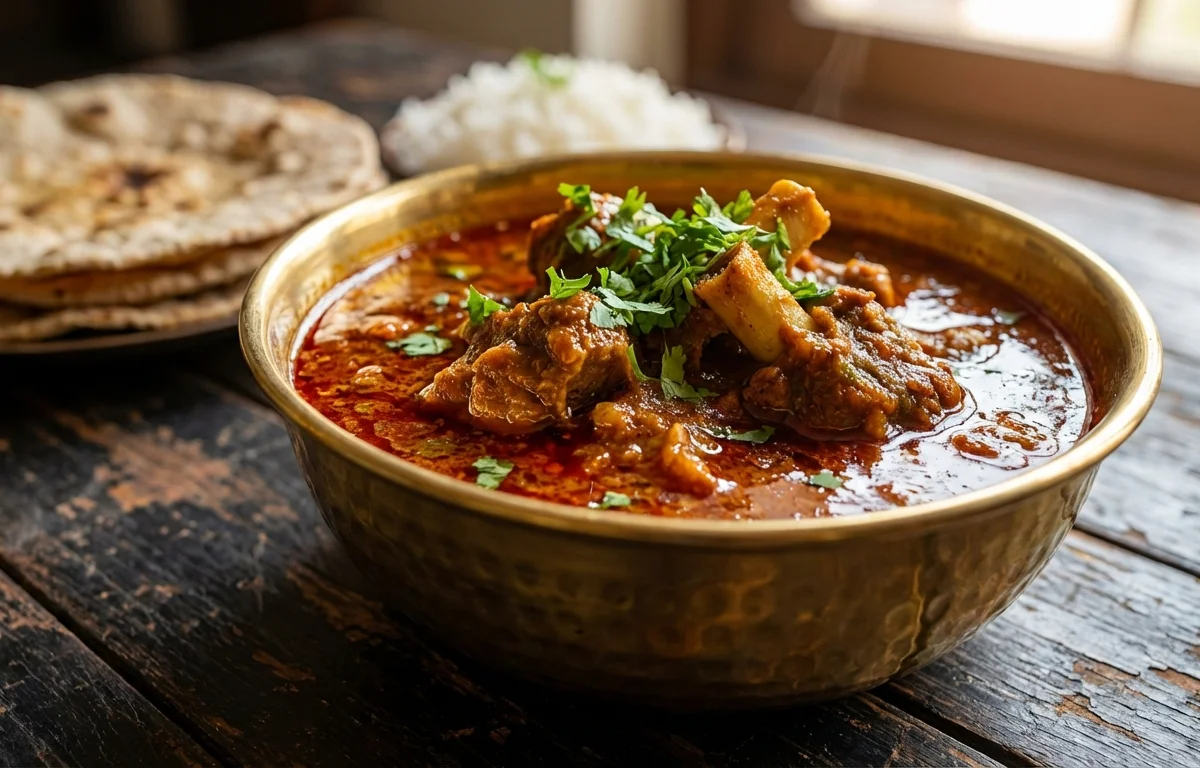
Kolhapuri Mutton Curry
A fiery, deeply aromatic mutton curry from the Kolhapur region of Maharashtra. Slow-cooked bone-in mutton pieces swim in a robust gravy made from a freshly roasted blend of coconut, onion, and whole spices. The signature heat comes from dried red chilies, balanced by the rich nuttiness of fresh grated coconut and poppy seeds.
For 4 servings
- prep
Wash and marinate the mutton.
1.Wash 500g bone-in mutton pieces thoroughly under running water.2.Drain and keep aside. - roast · ~10 min
Dry roast the masala base.
1.Heat a heavy bottom pan on medium-low heat. Add 8 dried red chilies, 2 tbsp coriander seeds, 1 tbsp poppy seeds, 1-inch cinnamon, 4 cloves, 6 black peppercorns, and 4 stone flower.2.Dry roast for 2-3 minutes, stirring continuously until aromatic. Transfer to a plate.3.In the same pan, add 0.5 cup fresh grated coconut and 2 roughly chopped onions.4.Roast until the coconut turns golden brown and onions soften (5-7 minutes). Remove and cool.TIPRoast the coconut slowly—rushing it will burn the outside before the inside dries out. - mix · ~2 min
Grind the Kolhapuri masala paste.
1.Transfer the roasted spices, coconut, and onions to a blender.2.Add a little water and grind to a smooth, thick paste. Keep aside. - temper · ~10 min
Make the tempering and fry the base.
1.Heat 2 tbsp oil in the pressure cooker over medium heat.2.Add 2 bay leaves and sauté until fragrant (10 seconds).3.Add 1 finely chopped onion and cook until deep golden brown (7-8 minutes).4.Add 1 tbsp ginger-garlic paste and sauté until raw smell disappears (1 minute).TIPTake your time browning the onions—their deep colour is the base of the rich gravy. - saute · ~9 min
Cook the masala.
1.Lower the heat and add 1 pinch turmeric powder and 1 tsp red chili powder. Stir for 30 seconds.2.Add the ground Kolhapuri masala paste. Cook, stirring frequently, until oil separates (6-8 minutes).TIPKeep stirring to prevent the masala from sticking and burning at the bottom. - saute · ~4 min
Sear the mutton in the masala.
1.Add the mutton pieces to the cooker. Sauté on high heat for 3-4 minutes until the meat is well coated and lightly browned.2.Add 0.5 tsp salt and mix well.TIPSearing the mutton in the masala locks in flavour before pressure cooking. - pressure cook · ~25 min
Pressure cook the mutton.
1.Pour in 2 cups of water and stir well.2.Close the pressure cooker lid and cook on high heat until 1 whistle.3.Reduce heat to low and cook for 20-25 minutes (or 4-5 more whistles).4.Turn off heat and let pressure release naturally.TIPNatural pressure release ensures the mutton stays tender and doesn't toughen up. - simmer · ~5 min
Finish the curry.
1.Open the lid once pressure drops. Check mutton tenderness.2.Add 1 cup of water if a thinner gravy is desired.3.Add 1 tsp garam masala and simmer on medium heat for 5 minutes. - garnish
Garnish and serve hot.
1.Taste and adjust salt if needed.2.Garnish with 2 tbsp chopped coriander leaves.3.Serve piping hot with bhakri, chapati, or plain steamed rice.
What to keep in mind.
6 tips from the recipe — small details that make a real difference to the final dish.
- 1Use Kolhapuri lavangi chilies for authentic heat, or replace a few Byadgi with them if extra fire is desired.
- 2Roast the fresh coconut until it turns deep golden, not just light brown, for maximum nutty depth in the masala.
- 3Let the pressure release naturally after cooking—don't quick-release, or the mutton may turn chewy.
- 4Cook the ground masala until oil visibly separates on the sides of the pan; this ensures no raw taste remains.
- 5Add warm water when adjusting gravy consistency after pressure cooking to avoid shocking the hot curry.
- 6This curry tastes even better the next day—refrigerate overnight and reheat gently for deeper flavors.
Adapt it for your goals.
Less-oil
Reduce oil to 1 tablespoon and dry-roast the second onion instead of frying—still delicious, with a lighter finish for those watching fat intake.
chickenChicken
Replace mutton with 500g bone-in chicken legs or thighs. Skip pressure cooking; simmer covered for 20-25 minutes on low heat after sautéing, as chicken cooks faster.
vegan (with plant based meat)Vegan (with plant-based meat)
Substitute mutton with 400g soy chunks or seitan, and use coconut oil or vegan butter. Cook time reduces to 15-20 minutes as the plant protein absorbs the gravy quickly.
Why this is on our healthy list.
Rich in Iron from Mutton
Bone-in mutton provides heme iron, which is easily absorbed and supports healthy red blood cells and energy levels.
Antioxidants from Spices
Dried red chilies, coriander seeds, turmeric, and cloves are loaded with antioxidants that help combat inflammation and oxidative stress.
Healthy Fats from Coconut
Fresh grated coconut adds medium-chain triglycerides (MCTs) that can support brain function and provide sustained energy.
Digestive Aid from Poppy Seeds
Poppy seeds contain dietary fiber and traditional digestive properties that complement the richness of this heavy curry.
Frequently asked questions
Yes, but the fresh roasted aromas—particularly from coconut, onion, and whole spices—will be significantly muted. For authentic depth, stick to the scratch method, or use a quality masala and add extra roasted coconut paste.