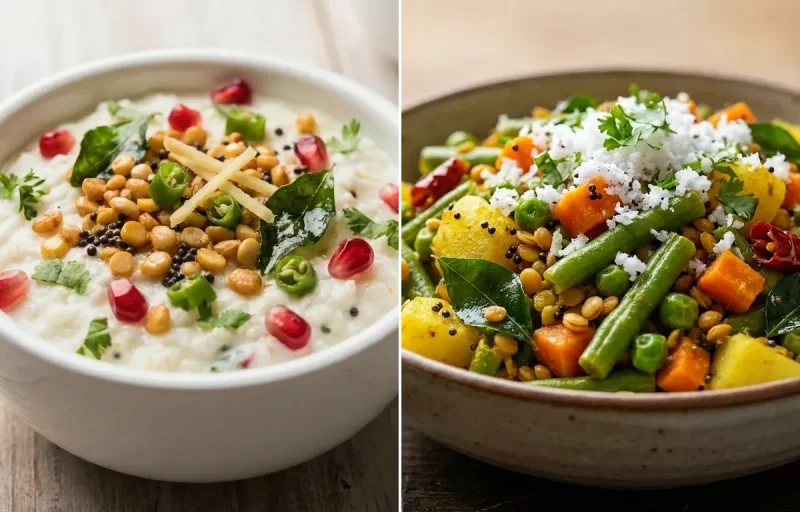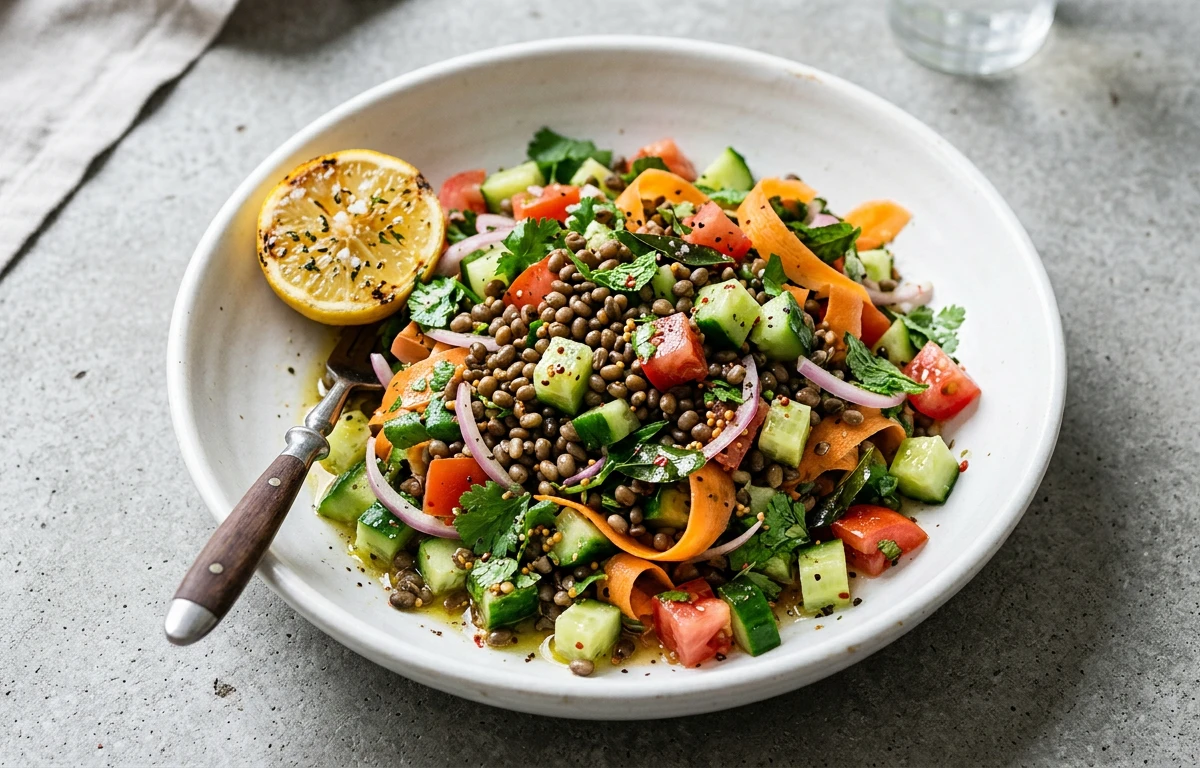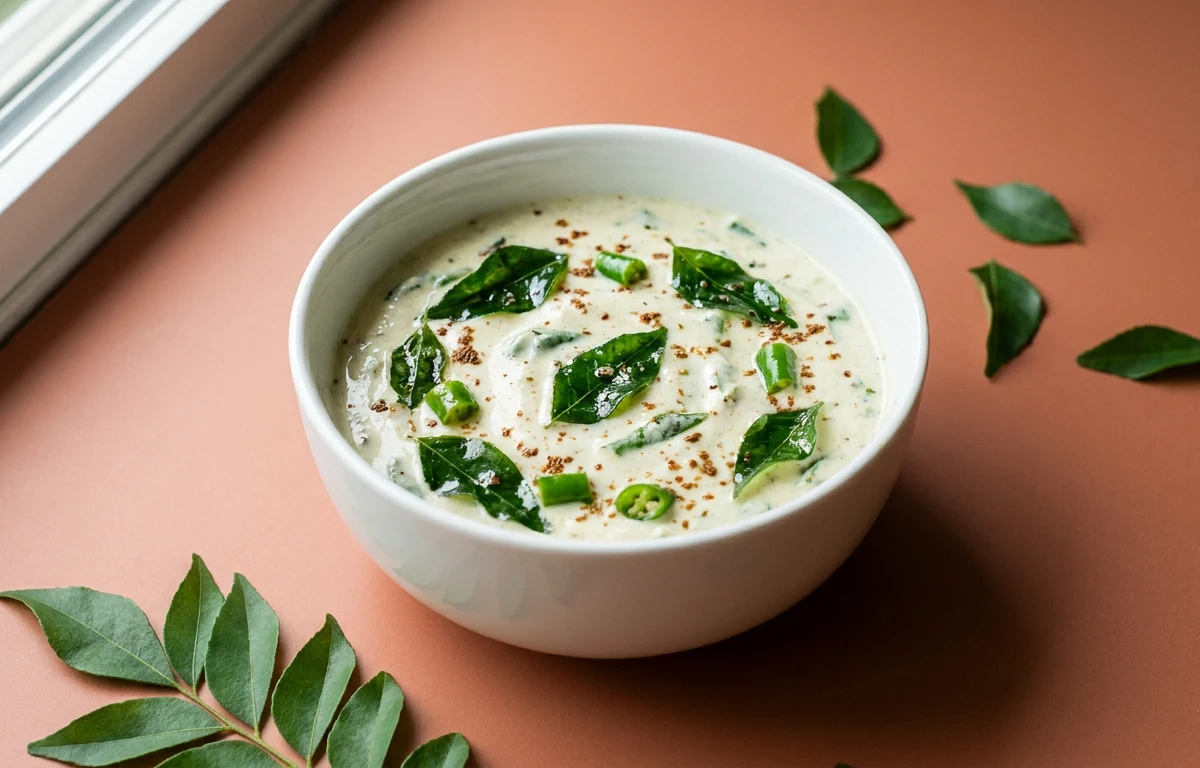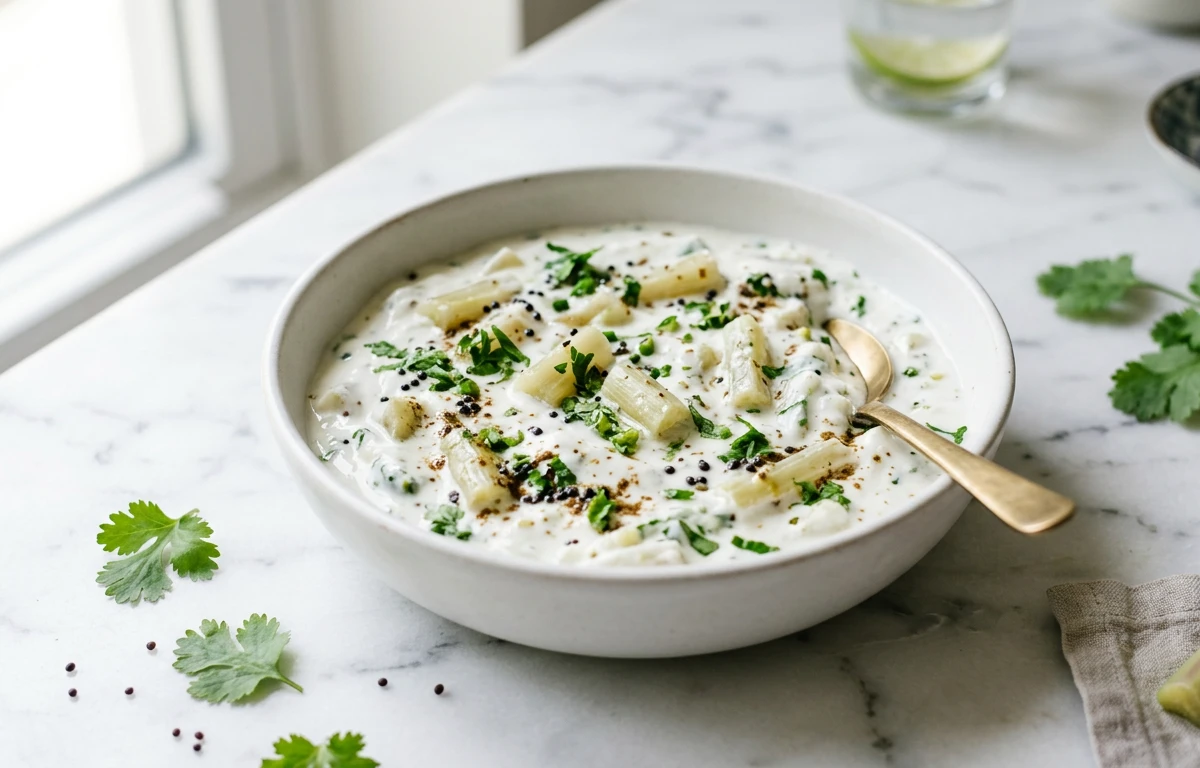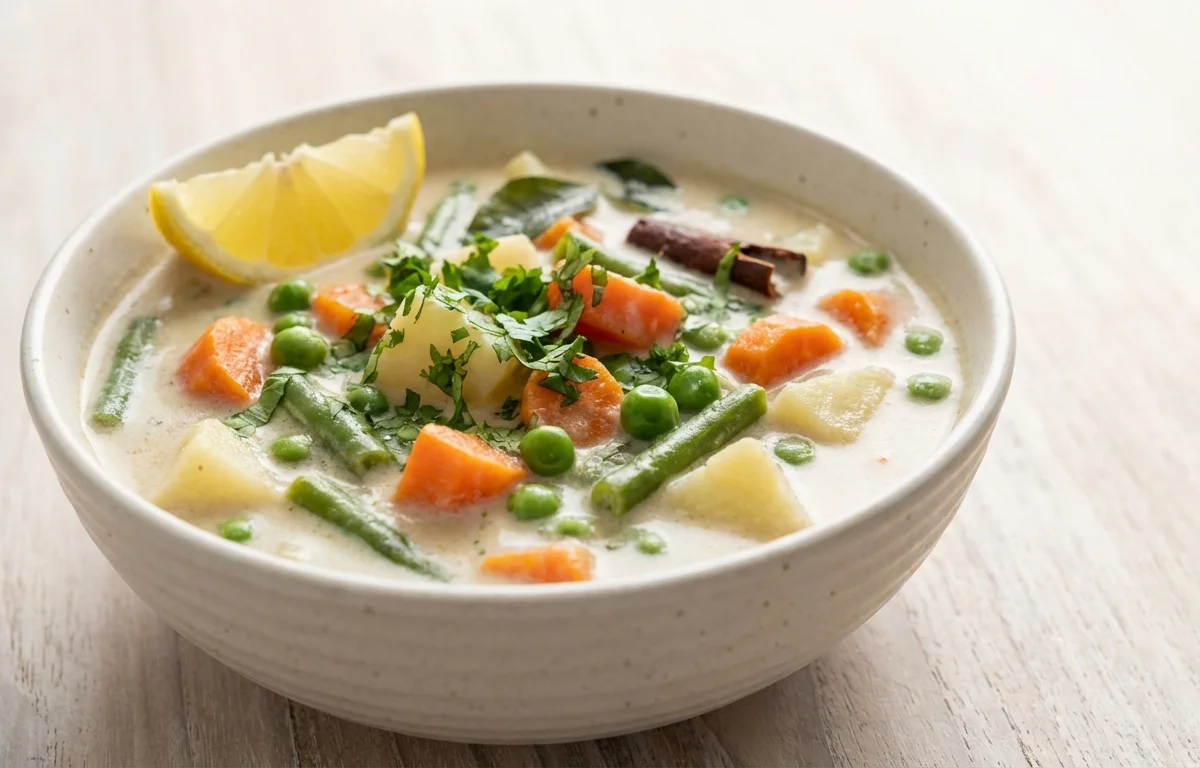
Mangalorean Vegetable Stew
A fragrant, creamy coconut-based stew with mixed vegetables from the coastal region of Mangalore. This mildly spiced dish features a freshly ground coconut masala paste with a subtle tang from tamarind. Pairs beautifully with appam, neer dosa, or steamed rice.
For 4 servings
- prep · ~10 min
Prepare the vegetables.
1.Peel and cube the potato and carrot into bite-sized pieces.2.Trim the green beans and cut into 1-inch lengths.3.Soak the tamarind in 2 tbsp warm water for 10 minutes, then squeeze to extract the pulp. Discard the solids. - boil · ~10 min
Cook the vegetables.
1.Place the cubed potato, carrot, and green beans in a pan with 1 cup of water and turmeric powder.2.Bring to a boil and cook until the vegetables are just tender but still firm (about 8-10 minutes).3.Add the green peas in the last 2 minutes.TIPDon't overcook the vegetables — they should retain a slight bite as they'll simmer further in the gravy. - prep · ~3 min
Grind the coconut masala paste.
1.In a mixer grinder, add the grated coconut, cumin seeds, coriander seeds, black peppercorns, garlic cloves, and green chilies.2.Add 0.25 cup of water and grind to a very smooth, fine paste. Set aside.TIPGrind until the coconut releases its oil and the paste feels creamy between your fingers — this is the secret to a rich stew. - temper · ~6 min
Make the tempering.
1.Heat coconut oil in a heavy-bottomed pan over medium heat.2.Add mustard seeds and let them splutter (30 seconds).3.Add dried red chilies and curry leaves. Stir until fragrant (15 seconds).4.Add sliced onion and sauté until translucent and soft (4-5 minutes). - simmer · ~5 min
Add the masala paste and cook.
1.Lower the heat and add the ground coconut masala paste to the pan.2.Stir continuously and cook for 4-5 minutes until the raw smell disappears and the mixture thickens slightly.3.Add the tamarind pulp and mix well.TIPKeep the heat low while cooking the coconut paste to prevent it from scorching or spitting. - simmer · ~10 min
Simmer the stew with vegetables.
1.Add the cooked vegetables along with their cooking water into the pan.2.Add the remaining 0.25 cup of water, if needed, for a thin, stew-like consistency.3.Season with salt and stir gently to combine.4.Bring to a gentle simmer and cook for 8-10 minutes for the flavors to meld.TIPThe stew should have a thin, milky consistency — not too thick. The flavors deepen as it rests. - rest · ~5 min
Rest the stew before serving.
Turn off the heat and let the stew rest for 5 minutes. This allows the coconut flavors to fully bloom.
TIPA short rest off the heat makes a noticeable difference — the gravy turns silkier and more fragrant. - serve
Serve the Mangalorean Vegetable Stew.
Transfer to a serving bowl. Serve hot with appam, neer dosa, or steamed rice.
What to keep in mind.
7 tips from the recipe — small details that make a real difference to the final dish.
- 1Cut vegetables into uniform bite-sized pieces for even cooking and a better texture.
- 2Grind the coconut masala until very smooth and creamy for a rich, luscious gravy.
- 3Keep the heat low when cooking the coconut paste to prevent scorching or spitting.
- 4Do not overcook the vegetables initially; they will cook further in the stew.
- 5Let the stew rest for 5 minutes off the heat to allow the coconut flavors to bloom.
- 6Taste and adjust salt and tamarind just before serving for a balanced tang.
- 7This stew thickens slightly on standing, so keep it a touch thinner initially.
Adapt it for your goals.
Low-oil
Replace the coconut oil tempering with a water-based tadka: sauté mustard seeds, red chilies, and curry leaves in 1 teaspoon of oil or dry roast them briefly, then proceed. Great for those reducing oil without losing tempering aroma.
high proteinHigh-protein
Add 200g of cubed paneer or firm tofu along with the green peas for a protein boost. The mild coconut gravy complements the extra ingredient perfectly without overpowering it.
veganVegan
This recipe is already vegan (no dairy), but ensure your appam or neer dosa accompaniment is also vegan by using coconut milk instead of dairy in those recipes.
spicy versionSpicy-version
Add 1-2 more slit green chilies or a teaspoon of red chili powder to the coconut paste for those who prefer a spicier stew. Adjust to taste.
Why this is on our healthy list.
Rich in Dietary Fiber
The mix of vegetables like beans, carrots, and peas provides a good amount of fiber, supporting healthy digestion and satiety.
Heart-Friendly Fats
Coconut contains medium-chain triglycerides (MCTs), and a small amount of coconut oil offers a source of healthy fats that may support heart health when used in moderation.
Packed with Antioxidants
Turmeric, curry leaves, and fresh coconut are rich in antioxidants that help combat oxidative stress and inflammation.
Vitamin A from Carrots
Carrots contribute beta-carotene, which the body converts to vitamin A for healthy vision and immune function.
Naturally Gluten-Free & Vegan
This stew is free from gluten and animal products, making it suitable for a wide range of dietary preferences and sensitivities.
Frequently asked questions
Yes, use ½ cup of unsweetened desiccated coconut rehydrated in ¼ cup of warm water for 10 minutes. Fresh coconut gives a creamier result, but this works well.