Masale Bhat
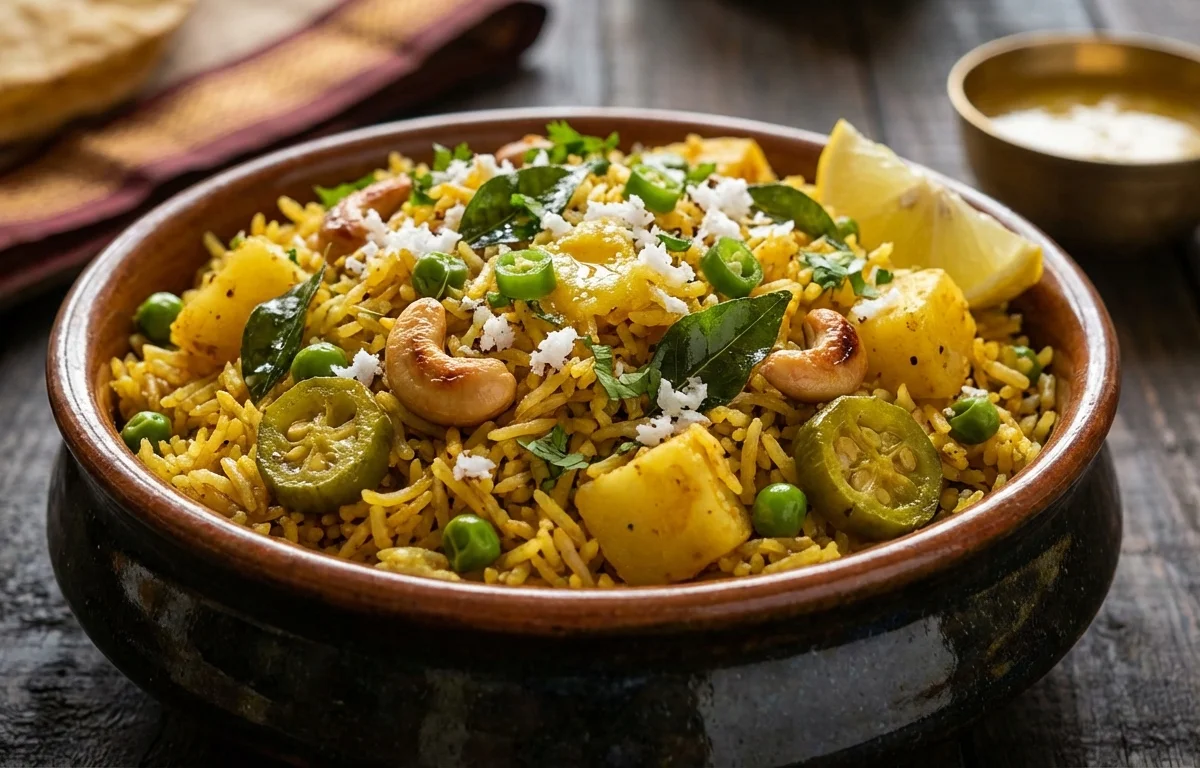
A homestyle Maharashtrian rice dish cooked with vegetables, goda masala, peanuts, and a little coconut. It is fragrant, gently spiced, and comforting, with every grain soaking up the warm, earthy flavors.
For 4 servings
- prep · ~20 min
Prepare the rice and vegetables.
1.Wash the rice well until the water runs mostly clear.2.Soak the rice in water for 20 minutes, then drain completely.3.Cube the eggplant and potato, slice the ivy gourd, slit the green chili, and grate the coconut.4.Keep the hot water ready so the rice cooks evenly once added.TIPDrain the soaked rice well so the grains stay separate and do not turn sticky. - temper · ~2 min
Make the tempering.
1.Heat the ghee in a heavy pan or pressure cooker over medium heat.2.Add mustard seeds and let them splutter.3.Add cumin seeds, asafoetida, curry leaves, and green chili.4.Stir for a few seconds until fragrant. - saute · ~6 min
Cook the peanuts and vegetables.
1.Add the peanuts and cook for 1 to 2 minutes.2.Add the potato, ivy gourd, eggplant, and green peas.3.Sprinkle in turmeric powder, red chili powder, goda masala, and salt.4.Mix well and cook for 4 to 5 minutes until the vegetables are lightly coated and a little tender.TIPStir gently after adding eggplant so it keeps its shape. - saute · ~2 min
Add the rice and coconut.
Add the drained rice and grated coconut to the pan. Mix gently for 1 to 2 minutes so the grains are coated with the masala and ghee without breaking.
- boil · ~4 min
Add hot water and bring it to a boil.
Pour in the hot water and stir gently once. Let the mixture come to a steady boil over medium heat.
- steam · ~15 min
Cover and cook the bhat.
Cover the pan with a tight lid and cook on low heat for 12 to 15 minutes, until the rice is tender and the water is absorbed.
TIPDo not stir while the rice cooks or the grains may turn mushy. - rest · ~5 min
Rest the rice off the heat.
Turn off the heat and let the masale bhat rest, covered, for 5 minutes so the steam finishes the cooking.
- garnish
Finish with cilantro and lemon juice.
Fluff the rice gently with a fork or flat spoon. Add cilantro and lemon juice, then mix lightly.
- serve
Serve the masale bhat hot.
What to keep in mind.
7 tips from the recipe — small details that make a real difference to the final dish.
- 1Drain the soaked rice very well before adding it, or the bhat can turn soft instead of fluffy.
- 2Fry the peanuts in ghee until aromatic before the vegetables go in, so they stay slightly crunchy after steaming.
- 3Use a heavy-bottomed pan with a tight lid to prevent the bottom layer from catching during the low-heat cook.
- 4After adding hot water, stir only once; repeated stirring releases starch and makes the grains sticky.
- 5Resting the bhat for 5 minutes off the heat is important because the potato and rice finish cooking in trapped steam.
- 6Add lemon juice only after cooking, not before, so the rice softens properly and the fresh tang stays bright.
- 7If making ahead, cool it uncovered first, then refrigerate and reheat with a spoonful of water to loosen the grains.
Adapt it for your goals.
Vegan
Replace ghee with peanut oil or coconut oil for a fully plant-based version that still carries the spices well.
no peanutNo-peanut
Skip the peanuts if needed for allergy concerns; add a little extra coconut for texture and richness.
more vegetableMore-vegetable
Add cauliflower, carrots, or cluster beans along with the existing vegetables for a heartier festive-style masale bhat.
spicierSpicier
Increase green chilies and red chili powder slightly if you want a hotter, sharper finish without changing the base character.
Why this is on our healthy list.
Vegetable-rich meal
Eggplant, peas, ivy gourd, and potato make this rice dish more balanced and add fiber, variety, and plant nutrients.
Includes healthy fats
Peanuts, coconut, and ghee add richness that makes the dish satisfying and helps carry the fat-soluble spice flavors.
Plant-based protein support
Peanuts and green peas contribute some plant protein, making the bhat more filling than plain spiced rice.
Frequently asked questions
Usually the rice was not drained well, too much water was used, or the rice was stirred too much after adding the liquid.



.webp)