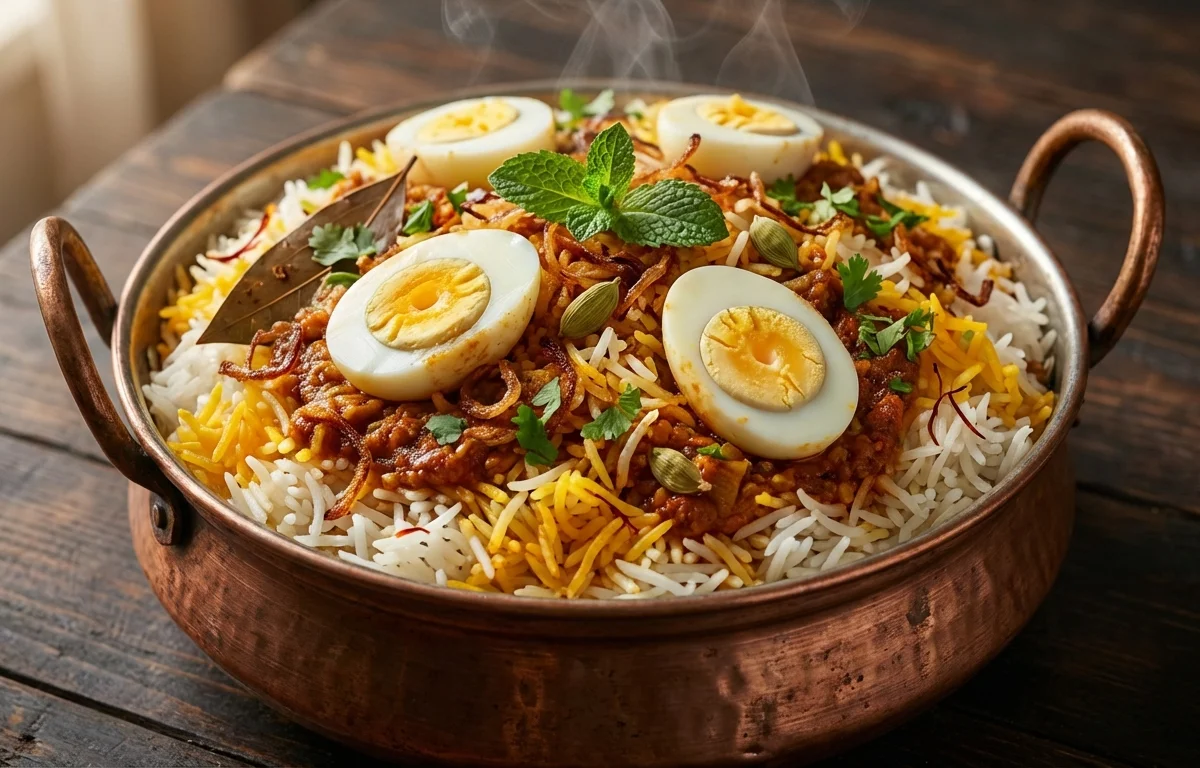
Punjabi Egg Biryani
Fragrant basmati rice layered with spiced eggs, mint, coriander, and a rich onion-tomato masala. This Punjabi-style biryani is hearty, aromatic, and made for a satisfying family meal without feeling too heavy.
For 4 servings
- prep · ~20 min
Soak the rice and prepare the eggs.
1.Rinse the basmati rice until the water runs mostly clear, then soak it in fresh water for 20 minutes.2.Boil the eggs until hard-cooked, peel them, and keep them ready.3.Slice the onion, chop the tomato, slit the green chili, and whisk the yogurt.TIPDrain the soaked rice well so the grains stay separate while parboiling. - boil · ~8 min
Parboil the rice.
1.Bring 6 cups water to a boil with bay leaf, green cardamom, cloves, cinnamon, and 0.5 tsp salt.2.Add the drained rice and cook until it is about 70 percent done, 5 to 6 minutes.3.Drain the rice right away and spread it lightly so it does not keep cooking.TIPThe grain should still have a slight bite in the center because it will finish cooking on dum. - saute · ~12 min
Cook the onion-tomato masala.
1.Heat ghee in a heavy pan over medium heat.2.Add cumin seeds and let them sizzle for a few seconds.3.Add the sliced onion and cook until golden, 6 to 8 minutes.4.Add ginger-garlic paste and green chili, then sauté for 1 minute.5.Add tomato, turmeric powder, red chili powder, coriander powder, garam masala, black pepper, and 0.25 tsp salt. Cook until the tomatoes soften and the masala looks thick.TIPCook the onions properly for deep biryani flavor, but do not let the spices burn. - simmer · ~4 min
Finish the egg masala.
Lower the heat and stir in the yogurt. Add 0.25 cup water and cook gently for 2 to 3 minutes until the masala is coated and slightly saucy. Add the boiled eggs and lemon juice, turning the eggs so they pick up the masala well.
- assemble · ~3 min
Layer the biryani.
1.Spread half of the rice over the egg masala in the pan.2.Scatter half of the mint and half of the coriander leaves on top.3.Add the remaining rice, then finish with the rest of the mint and coriander leaves. - rest · ~15 min
Cover and cook on dum.
Cover the pan tightly and cook on very low heat for 12 to 15 minutes so the rice finishes cooking and the flavors come together.
TIPUse a heavy pan and low heat so the bottom does not scorch. - serve · ~5 min
Rest briefly and serve the biryani.
Turn off the heat and let the biryani sit covered for 5 minutes. Fluff gently from the side so the rice grains stay long, then serve hot.
What to keep in mind.
7 tips from the recipe — small details that make a real difference to the final dish.
- 1Prick the boiled eggs lightly with a fork before adding them to the masala so they absorb more flavor.
- 2Do not cook the rice past 70% done; the grains should still feel firm in the center before dum.
- 3Let the onions turn properly golden, not just soft, because they give this biryani much of its sweetness and depth.
- 4Lower the heat before stirring in yogurt so it blends smoothly into the masala instead of splitting.
- 5Seal the lid tightly during dum; if needed, place foil under the lid to trap steam.
- 6After dum, fluff from the edges inward with a flat spoon to keep the basmati grains long and separate.
- 7Leftovers reheat best with a spoonful of water sprinkled over the rice, covered, on low heat.
Adapt it for your goals.
Spicier
Increase green chili and red chili powder for a hotter Punjabi-style biryani with a stronger kick.
low oilLow-oil
Use less ghee and sauté the onions a bit slower; the dish stays aromatic but feels lighter for everyday meals.
fried egg styleFried-egg-style
Shallow-fry the boiled eggs with a pinch of turmeric and chili before adding them to the masala for extra color and a richer taste.
vegetable eggVegetable-egg
Add peas or cubed potatoes to the onion-tomato masala to make the biryani heartier and stretch it for more servings.
Why this is on our healthy list.
Good Protein from Eggs
Boiled eggs make this biryani more satisfying and add high-quality protein that helps turn it into a complete meal.
Herb-Rich and Aromatic
Mint, coriander, ginger, garlic, and whole spices add freshness and strong flavor without needing heavy cream or rich gravies.
Balanced Richness
Yogurt and tomato give the masala body and tang, which helps balance the ghee and keeps the dish from feeling overly greasy.
Frequently asked questions
Yes. You can boil the eggs, parboil the rice, and make the masala a few hours ahead, then layer and cook on dum just before serving.



.webp)