
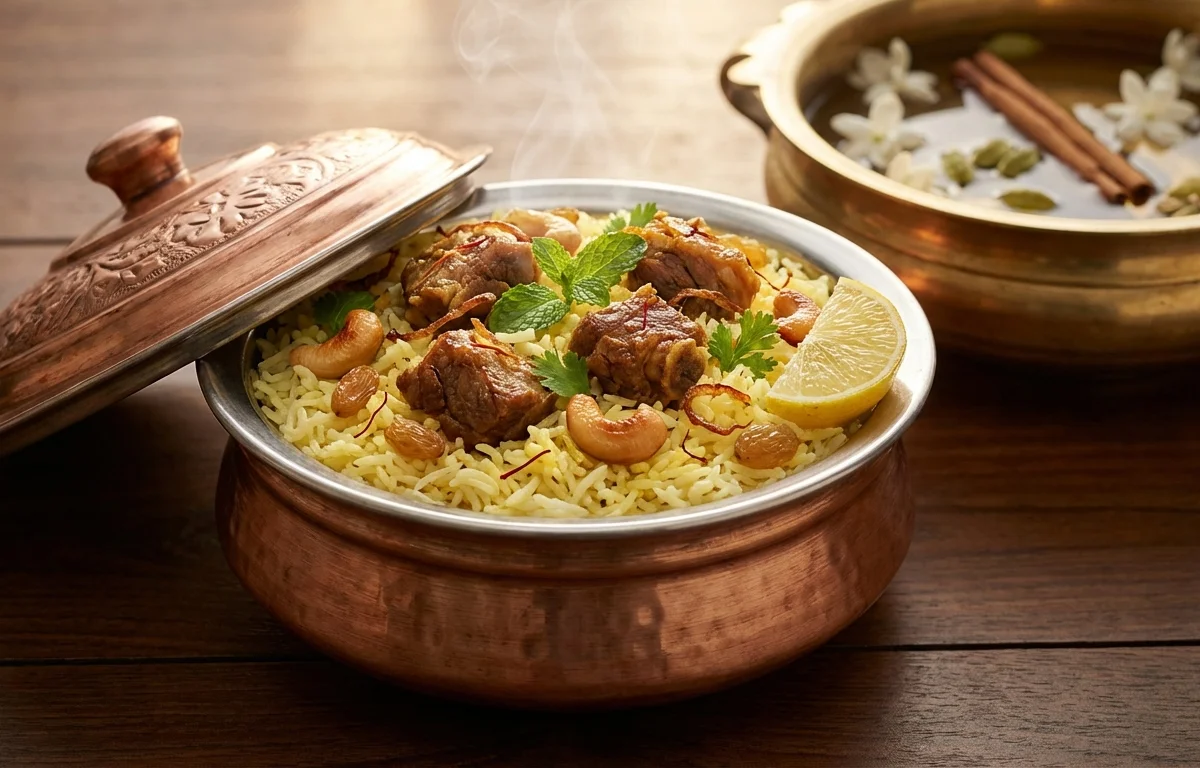
Thalassery Mutton Biryani
Fragrant Kerala-style biryani made with tender mutton, short-grain jeerakasala rice, fried onions, warm spices, herbs, and a gentle dum finish. Rich but balanced, it is layered for aroma rather than heavy masala.
For 4 servings
- prep · ~30 min
Soak the rice and prep the garnishes.
1.Wash the jeerakasala rice gently until the water runs mostly clear.2.Soak the rice in fresh water for 30 minutes, then drain well.3.Slice the onions, chop the tomatoes, slit the green chilies, and crush the ginger and garlic.4.Soak the saffron in warm milk and keep it aside.TIPDrain the rice well after soaking so the grains stay separate while cooking. - fry · ~12 min
Fry the onions, cashews, and raisins.
1.Heat the oil and 1 tbsp ghee in a wide pan over medium heat.2.Fry the sliced onions until golden and crisp, then remove and keep aside.3.In the same fat, fry the cashews until light golden.4.Fry the raisins just until they puff, then remove.TIPTake the onions out just before they look deeply browned; they darken more as they cool. - pressure cook · ~35 min
Cook the mutton until tender.
1.Add the mutton, 0.5 cup yogurt, turmeric powder, red chili powder, black pepper, and 0.25 tsp salt to a pressure cooker.2.Add 1.5 cups water and mix well.3.Pressure cook on medium heat until the mutton is tender, about 20 to 25 minutes after full pressure.4.Let the pressure fall naturally and reserve the cooked mutton with its liquid. - saute · ~10 min
Make the biryani masala.
1.Heat the remaining 1 tbsp ghee in a heavy pot over medium heat.2.Add cinnamon, cardamom, cloves, bay leaves, star anise, and fennel seeds; cook until fragrant.3.Add crushed ginger, garlic, and green chilies; sauté for 1 minute.4.Add the chopped tomatoes and cook until soft.5.Add half of the mint, half of the coriander leaves, garam masala, and the remaining 0.25 tsp salt.TIPCook the tomatoes until they break down fully so the masala coats the rice evenly later. - simmer · ~10 min
Finish the mutton masala.
Add the cooked mutton along with its cooking liquid to the pot. Simmer until the masala thickens and clings to the meat, then stir in the lemon juice. Turn off the heat and keep it ready for layering.
- saute · ~2 min
Toast the rice lightly.
In another heavy pot, warm the drained rice over low heat for 1 to 2 minutes, stirring gently so the grains are coated and lightly toasted without breaking.
TIPThis quick toasting gives the rice a nutty aroma and helps keep the grains fluffy. - boil · ~17 min
Cook the rice until just done.
Add 2.25 cups water to the rice pot and bring it to a boil. Cover and cook on low heat until the rice is almost done and the water is absorbed, about 10 to 12 minutes. Rest it covered for 5 minutes.
- assemble · ~5 min
Layer the biryani.
1.Spread half the cooked rice over the mutton masala.2.Scatter half the fried onions, half the cashews, half the raisins, and the remaining mint and coriander leaves on top.3.Drizzle half of the saffron milk over the layer.4.Add the remaining rice and finish with the rest of the fried onions, cashews, raisins, and saffron milk. - rest · ~15 min
Dum cook the biryani.
Cover the pot tightly and keep it on very low heat for 15 minutes so the rice and mutton finish together and the aromas settle into every layer.
TIPUse the lowest heat possible to avoid scorching the bottom layer. - serve
Rest briefly, fluff gently, and serve.
Let the biryani sit off the heat for 10 minutes. Fluff from the sides with a flat spoon, lifting the layers gently, and serve hot.
What to keep in mind.
7 tips from the recipe — small details that make a real difference to the final dish.
- 1Use bone-in mutton pieces of similar size so they tenderize evenly in the pressure cooker.
- 2Do not over-brown the fried onions; deep brown turns bitter and can darken the delicate Thalassery style.
- 3Reduce the cooked mutton liquid until the masala is thick, or the rice layer can turn soggy during dum.
- 4Cook the jeerakasala rice only till almost done before layering; it should finish cooking on dum, not before.
- 5Seal the pot tightly for dum with foil or a damp cloth under the lid to trap the saffron and spice aroma.
- 6Rest the biryani after dum before fluffing, so the short grains firm up and the layers stay distinct.
- 7If making ahead, keep rice and mutton masala separate and do the final layering and dum just before serving.
Adapt it for your goals.
Spicier
Increase green chilies and a touch of black pepper for a sharper heat while keeping the masala light and aromatic.
low oilLow-oil
Use less oil for frying and reduce the garnish quantity slightly; the biryani stays fragrant but feels lighter.
chickenChicken
Swap mutton for bone-in chicken for a quicker version with the same Thalassery-style layering and saffron finish.
eggEgg
Add halved boiled eggs between the layers for extra richness and a classic biryani-style variation.
Why this is on our healthy list.
Protein-Rich Main Dish
Mutton and yogurt make this biryani satisfying and protein-forward, helping turn it into a complete meal.
Herb-Loaded Aroma
Mint, coriander, ginger, garlic, and whole spices add fresh flavour depth without relying only on heavy masala.
Balanced Richness
Using separate rice and masala layers keeps the dish flavourful and rich-tasting without an overly greasy gravy.
Frequently asked questions
Yes, but the result will be different. Jeerakasala gives the authentic Thalassery texture and aroma, while basmati makes it longer-grained and less traditional.



.webp)
.webp)