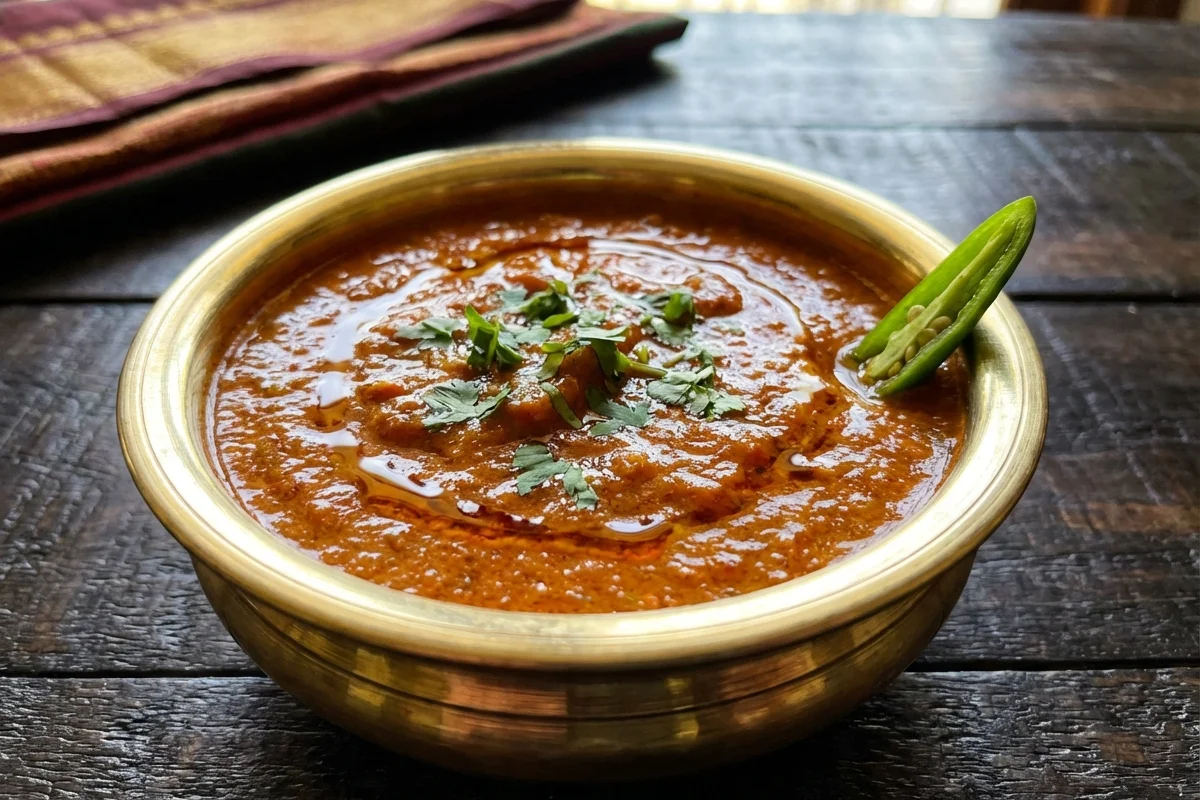
Tomato Kurma
A rich, tangy South Indian curry made with ripe tomatoes simmered in a creamy coconut-based gravy. This Tomato Kurma comes together quickly with everyday spices, making it a perfect weeknight companion to chapati, parotta, or steamed rice.
For 4 servings
- prep
Grind the coconut paste.
1.In a blender, add grated coconut, fennel seeds, and cashew nuts.2.Pour in 1 cup water and grind to a smooth, creamy paste.3.Set the paste aside until needed. - temper · ~1 min
Temper the whole spices.
1.Heat oil in a heavy-bottomed pan over medium heat.2.Add cinnamon stick, cloves, and cardamom pods. Sauté until fragrant (30 seconds).3.Add curry leaves and let them crackle briefly.TIPKeep the heat medium — whole spices release more flavor without burning. - saute · ~5 min
Sauté the aromatics.
1.Add the finely chopped onion and slit green chili to the pan.2.Cook until the onions turn soft and translucent (3-4 minutes).3.Add the ginger-garlic paste and sauté until the raw smell disappears (1 minute). - saute · ~6 min
Cook the tomatoes with spices.
1.Add the chopped tomatoes to the pan and stir well.2.Sprinkle in turmeric powder, red chili powder, coriander powder, and salt.3.Cook on medium heat, stirring occasionally, until the tomatoes turn soft and mushy (5-6 minutes).TIPMash the tomatoes gently with the back of the spoon for a thicker texture. - simmer · ~7 min
Add coconut paste and simmer.
1.Pour the prepared coconut paste into the pan and stir to combine.2.Add 3/4 cup water and bring the gravy to a gentle boil.3.Lower the heat and let it simmer for 5-7 minutes until the flavors meld and the gravy thickens slightly.TIPDon't let it boil hard after adding coconut paste — gentle simmer keeps the gravy creamy. - mix · ~1 min
Finish with garam masala.
Sprinkle garam masala over the simmering kurma. Stir well and cook for 1 more minute.
TIPAdding garam masala at the end preserves its aromatic oils. - garnish
Garnish with fresh coriander leaves and serve hot.
What to keep in mind.
6 tips from the recipe — small details that make a real difference to the final dish.
- 1Use fully ripe, deep-red tomatoes for natural sweetness and tang.
- 2Grind the coconut-fennel-cashew paste to a silky smooth consistency for a luxurious gravy.
- 3Sauté the whole spices until just fragrant — burnt spices turn bitter.
- 4Mash the cooked tomatoes with a spoon to thicken the base without extra cream.
- 5Always simmer gently after adding coconut paste; high heat can curdle the gravy.
- 6This kurma thickens on cooling; adjust water if reheating the next day.
Adapt it for your goals.
Vegan
The recipe is already vegan as written — skip the ghee and use any neutral oil. The coconut and cashews provide all the richness needed.
nut freeNut-free
Replace cashews with 1 tablespoon of raw white poppy seeds (khus khus) for a similarly creamy texture without nuts.
low oilLow-oil
Dry-roast the whole spices in the pan for a few seconds before adding onions in a splash of water or oil spray — reduces fat while keeping flavor.
Why this is on our healthy list.
Rich in Lycopene
Cooking tomatoes with a little oil makes their lycopene (a powerful antioxidant) more bioavailable.
Healthy Fats from Coconut
Fresh coconut provides medium-chain triglycerides (MCTs) that support energy metabolism.
Good Source of Plant Protein
Cashews and coconut contribute moderate plant-based protein, making this kurma more satiating.
Frequently asked questions
Yes, use 2 cups of canned crushed tomatoes and reduce the water slightly. The flavor will be less sweet, so you may want a pinch of sugar.