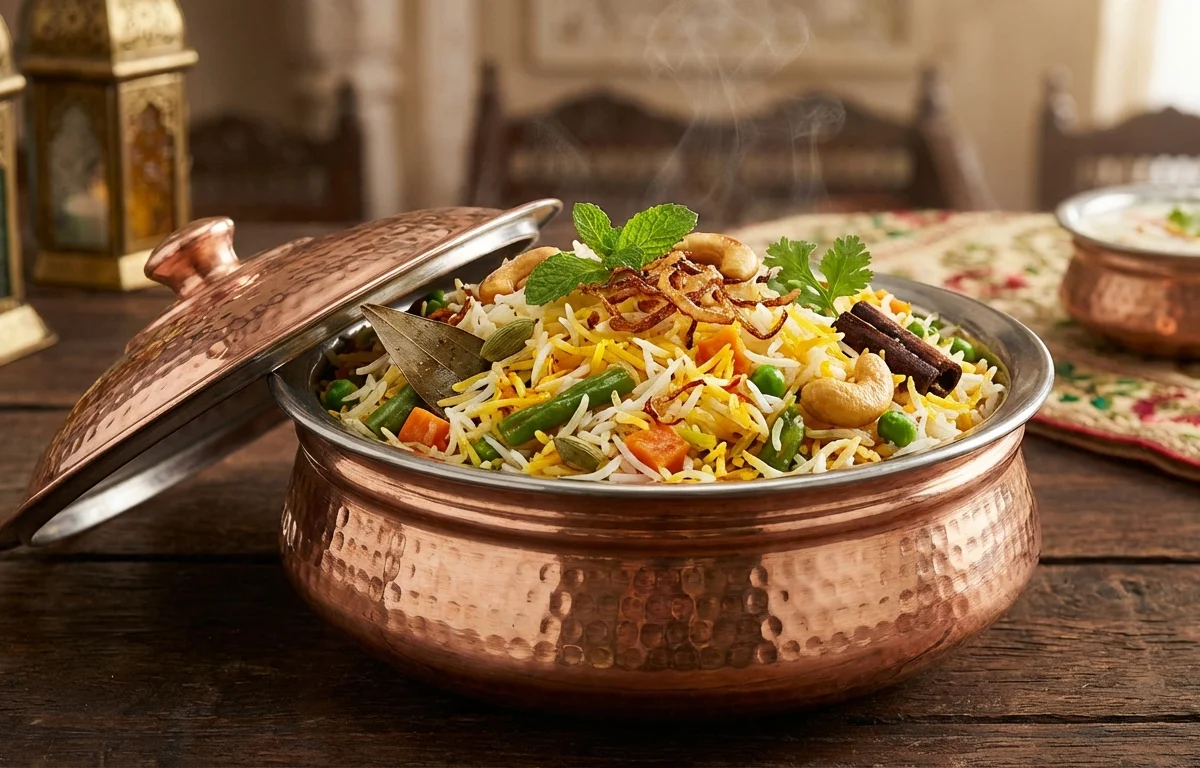
Veg Awadhi Biryani
Fragrant basmati rice layered with gently spiced vegetables, herbs, saffron milk, and fried onions, then cooked on dum until every grain turns aromatic. This Lucknow-style biryani is rich, elegant, and perfect for a festive Indian meal.
For 4 servings
- prep · ~30 min
Soak the rice and ready the saffron milk.
1.Rinse the basmati rice until the water runs mostly clear.2.Soak the rice in water for 30 minutes, then drain well.3.Soak the saffron in warm milk and set it aside.TIPLong grains stay separate when the rice is soaked and drained well before cooking. - boil · ~8 min
Parboil the rice.
1.Bring 6 cups water to a boil with bay leaf, green cardamom, cloves, cinnamon, and 0.5 tsp salt.2.Add the drained rice and cook until it is about 70 percent done, about 5 to 6 minutes.3.Drain the rice immediately and spread it lightly so the grains stop cooking.TIPThe rice should still have a firm center because it will finish on dum. - fry · ~15 min
Fry the onions and potato.
1.Heat 1 tbsp ghee in a heavy pan over medium heat.2.Add the sliced onions and cook until deep golden and lightly crisp, 8 to 10 minutes.3.Remove half the onions for layering.4.Add the potato cubes to the same pan and fry until lightly golden and nearly tender, 4 to 5 minutes.TIPKeep the heat moderate so the onions turn sweet and brown instead of burning. - saute · ~10 min
Cook the vegetable masala.
1.Add the remaining 1 tbsp ghee to the pan if needed, then add shahi jeera and let it sizzle for a few seconds.2.Add ginger-garlic paste and green chili, and cook for 1 minute.3.Add mixed vegetables and the fried potato, then sauté for 3 to 4 minutes.4.Add turmeric powder, red chili powder, coriander powder, garam masala, black pepper, and 1 pinch salt.5.Add yogurt and cook until it coats the vegetables and turns slightly thick, about 3 minutes. - assemble · ~5 min
Layer the biryani.
1.Spread the vegetable masala in an even layer in the heavy pan.2.Top with half the parboiled rice.3.Scatter half the fried onions, half the mint, and half the coriander leaves.4.Add the remaining rice on top.5.Finish with the rest of the fried onions, mint, coriander leaves, lemon juice, and saffron milk. - rest · ~5 min
Seal and rest the pan for dum cooking.
Cover the pan tightly with a lid. Let it sit for 5 minutes while you keep the heat very low.
- simmer · ~20 min
Cook the biryani on dum.
Place the covered pan on very low heat and cook for 18 to 20 minutes until the rice is fully tender and the layers smell aromatic.
TIPUse a heavy pan so the bottom does not scorch during dum cooking. - serve · ~5 min
Rest briefly, fluff gently, and serve hot.
Turn off the heat and let the biryani stand covered for 5 minutes. Fluff from the sides with a flat spoon so the grains stay long and separate.
What to keep in mind.
7 tips from the recipe — small details that make a real difference to the final dish.
- 1Stop boiling the basmati at about 70% done; a firm white core in the grain is ideal for dum.
- 2Spread the drained rice briefly after parboiling so trapped steam does not keep cooking it.
- 3Brown the onions to a deep golden color, not just soft, because they bring much of the biryani's sweetness and depth.
- 4Cook the yogurt masala until it thickly coats the vegetables, otherwise the final biryani can turn soggy.
- 5Keep the dum heat very low or place the pan on a tawa to protect the bottom layer from scorching.
- 6Rest the biryani after dum and fluff from the sides with a flat spoon so the layers stay distinct.
- 7If making ahead, prepare the fried onions and vegetable masala earlier, then layer and dum just before serving.
Adapt it for your goals.
Vegan
Use oil instead of ghee and replace yogurt and milk with unsweetened plant-based alternatives; you keep the layered biryani style while making it fully dairy-free.
jainJain
Skip onion, garlic, ginger, and potato; increase mixed vegetables and use hing plus extra whole spices for a Jain-friendly biryani with aromatic depth.
paneerPaneer
Add lightly pan-seared paneer cubes to the vegetable masala for a richer, more substantial biryani that suits festive meals.
low oilLow-oil
Air-fry or bake the onions and reduce the ghee slightly; the biryani stays fragrant but feels lighter for everyday cooking.
Why this is on our healthy list.
Vegetable-Rich Main Dish
Carrot, beans, cauliflower, peas, and potato make this biryani more balanced and add fiber, color, and varied plant nutrients.
Digestive Herbs and Spices
Mint, coriander, ginger, shahi jeera, cardamom, and cloves bring freshness and traditional aromatic spices that can make a rich rice dish feel lighter.
Moderate Protein Support
Yogurt and peas contribute some protein, helping the dish feel more satisfying than plain rice alone.
Frequently asked questions
The basmati should be about 70 percent cooked: long and partly tender but still firm in the center, since it finishes during dum.