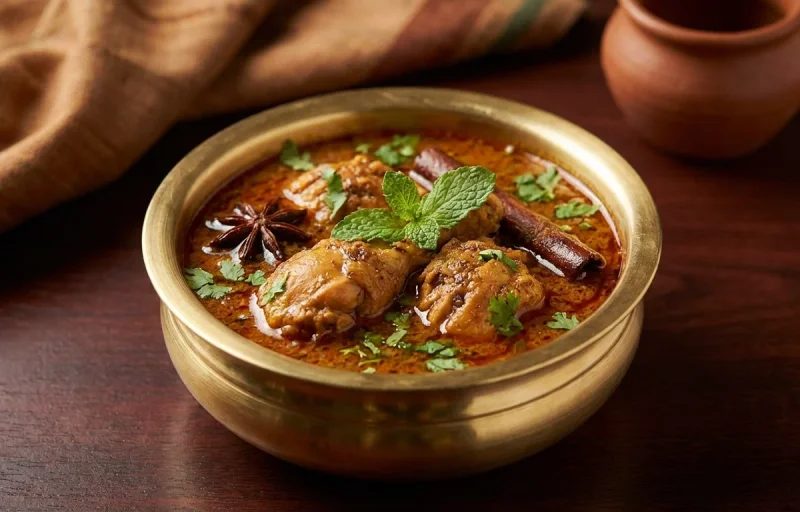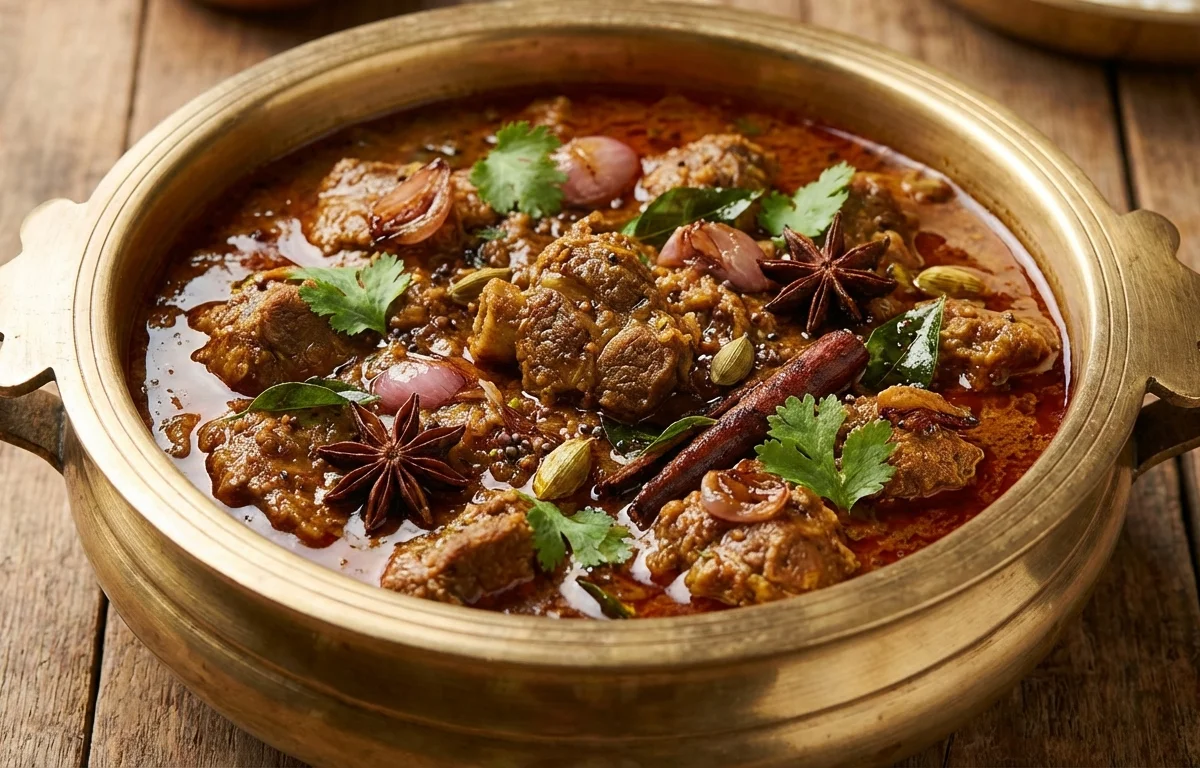
Chettinad Mutton Kuzhambu
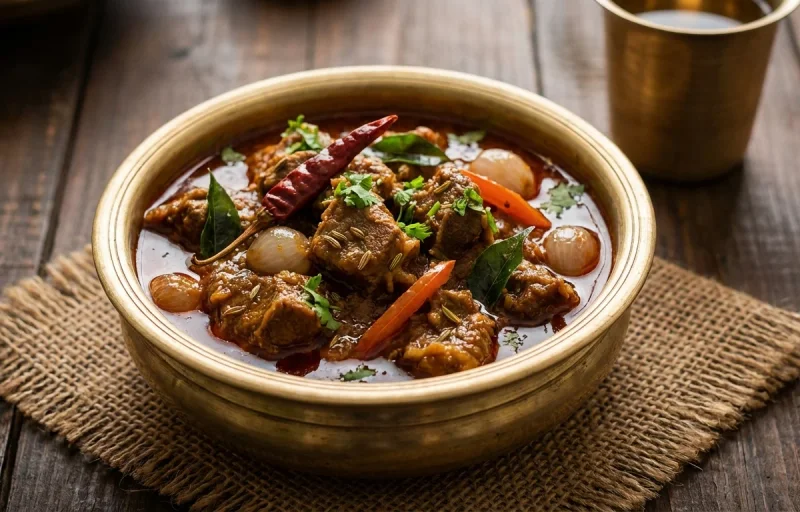
A bold, aromatic mutton curry from Tamil Nadu's Chettinad region, where tender bone-in goat pieces are slow-cooked in a deeply spiced gravy of roasted coconut, poppy seeds, fennel, and dried red chilies. The masala is ground fresh, giving it a rustic, earthy intensity. Best enjoyed with steamed rice or dosa, this curry is fiery, rich, and unforgettable.
For 4 servings
- prep
Wash the mutton and marinate.
Clean the mutton pieces thoroughly. Rub with turmeric powder and a pinch of salt. Set aside to marinate while you prepare the masala.
- roast · ~5 min
Dry roast the spices and coconut.
1.Heat a pan on medium-low. Add dried red chillies, coriander seeds, cumin seeds, fennel seeds, poppy seeds, black peppercorns, cinnamon, cardamom, cloves and star anise.2.Dry roast for 2-3 minutes until fragrant and slightly darkened. Transfer to a plate to cool.3.In the same pan, add grated coconut and dry roast for 2 minutes until golden brown. Remove and let it cool completely.TIPDon't walk away during roasting — spices burn easily and turn bitter. Keep the heat medium-low and keep stirring. - mix · ~2 min
Grind the Chettinad masala paste.
Once cooled, grind the roasted spices and coconut together with a little water into a smooth, thick paste. Set the masala paste aside.
- saute · ~15 min
Sauté shallots and tomatoes.
1.Heat oil in a pressure cooker or heavy-bottomed pot over medium heat.2.Add curry leaves and let them crackle for a few seconds.3.Add sliced shallots and sauté until deeply golden brown (8-10 minutes).4.Add ginger-garlic paste and cook until the raw smell disappears (1-2 minutes).5.Add chopped tomatoes and sauté until they turn soft and mushy (4-5 minutes).TIPProperly browning the shallots is key — this builds the deep, savory backbone of the kuzhambu. - saute · ~7 min
Sauté the masala paste.
Add the ground masala paste to the pot. Stir well and sauté on medium heat for 5-7 minutes, until the oil starts to separate from the mixture and the raw aroma cooks out.
TIPA well-sautéed masala paste is non-negotiable. Cook until you see the oil glistening on the surface, otherwise the gravy will taste raw. - saute · ~5 min
Sear the mutton pieces.
Add the marinated mutton pieces to the pot. Sauté on high heat for 5 minutes, turning the pieces so they brown lightly on all sides in the masala.
- pressure cook · ~25 min
Pressure cook the mutton.
1.Pour 2 cups of water into the pot and add salt for the gravy.2.Add the extracted tamarind pulp and stir well.3.Close the pressure cooker lid and cook on medium heat.4.After the first whistle, lower the heat and cook for 20 minutes.5.Turn off the heat and let the pressure release naturally.TIPMutton needs solid time under pressure to become fork-tender. Don't rush the natural release — it helps the meat relax. - simmer · ~10 min
Simmer to thicken the gravy.
Once the pressure has released, open the lid and check the mutton for tenderness. If the gravy is too thin, simmer uncovered on medium heat for another 5-10 minutes until it reaches a thick, coating consistency.
TIPChettinad kuzhambu should be thick enough to cling to the meat, not watery. Let it reduce until you can see the oil floating on top. - garnish
Garnish with fresh coriander and serve hot.
Sprinkle chopped coriander leaves over the curry. Serve hot with steamed rice, idli, or dosa.
What to keep in mind.
7 tips from the recipe — small details that make a real difference to the final dish.
- 1Roast the spices on medium-low heat until fragrant but not burnt — burnt spices ruin the gravy with bitterness.
- 2Grind the roasted coconut and spices into a very smooth paste; a coarse paste can leave an unpleasant gritty texture.
- 3Brown the shallots deeply (8-10 minutes) until caramelized — this builds the rich, savory foundation of the kuzhambu.
- 4Sauté the ground masala paste until oil separates visibly on the surface, otherwise the gravy will taste raw and uncooked.
- 5Use bone-in goat leg meat for best flavor and tenderness; the marrow enriches the gravy during pressure cooking.
- 6Let the pressure release naturally after cooking — sudden release can toughen the mutton and affect texture.
- 7Simmer the kuzhambu uncovered after pressure cooking to thicken it until it clings to the meat, not watery.
Adapt it for your goals.
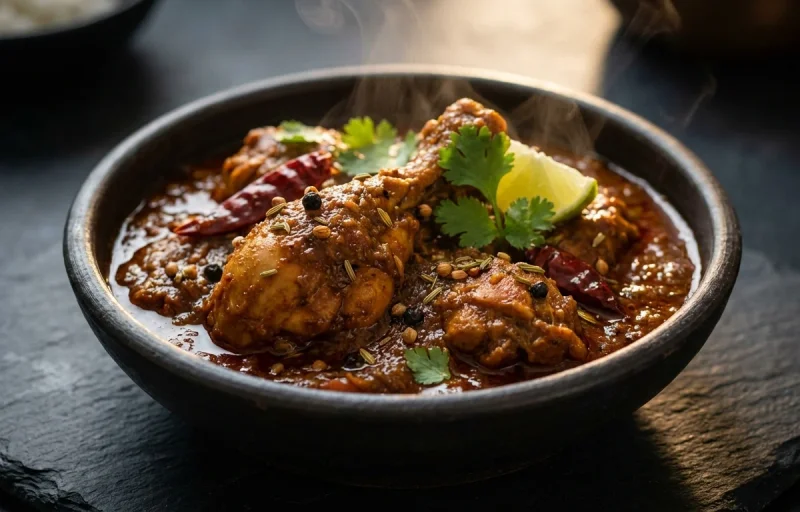
Chicken Chettinad
Substitute bone-in chicken legs or thighs for the mutton. Reduce pressure cooking time to 10 minutes after the first whistle instead of 20, as chicken cooks faster and stays tender.
vegetarian ChettinadVegetarian Chettinad
Replace mutton with mixed vegetables like potato, cauliflower, and paneer. Skip pressure cooking; instead, simmer the vegetables directly in the masala gravy until tender for a hearty, meatless kuzhambu.
low oilLow-oil
Reduce oil to 1 tbsp and dry-roast the shallots in a non-stick pan with a splash of water to prevent sticking. The coconut in the masala still provides enough richness for a lighter gravy.
eggs ChettinadEggs Chettinad
Swap mutton with 6 hard-boiled eggs (halved). Add them to the cooked gravy and simmer for 5 minutes without pressure cooking, letting the eggs absorb the spicy masala. Perfect for a quick, protein-packed meal.
Why this is on our healthy list.
Rich in Collagen from Bone-In Meat
Slow-cooking bone-in goat meat releases gelatin from the bones, which supports joint health and skin elasticity.
Antioxidants from Spices
Ingredients like fennel, cumin, coriander, and black pepper provide natural antioxidants that help reduce oxidative stress in the body.
Digestive Aid from Fennel and Cumin
Fennel and cumin seeds are traditionally used to aid digestion and reduce bloating, making this hearty curry easier on the stomach.
Healthy Fats from Coconut
Fresh coconut adds medium-chain triglycerides (MCTs) that can provide quick energy and support metabolism when consumed in moderation.
High-Quality Protein from Goat Meat
Goat meat is a lean source of complete protein, which supports muscle repair and overall satiety without excessive saturated fat.
Frequently asked questions
Yes, but the flavor will be less intense and aromatic. Use 4-5 tbsp of store-bought Chettinad masala powder and add it directly during the sauté step after the tomatoes soften.