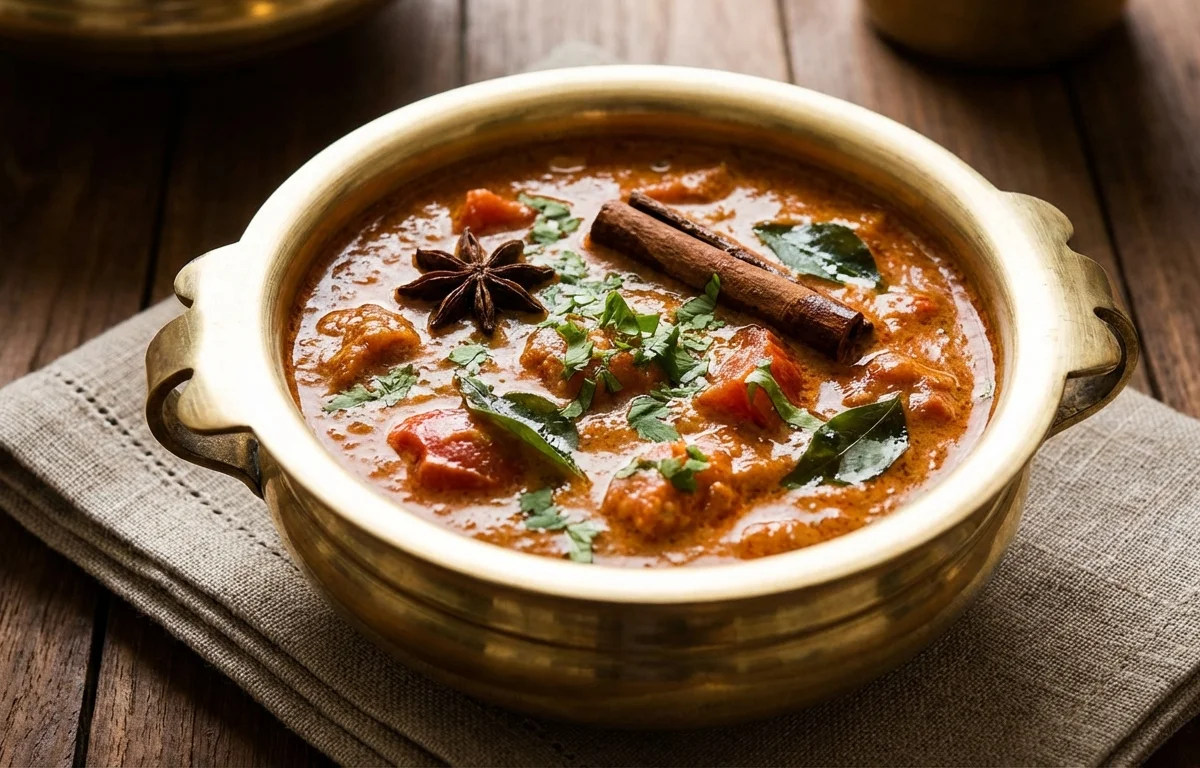
Chettinad Tomato Kurma
A lightly spiced South Indian kurma where ripe tomatoes cook down into a silky gravy with coconut, poppy seeds, and fennel. It is tangy, comforting, and just right with idiyappam, dosa, or parotta.
For 4 servings
- prep · ~15 min
Soak and grind the kurma paste.
1.Soak the poppy seeds in a little warm water for 15 minutes.2.Add grated coconut, soaked poppy seeds, ginger, garlic, and 0.5 cup water to a blender.3.Grind to a smooth paste and keep aside.TIPGrind the paste very smooth for a silky kurma without graininess. - saute · ~7 min
Cook the whole spices and onions.
1.Heat oil in a kadai over medium heat.2.Add fennel seeds, cinnamon, cloves, cardamom, and bay leaf and cook until fragrant, about 30 seconds.3.Add sliced onions and green chili.4.Cook until the onions turn soft and light golden, 5 to 6 minutes. - saute · ~8 min
Cook the tomatoes with the spice powders.
1.Add chopped tomatoes to the pan and mix well.2.Add coriander powder, red chili powder, turmeric powder, garam masala, and salt.3.Cook until the tomatoes turn soft and pulpy and the oil begins to show at the edges, 7 to 8 minutes.TIPMash the tomatoes lightly while cooking so the gravy gets its classic kurma body. - simmer · ~8 min
Add the ground paste and simmer the kurma.
1.Lower the heat and add the ground coconut paste.2.Stir for 1 minute so the paste mixes evenly with the tomato base.3.Pour in the remaining 1 cup water and stir until smooth.4.Bring to a gentle simmer and cook for 6 to 8 minutes, stirring now and then.TIPKeep the heat low after adding coconut paste so the gravy stays smooth and does not split. - garnish
Finish with coriander leaves.
- serve
Serve hot with idiyappam, dosa, parotta, or chapati.
What to keep in mind.
7 tips from the recipe — small details that make a real difference to the final dish.
- 1Use fully ripe, slightly soft tomatoes; firmer ones make the kurma sharper and less naturally sweet.
- 2Soak the poppy seeds well before grinding so the coconut paste turns silky instead of gritty.
- 3Cook the onions only to light golden, not deep brown, so the gravy stays delicate and doesn't taste roasted.
- 4Mash the tomatoes as they soften to help them melt into the onion base and thicken the kurma naturally.
- 5After adding the coconut paste, keep the flame low and stir often to prevent splitting or catching at the bottom.
- 6If the kurma thickens on standing, loosen it with a splash of hot water before serving with idiyappam or dosa.
- 7This tastes even better after a short rest; let it sit 10 minutes so the fennel and whole spices round out.
Adapt it for your goals.
Spicier
Add 1-2 extra green chilies or a little more red chili powder for a hotter kurma that still keeps the tomato-coconut balance.
no poppy seedNo-poppy-seed
Skip the poppy seeds and use a little extra coconut if needed; useful where poppy seeds are unavailable, though the gravy will be slightly lighter.
vegetable kurmaVegetable-kurma
Add cooked peas, potato, carrot, or cauliflower to turn the tomato kurma into a heartier side for chapati or parotta.
veganVegan
This recipe is naturally vegan as written, making it a good dairy-free South Indian gravy option.
Why this is on our healthy list.
Tomato-Rich Base
Tomatoes bring brightness, natural acidity, and beneficial plant compounds, while keeping the gravy light compared with cream-based curries.
Aromatics for Depth
Ginger, garlic, onion, and spices add strong flavor without needing heavy fats, helping the dish taste rich with modest oil.
Plant-Based Fats
Fresh coconut provides satisfying texture and richness from plant-based fats, making the kurma filling even without dairy.
Frequently asked questions
Usually the heat was too high after adding the ground paste. Keep it at a gentle simmer and stir regularly so the coconut stays smooth.