Hyderabadi Veg Tehri
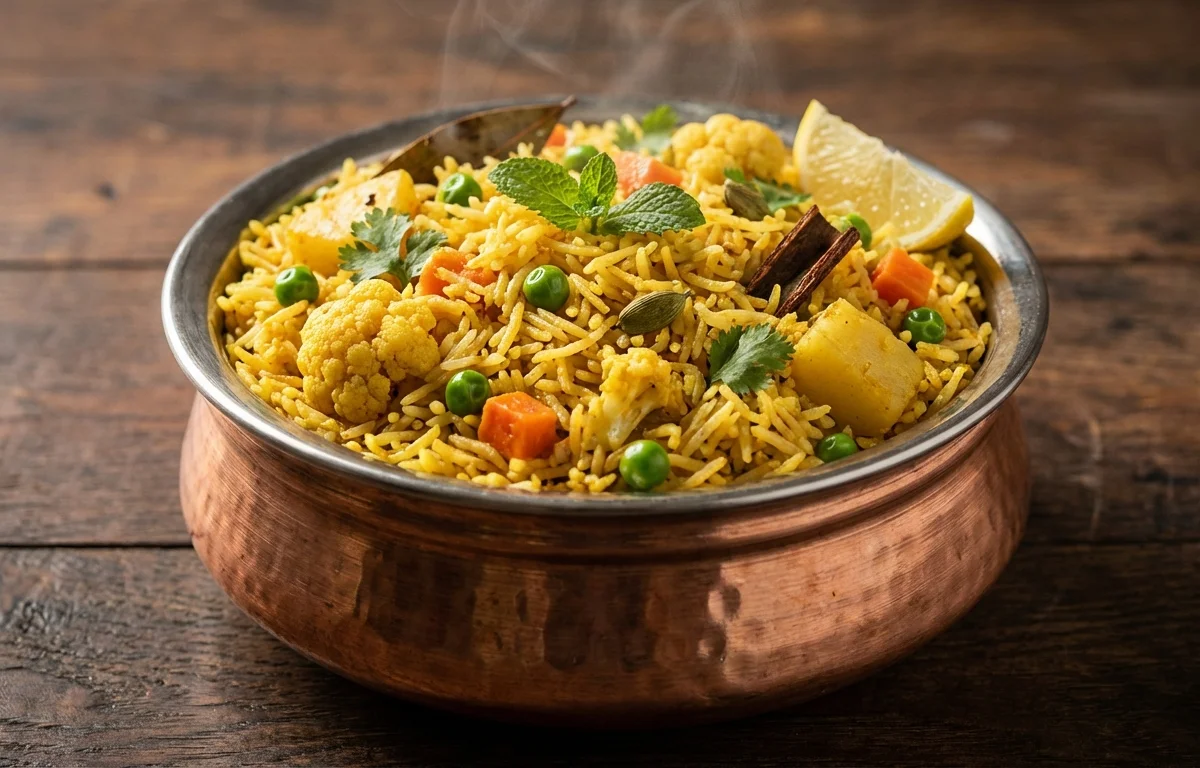
A fragrant one-pot rice dish from Hyderabad where basmati rice cooks with seasonal vegetables and whole spices. Golden onions, fresh mint, and a splash of lemon bring brightness while the dum cooking locks in every layer of aroma. Simple, satisfying comfort food that comes together in under an hour.
For 4 servings
- prep · ~20 min
Soak the rice.
Wash basmati rice in 2-3 changes of water until water runs clear. Soak in fresh water for 20 minutes, then drain completely.
- fry · ~15 min
Fry the potatoes and onions.
1.Heat oil in a heavy-bottomed pot over medium heat.2.Add cubed potatoes and fry until golden and almost cooked (4-5 min). Remove and set aside.3.In the same oil, add sliced onions and fry until deep golden brown (8-10 min). Remove half for garnish.TIPGetting the onions deeply brown is key — this colour builds the kadhi's rich hue. - temper · ~1 min
Temper the whole spices.
1.Add whole spices — cumin seeds, cinnamon stick, green cardamom, cloves, and bay leaf.2.Let them sizzle and release their aroma in the remaining hot oil (30-40 sec). - saute · ~6 min
Build the masala base.
1.Add ginger paste and garlic paste to the pot and sauté until the raw smell disappears (1 min).2.Add chopped tomato, green chili, turmeric, red chili powder, and coriander powder.3.Cook, stirring often, until the tomato breaks down and oil starts separating from the masala (4-5 min).TIPScrape the bottom of the pot — the caramelised onion bits add deep flavour. - saute · ~3 min
Sauté the vegetables.
1.Add diced carrot, green beans, green peas, and the fried potato cubes.2.Stir gently to coat every piece in the masala (2-3 min). - mix · ~2 min
Add rice, water, and fresh herbs.
1.Gently stir in the drained basmati rice, taking care not to break the grains.2.Pour in 2.5 cups of water and add salt.3.Scatter torn mint leaves and half of the reserved fried onions on top. - simmer · ~24 min
Cook on dum until the rice is done.
1.Bring the pot to a rolling boil, then immediately reduce heat to the lowest setting.2.Cover with a tight-fitting lid and let it steam undisturbed for 15-18 minutes.3.Turn off the heat and let the pot rest, covered, for 5 more minutes.TIPIf your lid isn't tight, seal the rim with a strip of dough or place a heavy weight on top. - mix · ~1 min
Finish with garam masala, ghee, and lemon.
1.Remove the lid and sprinkle garam masala evenly over the rice.2.Drizzle ghee and fresh lemon juice on top.3.Use a fork to gently fluff the rice, lifting from the bottom to mix everything without mashing. - garnish
Garnish with fried onions, coconut, and coriander and serve hot.
Transfer the Tehri to a serving platter. Scatter the remaining fried onions, sliced fresh coconut, and chopped coriander leaves generously over the top. Serve immediately.
What to keep in mind.
6 tips from the recipe — small details that make a real difference to the final dish.
- 1Soaking basmati for 20 minutes ensures each grain stays separate and fluffy after dum cooking.
- 2Fry the onions until deep golden brown — this color is the backbone of Tehri's signature look and taste.
- 3Use a heavy-bottomed pot with a tight lid to trap steam; seal the rim with dough if needed.
- 4Reserve half the fried onions for garnish; their crunch contrasts beautifully with the soft rice.
- 5Let the Tehri rest for 5 minutes after turning off the heat — this allows steam to evenly finish cooking.
- 6Fluff the rice gently with a fork after adding ghee and lemon to avoid breaking the grains.
Adapt it for your goals.
Protein-packed
Add 1 cup of paneer cubes or cooked chickpeas along with the vegetables for a heartier meal that boosts protein without altering the core Tehri character.
low oilLow-oil
Reduce oil and ghee to 1 tbsp each and skip frying the potatoes — just sauté them with the other veggies for a lighter version that still tastes aromatic.
veganVegan
Replace ghee with an extra tablespoon of oil or vegan butter — the dish remains fully flavourful and plant-based.
spice forwardSpice-forward
Double the green chilies and add 1 tsp of ghee-fried dried red chilies at the end for a spicier Tehri that Hyderabadis love.
Why this is on our healthy list.
Rich in Dietary Fiber
The mix of carrots, green beans, and peas provides soluble and insoluble fiber that supports digestion and helps maintain steady energy levels.
Packed with Antioxidants
Turmeric, cinnamon, cloves, and mint deliver anti-inflammatory compounds that help combat oxidative stress and support overall wellness.
Good Source of Plant-Based Iron
Coriander leaves, cumin, and green peas contribute iron, which is essential for healthy blood and energy metabolism.
Low in Saturated Fat
Using only 1 tbsp of ghee keeps saturated fat modest while still lending the traditional nutty aroma of Hyderabadi cooking.
Frequently asked questions
Yes, frozen peas and beans work well — just thaw them first and pat dry to avoid adding excess water to the pot.