Mutton Nihari
Slow-cooked mutton simmered with browned onions, warm whole spices, and a lightly thickened gravy. This rich North Indian-style nihari turns silky and deeply savory after a long, gentle cook.
For 4 servings
- prep · ~10 min
Prepare the mutton and aromatics.
1.Wash the mutton pieces and drain well.2.Slice the onions thinly.3.Measure the spices, flour, and water so everything is ready to cook. - saute · ~10 min
Brown the onions and whole spices.
1.Heat ghee in a heavy pot over medium heat.2.Add bay leaf, cinnamon, green cardamom, cloves, black peppercorns, and fennel seeds.3.Stir for 30 seconds until fragrant.4.Add sliced onions and cook until deep golden, 8 to 10 minutes.TIPKeep the heat medium so the onions brown evenly without burning. - saute · ~9 min
Cook the mutton with the spice base.
1.Add ginger-garlic paste and cook for 1 minute.2.Add mutton and cook until the pieces lose their raw color, 5 to 6 minutes.3.Add coriander powder, red chili powder, turmeric powder, and salt.4.Mix well and cook for 2 minutes so the spices coat the mutton. - mix · ~3 min
Add the flour and water.
Sprinkle in the whole wheat flour and stir well for 1 minute so it blends into the masala without lumps. Pour in the water and scrape the bottom of the pot to loosen any browned bits.
TIPStir the flour in quickly before adding water so the gravy thickens smoothly. - simmer · ~95 min
Slow-cook the nihari until tender.
Bring the pot to a gentle boil, then lower the heat, cover, and simmer until the mutton is very tender and the gravy turns rich, 1 hour 30 minutes to 1 hour 40 minutes. Stir a few times during cooking and add a splash of water only if needed.
- garnish · ~2 min
Finish with garam masala and fresh garnish.
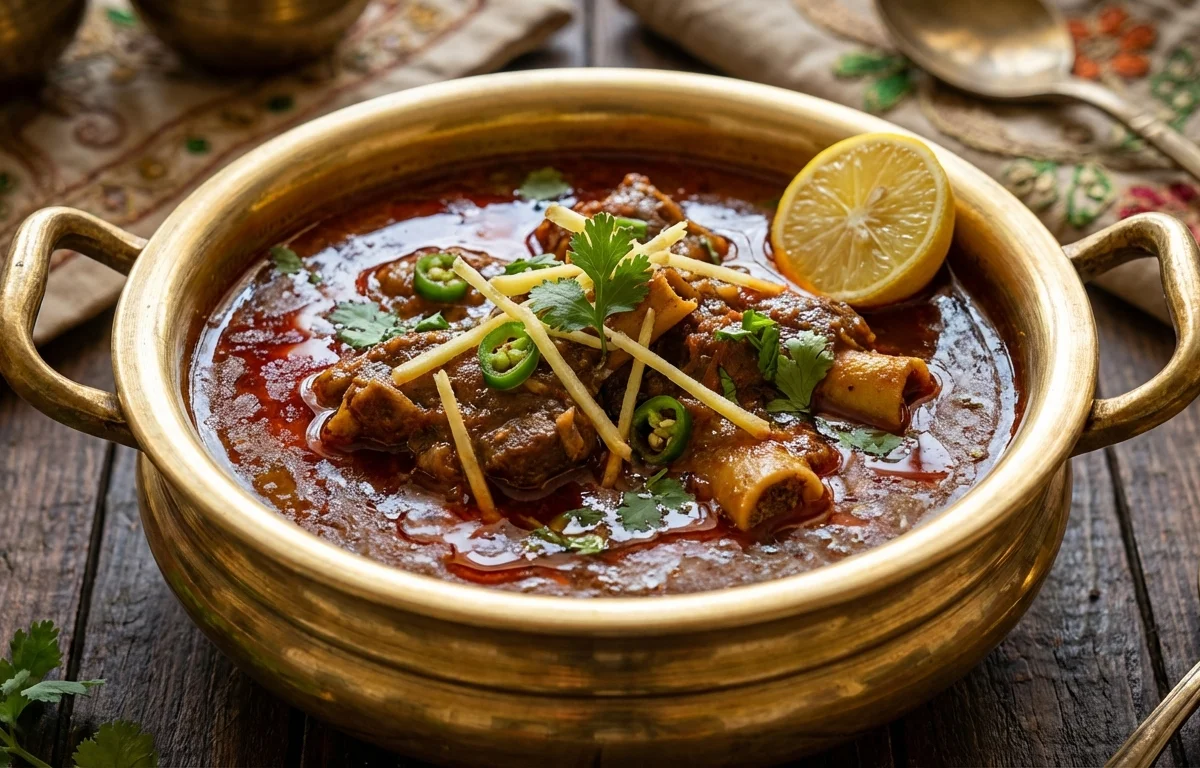
Stir in garam masala and simmer for 2 minutes. Top with ginger strips, cilantro, and lemon juice just before serving.
- serve
Serve the mutton nihari hot.
What to keep in mind.
7 tips from the recipe — small details that make a real difference to the final dish.
- 1Use a heavy-bottomed pot so the onion masala and flour do not catch during the long simmer.
- 2Brown the onions to a deep golden color, not dark brown, or the gravy can taste bitter.
- 3After adding water, scrape up all the browned bits from the pot; they give the nihari much of its depth.
- 4Keep the simmer very gentle once covered; a hard boil can toughen mutton before it turns tender.
- 5Bone-in pieces work best here because the bones enrich the gravy as it cooks.
- 6If making ahead, let the nihari rest overnight in the fridge; the gravy tastes fuller the next day.
- 7Add the lemon juice at serving, not during simmering, so the fresh acidity brightens the rich gravy.
Adapt it for your goals.
Pressure-cooker
Cook the mutton under pressure to shorten the simmering time, then uncover and reduce the gravy for the same rich finish.
spicierSpicier
Increase the red chili powder slightly and add extra black pepper for a hotter, more robust nihari.
bonelessBoneless
Use boneless mutton for easier serving, though the gravy will be slightly less rich than with bone-in pieces.
gluten freeGluten-free
Replace the whole wheat flour with a small slurry of rice flour or skip it and reduce the gravy a bit longer.
Why this is on our healthy list.
Protein-Rich Main Dish
Mutton provides substantial protein, making this nihari hearty and satisfying as a meal.
Collagen-Rich Bone-In Broth
Bone-in mutton adds body and richness to the gravy, along with naturally extracted connective tissue from slow cooking.
Digestive Aromatics
Ginger, garlic, fennel, and black pepper bring traditional warming spices that add flavor and digestive appeal.
Frequently asked questions
The meat should be very tender and easy to pull from the bone with a spoon or fork, while the gravy looks rich and slightly thickened.



.webp)