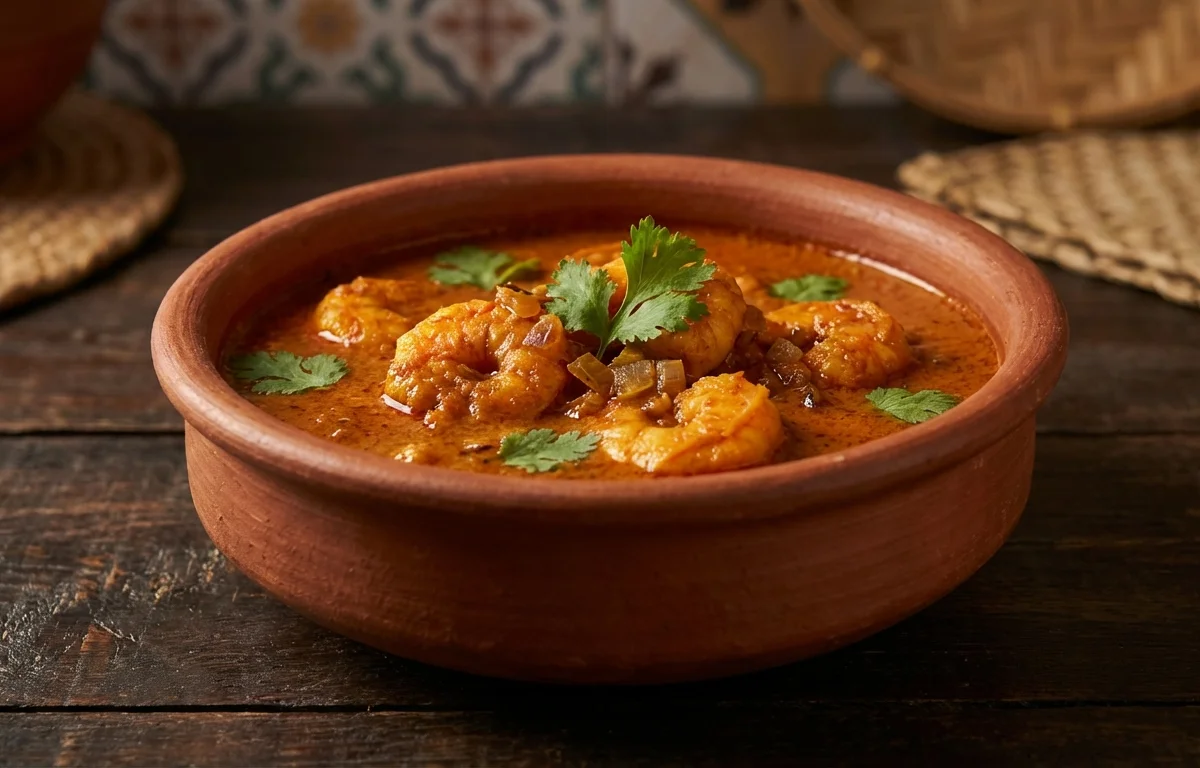
Sungta Ambat
A coastal Konkani prawn curry with a gentle tang from tamarind and a rich coconut base. It cooks quickly, tastes deeply homestyle, and is especially good with steamed rice on the side.
For 4 servings
- prep · ~10 min
Soak the tamarind and clean the prawns.
1.Soak the tamarind in a little warm water for 10 minutes.2.Rinse the prawns well, then clean and devein them if needed.3.Set the prawns aside while you make the curry paste.TIPDo not leave the prawns in water for long or they lose their sweet, fresh taste. - mix · ~5 min
Grind the coconut masala.
1.Add grated coconut, dry red chili, coriander seeds, cumin seeds, turmeric powder, garlic, and soaked tamarind to a grinder jar.2.Pour in a little water and grind to a smooth, thick paste.3.Use just enough water to keep the paste rich and not too thin. - saute · ~9 min
Cook the onion and tomato.
1.Heat oil in a pan over medium heat.2.Add the sliced onion and cook until soft and lightly golden, 4 to 5 minutes.3.Add the chopped tomato and cook until it turns soft and pulpy, 3 to 4 minutes.TIPKeep the heat medium so the onion sweetens without burning. - simmer · ~6 min
Simmer the coconut gravy.
Add the ground coconut masala to the pan and stir well. Pour in the remaining water, add salt, and bring the curry to a gentle simmer for 5 to 6 minutes so the raw coconut and spices cook through.
- simmer · ~4 min
Cook the prawns in the curry.
Add the prawns to the simmering gravy and cook for 3 to 4 minutes, just until they turn opaque and tender. Do not overcook or they will become rubbery.
TIPPrawns cook very fast, so switch off the heat as soon as they curl and turn pink. - rest · ~5 min
Let the curry rest for 5 minutes.
- serve
Serve hot with steamed rice.
What to keep in mind.
7 tips from the recipe — small details that make a real difference to the final dish.
- 1Grind the coconut masala as smooth as possible so the curry stays silky, not grainy.
- 2Squeeze the soaked tamarind well and strain out fibers before adding it to the grinder.
- 3Cook the coconut gravy for a few minutes before adding prawns, or the masala can taste raw.
- 4Add prawns only at a gentle simmer; a hard boil can toughen them quickly.
- 5The prawns are done when they turn opaque and curl lightly into a loose C-shape.
- 6Let the curry rest after cooking so the tamarind, chili, and coconut flavors meld.
- 7This curry thickens as it stands; loosen leftovers with a splash of hot water while reheating.
Adapt it for your goals.
Extra-spicy
Increase the dried red chilies or use hotter Goan-style chilies for a fiercer, more robust coastal curry.
thicker gravyThicker-gravy
Use slightly less water for a richer curry that clings beautifully to rice and tastes more coconut-forward.
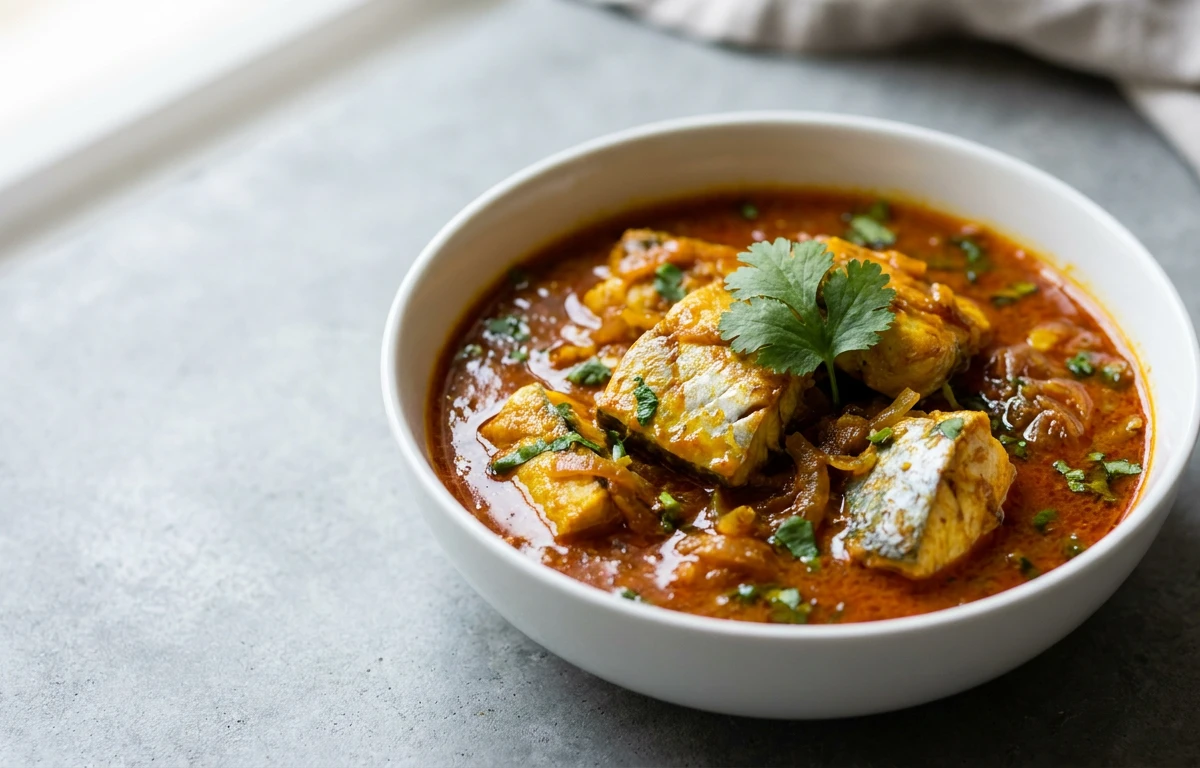
fish versionFish-version
Replace prawns with firm fish pieces; simmer gently until just cooked for a similar tangy coconut curry.
shallot basedShallot-based
Swap the sliced onion for shallots for a sweeter, more traditional homestyle depth in the base.
Why this is on our healthy list.
Protein-Rich Seafood
Prawns provide lean protein, making this curry satisfying without relying on heavy ingredients.
Spice-Based Antioxidants
Dried red chili, turmeric, cumin, coriander, and garlic add flavor along with beneficial plant compounds.
Balanced with Coconut
Fresh coconut gives the curry body and satiety, so a little goes a long way when served with rice.
Frequently asked questions
Yes. Thaw them fully, pat them dry, and add them only at the end so they do not release excess water into the curry.