
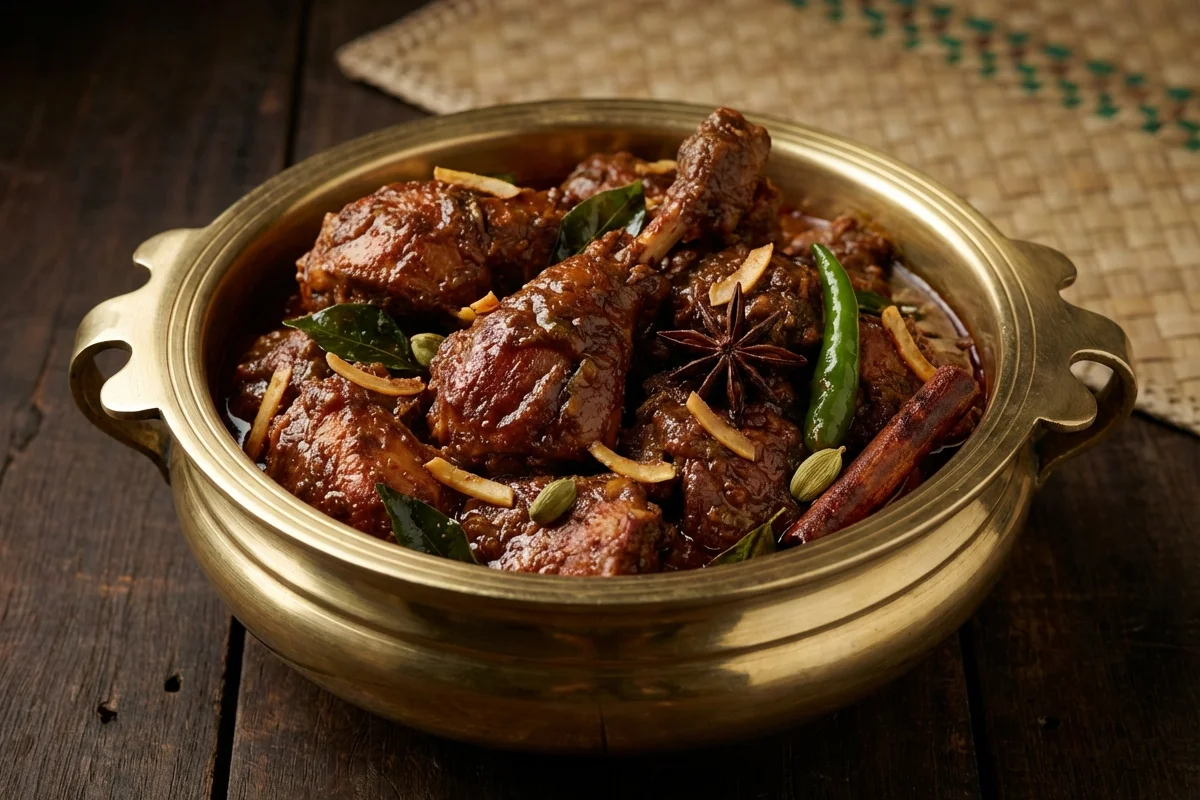
Kuttanadan Duck Roast
A rustic, deeply spiced duck roast from the backwaters of Kuttanad, Kerala. Bone-in duck pieces are slow-cooked with roasted coconut, black pepper, and aromatic spices until the meat is fall-apart tender and the masala clings to every piece in a dark, smoky, semi-dry coating. Best enjoyed with appam or steamed rice.
For 4 servings
- prep · ~15 min
Clean and marinate the duck pieces.
1.Remove all skin and excess fat from the duck pieces.2.Wash the duck well and drain completely.3.Rub the pieces with 0.25 tsp turmeric powder, 1 pinch salt, and 0.5 tsp black pepper powder (freshly ground from your peppercorns).4.Set aside to marinate while you prepare the masala.TIPRemoving the duck skin is crucial — duck fat can make the roast greasy rather than intensely flavored. - roast · ~10 min
Dry-roast the coconut until deep brown.
In a heavy-bottom pan or kadai, dry-roast the grated coconut over low-medium heat. Stir continuously for 8-10 minutes until it turns a deep, even brown. Do not let it burn. Transfer to a plate and let it cool.
TIPThe coconut must be deeply browned — this is what gives Kuttanadan duck roast its signature dark color and smoky depth. - roast · ~3 min
Dry-roast the whole spices until fragrant.
1.In the same pan, add black peppercorns, coriander seeds, fennel seeds, cinnamon stick, cloves, cardamom pods, and star anise.2.Roast on low heat, shaking the pan often, until the spices are aromatic (2-3 minutes).3.Remove from heat and let them cool completely.TIPRoasting the spices low and slow releases their oils without burning them — burnt spices will make the dish bitter. - prep · ~2 min
Grind the roasted spices and coconut into a coarse masala powder.
Transfer the cooled roasted coconut and whole spices to a spice grinder. Add red chili powder, garam masala, and the remaining 0.25 tsp turmeric powder. Grind to a slightly coarse powder — not too fine. Set aside.
- pressure cook · ~20 min
Pressure-cook the duck with salt until tender.
1.Place the marinated duck pieces in a pressure cooker.2.Add 1 cup water and 0.25 tsp salt.3.Close the lid and pressure cook on medium heat for 3-4 whistles or about 20 minutes.4.Let the pressure release naturally. The duck should be tender but not falling off the bone.TIPDuck meat is tougher than chicken — do not skip pressure cooking or you will need hours of simmering. Natural pressure release keeps the meat moist. - saute · ~15 min
Sauté shallots, ginger, garlic, and green chili.
1.Heat coconut oil in a large heavy-bottom pan or kadai over medium heat.2.Add sliced shallots and sauté until deep golden brown (10-12 minutes).3.Add julienned ginger, sliced garlic, slit green chilies, and curry leaves.4.Sauté for another 2 minutes until the raw smell disappears.TIPTake the shallots all the way to deep golden — pale shallots will lack the sweetness and depth needed for this dish. - saute · ~4 min
Cook the tomatoes until soft.
1.Add sliced tomatoes to the pan.2.Cook on medium heat until they break down completely and release their juices.3.Continue cooking until the oil starts to separate at the edges (3-4 minutes). - fry · ~5 min
Add the ground masala powder and roast well.
1.Lower the heat to its minimum setting.2.Tip in the ground coconut-spice powder.3.Stir continuously and roast the masala for 4-5 minutes until the raw smell disappears and the mixture darkens.4.Add a splash of water if it catches at the bottom.TIPRoasting the masala powder on low heat is the most critical step — under-roasted masala will taste raw and flat. - simmer · ~20 min
Add the duck and simmer until the masala coats every piece.
1.Add the pressure-cooked duck pieces along with any residual cooking liquid to the masala.2.Stir well to coat every piece in the masala.3.Cook uncovered on medium heat, stirring occasionally, until the gravy thickens and clings to the duck (15-20 minutes).4.Taste and adjust salt if needed.TIPThe roast is ready when the masala is dark, semi-dry, and glistening with coconut oil. There should be no watery gravy left. - rest · ~5 min
Rest for 5 minutes before serving.
Switch off the flame and let the duck roast rest in the pan for 5 minutes. The masala will tighten further around the pieces. Garnish with a few fresh curry leaves if desired.
TIPThis roast tastes even better the next day. Make it ahead if you can — the spices deepen overnight.
What to keep in mind.
7 tips from the recipe — small details that make a real difference to the final dish.
- 1Removing duck skin is essential; leaving it on makes the roast greasy instead of intensely flavored.
- 2Dry-roast the coconut until deep brown — this gives the dish its signature dark color and smoky depth.
- 3Roast whole spices on low heat to release their oils without burning, which would make the dish bitter.
- 4Naturally release pressure after cooking the duck to keep the meat moist and tender.
- 5Sauté shallots until deep golden brown to build the sweet, aromatic base of the masala.
- 6Roast the ground masala powder on low heat for 4-5 minutes until the raw smell disappears completely.
- 7Let the roast rest for 5 minutes before serving so the masala tightens around the duck pieces.
Adapt it for your goals.
Mild-version
Reduce black peppercorns to 1 tsp and skip the green chilies for a family-friendly version that still has deep roasted-coconut flavor.
chicken versionChicken-version
Substitute bone-in chicken legs or thighs (800g) for duck; pressure-cook for only 1-2 whistles and reduce final simmer to 10 minutes.
oil free roastOil-free-roast
Replace coconut oil with 1 tbsp water when sautéing shallots and skip the final oil separation; use a non-stick pan for a lighter, lower-fat version.
Why this is on our healthy list.
Rich in Protein
Duck meat provides high-quality animal protein essential for muscle repair and satiety.
Source of Healthy Fats
Coconut contains medium-chain triglycerides (MCTs) which may support metabolism when used in moderation.
Spice Power
Black pepper, turmeric, and ginger offer natural anti-inflammatory and digestive-supporting compounds.
Frequently asked questions
Bone-in duck is traditional because the bones add flavor and the meat stays juicier during pressure cooking. Boneless will cook faster and may dry out — reduce pressure cooking to 2 whistles.

.webp)
.webp)