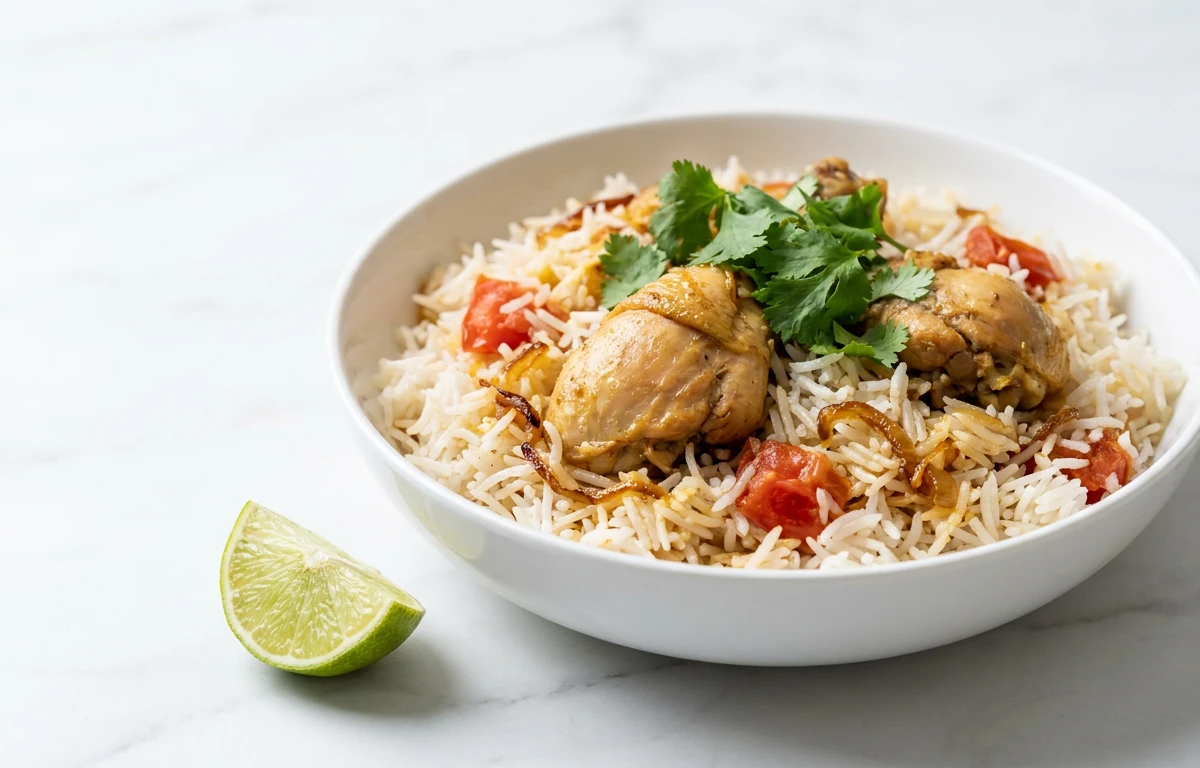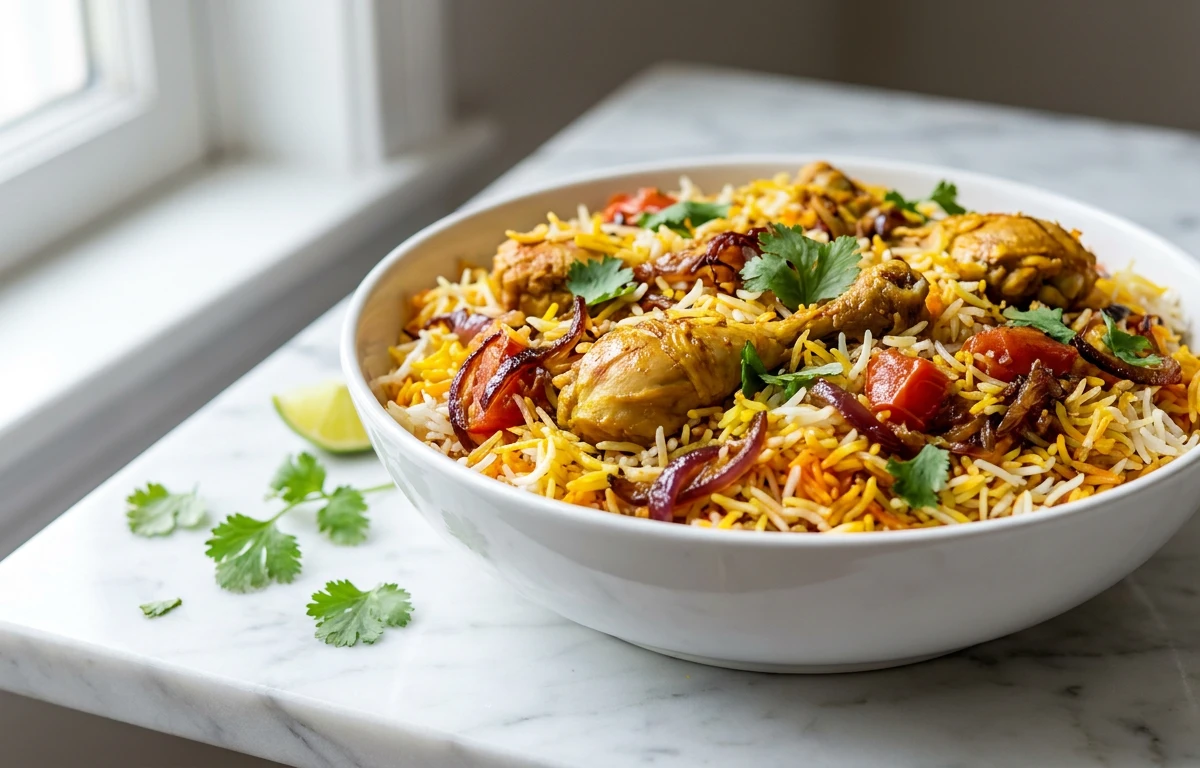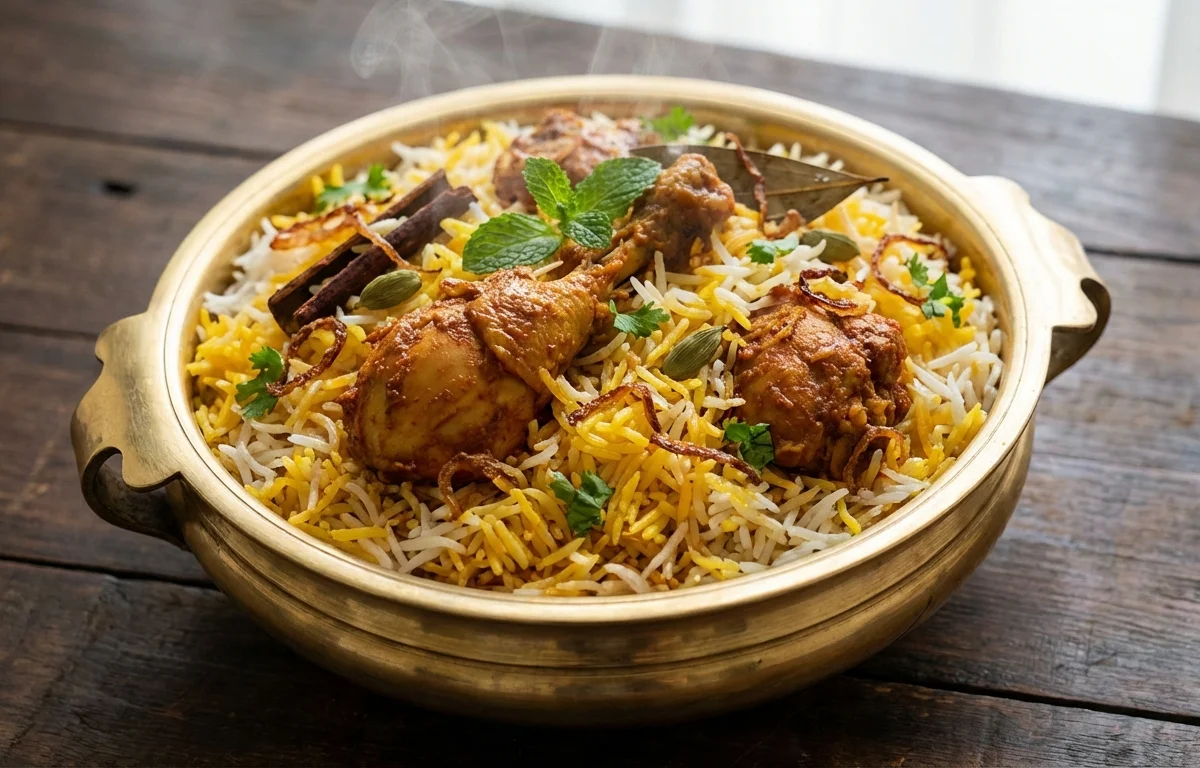
Mangalorean Chicken Biryani
A fragrant, mildly spiced biryani from the coastal town of Mangalore, where tender marinated chicken and aromatic short-grain rice are slow-cooked together. Coconut milk adds a subtle richness, while a unique blend of roasted spices and fresh herbs brings warmth and depth. Perfect for festive lunches or a Sunday family feast.
For 4 servings
- prep · ~30 min
Marinate the chicken.
1.In a large bowl, combine chicken pieces with yogurt, red chili powder, turmeric powder, coriander powder, 1 tbsp ginger-garlic paste, lemon juice, and 1 pinch salt.2.Mix well to coat every piece. Cover and set aside for at least 30 minutes or refrigerate for up to 2 hours.TIPBone-in chicken keeps the biryani moist and flavorful—avoid boneless pieces if possible. - prep · ~5 min
Prepare the cashew-coconut paste.
1.Grind the soaked cashew nuts with 2 tablespoons of the coconut milk into a smooth paste.2.Set aside. Whisk the remaining coconut milk with 0.5 cup water in a small bowl. - fry · ~12 min
Fry the onions until deep golden.
1.Heat oil and 1 tablespoon of ghee in the heavy-bottomed pot over medium heat.2.Add the sliced onions and fry until deep golden brown and crisp on the edges, about 10–12 minutes.3.Remove half the fried onions and set them aside for layering.TIPStir constantly towards the end—onions go from golden to burnt in seconds. - temper · ~2 min
Bloom the whole spices and aromatics.
1.To the remaining onions in the pot, add bay leaf, cinnamon stick, green cardamom, cloves, star anise, fennel seeds, and black peppercorns.2.Stir for about 30 seconds until fragrant.3.Add the remaining 1 tablespoon ginger-garlic paste and slit green chilies. Sauté until the raw smell disappears, about 1 minute. - saute · ~6 min
Brown the marinated chicken.
1.Add the marinated chicken pieces to the pot along with all the marinade.2.Cook on high heat, stirring occasionally, until the chicken is seared and no longer pink on the outside, about 5–7 minutes.TIPSearing the chicken first locks in the juices and deepens the flavor of the masala. - simmer · ~15 min
Simmer the chicken masala.
1.Add the chopped tomatoes and the cashew-coconut paste. Stir well.2.Add half of the chopped mint and coriander leaves. Cook until the tomatoes soften and the oil starts to separate, about 5 minutes.3.Pour in the diluted coconut milk and remaining salt. Bring to a gentle simmer and cook uncovered for 10 minutes, stirring once or twice. The gravy should be thick and clinging to the chicken.TIPThe masala should be thick, not watery, before you add the rice—otherwise the biryani will become mushy. - boil · ~6 min
Parboil the rice.
1.While the chicken simmers, bring 4 cups of water to a rolling boil in a separate pot.2.Add the soaked and drained rice along with a pinch of salt. Boil until the rice is 70% cooked—the grains should still have a bite, about 5–6 minutes.3.Drain immediately and set aside.TIPParboiling ensures the rice doesn't over-cook during the final dum. The grains should break when pressed but not be soft. - assemble · ~3 min
Layer the biryani for dum.
1.Gently spoon the parboiled rice over the chicken masala in the pot, spreading it evenly without mixing.2.Drizzle the rose water and remaining 2 tablespoons of ghee over the rice.3.Scatter the reserved fried onions, remaining mint, and coriander leaves on top. Sprinkle the split cashew nuts if using. - other · ~25 min
Seal and cook on dum.
1.Cover the pot with a tight-fitting lid. If the lid doesn't seal perfectly, seal the edges with a strip of wheat dough or heavy-duty foil.2.Place the pot over very low heat and cook undisturbed for 20–25 minutes.3.Turn off the heat and let the pot rest, still sealed, for 10 minutes.TIPDon't peek during dum cooking—the trapped steam is what finishes the rice and fuses the flavours. - serve · ~1 min
Fluff gently and serve hot.
1.Remove the lid. Using a flat spatula, gently fluff the biryani by lifting from the sides—do not stir aggressively or the rice will break.2.Transfer to a serving platter. Garnish with the remaining fried onions and a sprinkle of fresh coriander.TIPDig all the way to the bottom when serving so each plate gets the fragrant rice, tender chicken, and rich masala together.
What to keep in mind.
6 tips from the recipe — small details that make a real difference to the final dish.
- 1Bone-in chicken pieces keep the biryani moist and add deeper flavor during cooking.
- 2Parboil the rice to 70% doneness so it finishes perfectly during dum without turning mushy.
- 3Seal the pot tightly with dough or foil to trap steam—peeking releases essential moisture.
- 4Use thick first-press coconut milk for a richer, creamier gravy that coats the chicken.
- 5Fry onions until deep golden brown but not burnt; stir constantly near the end for best results.
- 6Let the biryani rest for 10 minutes after dum to allow flavors to meld and rice to settle.
Adapt it for your goals.
Spicier version
Increase the green chilies to 5–6 and add ½ teaspoon of Kashmiri red chili powder for extra heat without overpowering the coconut flavor.
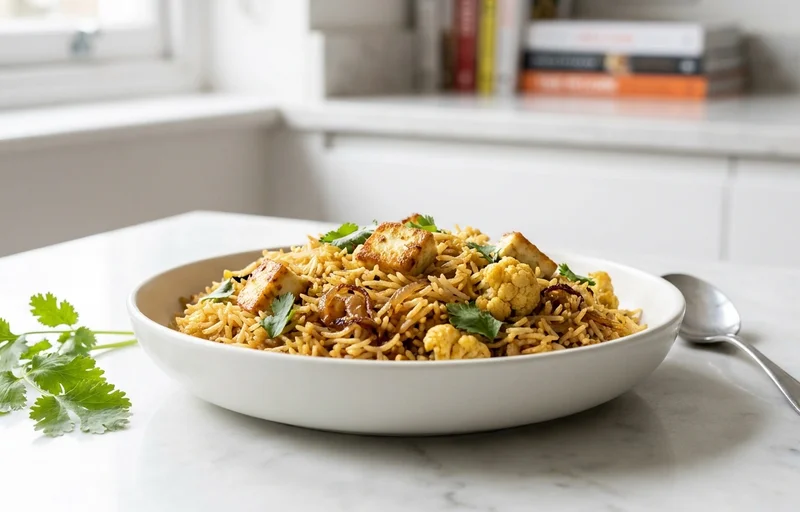
vegetable versionVegetable version
Replace chicken with mixed vegetables like potatoes, carrots, and peas; reduce cooking time for the masala by 5 minutes.
low oilLow-oil
Use only 1 tablespoon of ghee for frying onions and skip the extra ghee drizzle; still achieve good flavor by blooming spices in a non-stick pan.
jainJain
Omit onion, garlic, and ginger; substitute with asafoetida and a pinch of hing, and use cashew cream instead of yogurt.
Why this is on our healthy list.
Rich in Protein
Chicken provides high-quality protein to support muscle health and satiety.
Gut-Friendly Probiotics
Yogurt in the marinade adds beneficial probiotics that aid digestion.
Antioxidant Spices
Turmeric, cinnamon, and cloves offer anti-inflammatory and antioxidant properties.
Healthy Fats from Coconut
Coconut milk provides medium-chain triglycerides (MCTs) for sustained energy.
Frequently asked questions
Yes, but reduce parboiling time to 4 minutes as basmati cooks faster; the texture will be less sticky than traditional jeera samba.