Quinoa (pronounced KEEN-wah) has spent the last decade on every “superfood” list going — which is usually a reason to be suspicious. But this one mostly earns the hype. It’s a seed that behaves like a grain, it’s naturally gluten-free, and it delivers something genuinely uncommon in the plant world: a complete protein with a real dose of fiber and minerals attached. The catch is that most people cook it badly and eat it plain, then wonder what the fuss was about.
↑ Cooked white quinoa — the most common of the three culinary types.
Health & Nutrition · 11 MIN READ
Quinoa: Nutrition Facts, Real Benefits, and How to Actually Eat It
It cooks like a grain, but it’s really a seed — and one of the few plant foods that hands you complete protein, serious fiber, and a long list of minerals in a single bowl. Here’s what the evidence supports, what’s overhyped, and how to fold it into an everyday Indian kitchen.
222
Calories
8.1 g
Protein
39 g
Carbs
5.2 g
Fiber
3.6 g
Total fat
1.2 mg
Manganese
By Shreya Chatterjee, Nutrition Writer
June 10, 2026 · Reviewed by the CraftMeals Editorial Team
WHAT THIS ARTICLE COVERS
- 01What quinoa actually is
- 02Quinoa nutrition facts
- 03A rare complete plant protein
- 04Five evidence-backed benefits
- 05Is quinoa gluten-free?
- 06Quinoa and blood sugar
- 07Who it suits — and who should go easy
- 08Quinoa the Indian way
- 09How to cook it so it isn’t bitter
- 10Recipes to start with
- 11Frequently asked questions
What quinoa actually is
Quinoa isn’t a cereal grain like wheat or rice. It’s the edible seed of Chenopodium quinoa, a plant related to spinach, beets, and chard, domesticated in the Andes thousands of years ago. Because we cook and eat it like a grain, nutritionists call it a “pseudocereal” — grain-like in the kitchen, but botanically something else entirely.
You’ll find it in three main colours. White (sometimes labelled ivory) is the mildest and fluffiest, and the easiest swap for rice. Red holds its shape and bite better, which suits salads and pulao. Black is earthiest and slightly sweet. Tricolour blends are simply the three mixed — pretty, but they cook a touch unevenly.
IN ONE LINE
Quinoa is a gluten-free seed you cook like a grain — notable for being a complete protein that also brings fiber, magnesium, and iron to the plate.
Quinoa nutrition facts
Here’s what one cooked cup — about 185 grams, or a generous side portion — delivers. Percent Daily Values give you a quick sense of how much of a day’s needs each nutrient covers.
A few things stand out. The manganese and magnesium numbers are unusually high for a staple food. The fiber is roughly double what you’d get from the same serving of white rice. And unlike most plant foods, the protein is the complete kind — which deserves its own section.
A rare complete plant protein
Your body needs nine essential amino acids it can’t make on its own. Most plant foods are short on at least one — grains tend to run low on lysine, for instance. Quinoa contains all nine in meaningful amounts, which is why it’s called a complete protein. That puts it in rare company alongside soy and a handful of others.
WORTH KNOWING
Complete doesn’t mean high-protein. At ~8 g per cooked cup, quinoa is a solid contributor, not a protein bomb. Treat it as a better-than-rice base and still build the plate around dal, beans, paneer, tofu, eggs, or curd.
For anyone eating plant-forward — which is most of India by default — that completeness genuinely matters. It means a quinoa-and-rajma bowl, or quinoa khichdi with a spoon of curd, covers your amino-acid bases without much thought.
Five evidence-backed benefits
Stripping away the superfood marketing, here’s what the nutrition science actually supports.
01
Keeps you full longer
The fiber-and-protein combination slows digestion, which blunts the post-meal energy dip and helps curb mid-afternoon snacking. It’s a more satisfying base than refined white rice for the same volume.
5.2 g
fiber / cup
02
Supports steady energy
Quinoa is rich in magnesium and manganese, minerals your body uses to turn food into usable energy and keep muscles and nerves working smoothly — areas where many plant-based eaters quietly run low.
51%
manganese DV
03
Friendlier to blood sugar
Its lower glycemic index and high fiber mean a gentler rise in blood sugar than white rice, making it a smart swap for anyone watching glucose — more on that below.
≈53
glycemic index
04
Adds plant iron and zinc
A cup contributes meaningful iron and zinc — useful in vegetarian diets where both can fall short. Pair it with a squeeze of lemon or tomato to absorb the iron better.
2.8 mg
iron / cup
05
Brings antioxidants
Quinoa contains plant compounds like quercetin and kaempferol — antioxidants linked in research to lower inflammation — typically in higher amounts than common cereal grains.
Rich in
flavonoids
Is quinoa gluten-free?
Yes. Quinoa contains no gluten, which makes it a genuinely useful staple for anyone with coeliac disease or gluten sensitivity — a flexible stand-in for wheat and barley in bowls, porridges, and bakes.
ONE CAVEAT
Quinoa is often processed in facilities that also handle wheat. If you’re coeliac, choose a packet that’s certified gluten-free to rule out cross-contamination.
Quinoa and blood sugar
With a glycemic index around 53 — comfortably in the low-to-moderate band — and a hefty fiber load, quinoa raises blood sugar more gently than white rice or most refined grains. That makes it one of the better staple choices for people managing diabetes or insulin resistance.
As always, portion and pairing decide the outcome. A modest serving alongside protein and vegetables behaves very differently from a giant bowl of quinoa on its own. Treat it as one slice of the plate, not the whole thing.
Who it suits — and who should go easy
Quinoa the Indian way
Quinoa earned its reputation in grain bowls and salads, but it slots into Indian cooking with almost no friction — its mild, nutty flavour takes a tadka happily. Six easy ways to fold it into meals you already make:
01
Quinoa upma
Cook it like a savoury upma with mustard seeds, curry leaves, ginger, and vegetables. Nuttier than rava, and far higher in protein and fiber.
02
Quinoa pulao
Swap rice for quinoa in a vegetable pulao. Red quinoa holds its shape best and won’t turn mushy under the whole spices.
03
Quinoa khichdi
Combine with moong dal for a complete-protein khichdi that’s gentle on the stomach and genuinely balanced. A weeknight hero.
04
Curd-rice swap
Stir cooled quinoa into seasoned curd with a tempering of mustard and curry leaves for a higher-protein take on curd rice.
05
Tikki binder
Use cooked quinoa to bind vegetable or sprout tikkis. It adds structure, protein, and a pleasant bite without extra refined starch.
06
Breakfast porridge
Simmer in milk or plant milk with cardamom, banana, and nuts for a warm, filling porridge that beats sugary cereal flat.
How to cook it so it isn’t bitter
Most “I don’t like quinoa” verdicts trace back to two fixable mistakes: skipping the rinse, and overcooking it to mush. Get these right and it’s foolproof.
01
Rinse it well.
Quinoa’s natural coating, saponin, tastes soapy and bitter. Rinse under cold running water in a fine sieve for 30–60 seconds, rubbing the seeds, until the water runs clear. Many packets are pre-rinsed — a quick rinse anyway does no harm.
02
Use a 1:2 ratio.
One cup quinoa to two cups water or stock. Stock is the single biggest flavour upgrade you can make.
03
Simmer, then steam.
Bring to a boil, drop to a low simmer, cover, and cook 15 minutes until the water is absorbed and you see little white “tails” unfurl. Then take it off the heat.
04
Rest, then fluff.
Leave it covered off the heat for 5 minutes, then fluff with a fork. This is what gives you separate, fluffy seeds instead of a sticky clump.
05
Toast for extra nuttiness.
Optional but lovely: dry-toast the rinsed quinoa in the pan for a couple of minutes before adding liquid, the way you’d bhuno a grain.
Rinse it, don’t drown it, and let it rest. Ninety percent of bad quinoa is just unrinsed quinoa cooked five minutes too long.
— Dr. Lena Hoff, RD
Recipes to start with
Two easy ways to put this into practice tonight — one a flexible base, one a complete plate.
Three quinoa recipes to start with
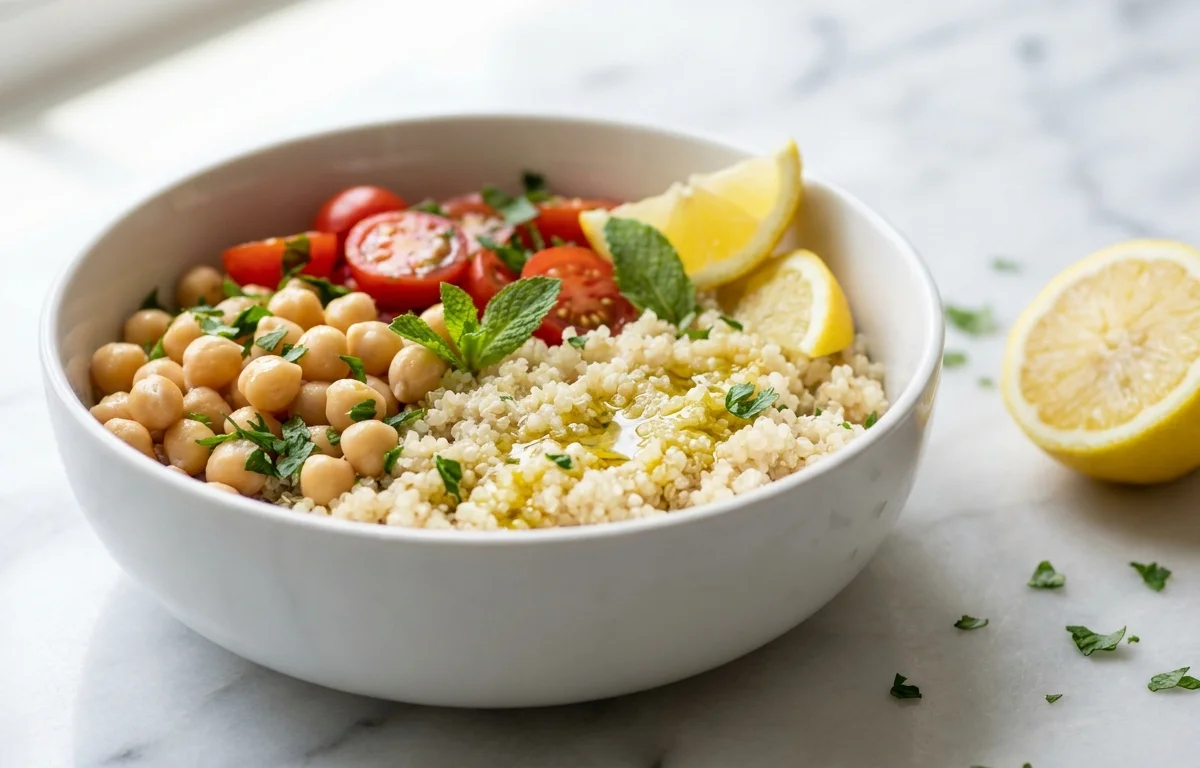
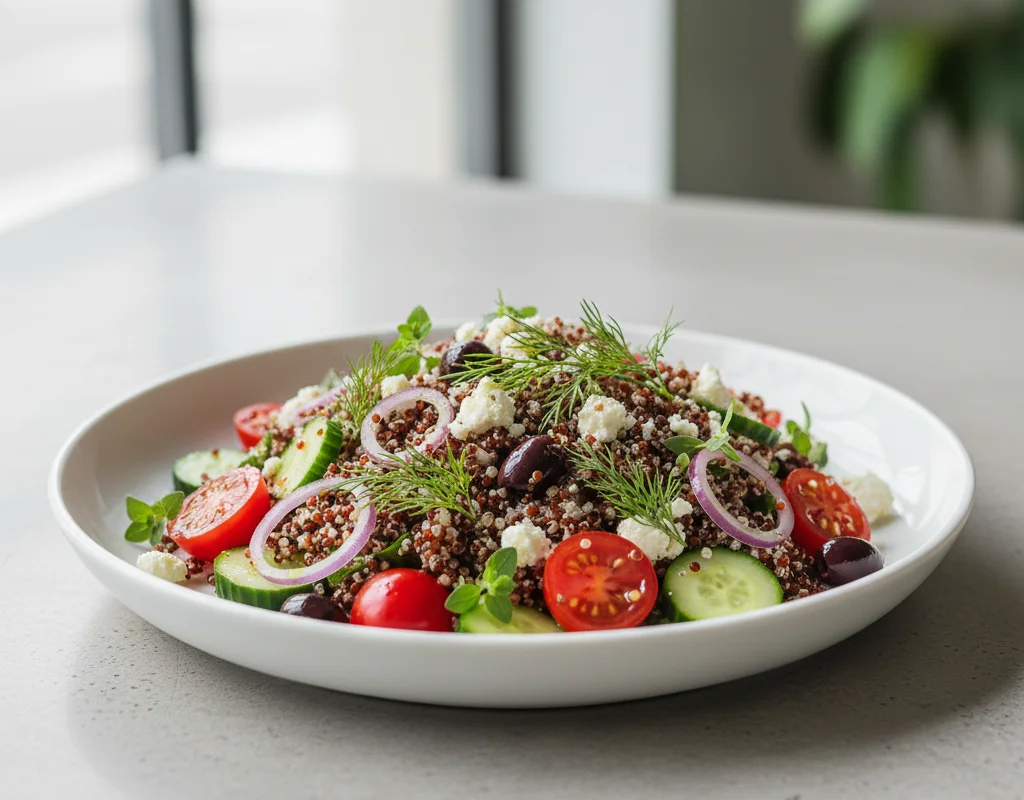
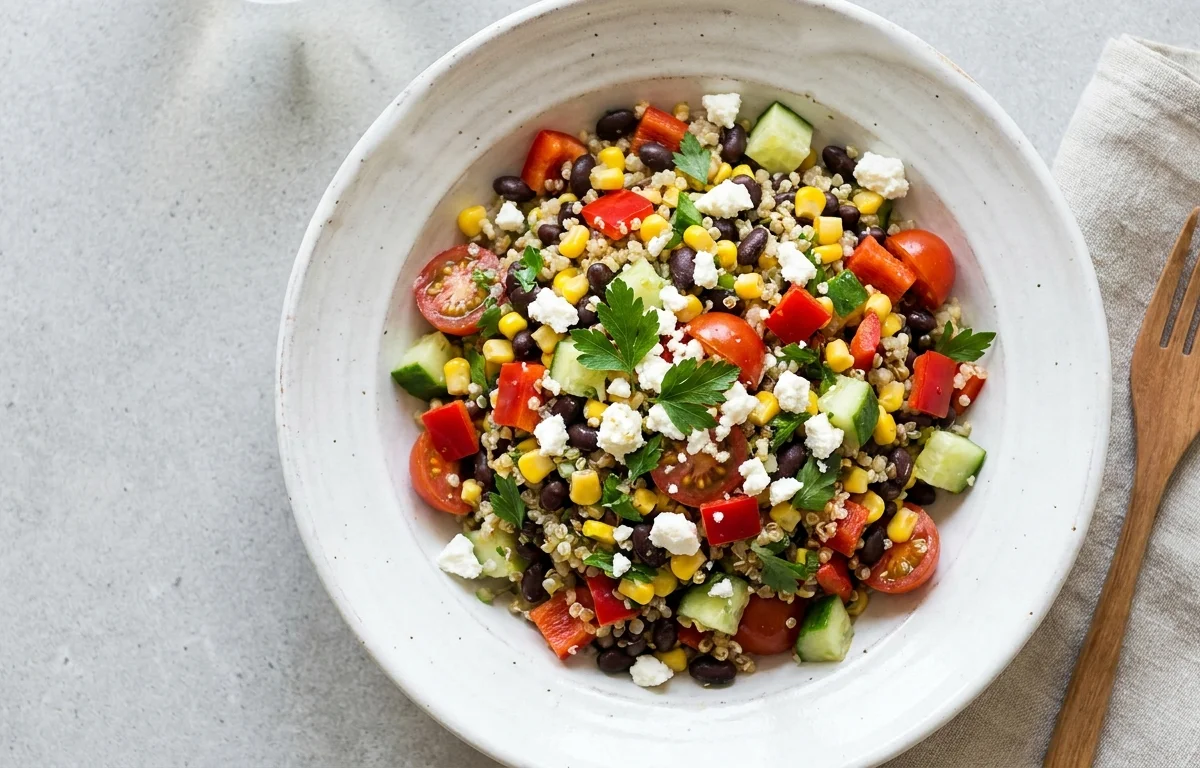
Want quinoa worked into a balanced week — without the planning?
Our meal planner builds protein-and-fiber-forward plates around bases like quinoa, with portions and macros already calculated and a single grocery list at the end.
Build my weekly plan →SOURCES & REFERENCES · 3
One more thing
Eating well is rarely about willpower. It’s about having a short list of dinners you actually want to eat. Pick two from this list. Make them next week. The rest will follow.
If you want these on autopilot, our weekly meal planner can drop the picks above into your calendar with one click and build a single grocery list from the merged ingredients.
FREQUENTLY ASKED QUESTIONS
Frequently asked questions
Is quinoa better than rice?
For most purposes, yes — gram for gram it has more protein, more fiber, and more minerals than white rice, with a gentler effect on blood sugar. That said, rice isn’t the enemy; quinoa is simply a more nutrient-dense base when you want one. Brown rice narrows the gap on fiber.
Is quinoa good for weight loss?
It can help. The protein-and-fiber combination is filling, which makes it easier to eat less without feeling deprived. The usual rules apply: mind your portion and what you pile on top. Quinoa drowning in oil or cheese is no longer a light meal.
Can diabetics eat quinoa?
Generally yes, and it’s often a better choice than white rice thanks to its lower glycemic index and high fiber. Keep portions moderate and pair it with protein and vegetables to flatten the blood-sugar response. Check with your doctor or dietitian about your own targets.
How much quinoa should I eat?
A typical serving is about half to one cup cooked as part of a balanced plate — roughly a quarter of it. Remember it roughly triples when cooked, so a little dry quinoa goes a long way.
Do I really need to rinse it?
For best taste, yes. Rinsing removes the bitter saponin coating. Many brands sell pre-rinsed quinoa, but a quick rinse is cheap insurance against a soapy aftertaste.
Can I eat quinoa every day?
For most people, absolutely — it’s a wholesome everyday staple. Variety still matters, so rotate it with other whole grains and pseudocereals rather than eating it at every single meal.

ABOUT THE AUTHOR
Shreya Chatterjee
NUTRITION WRITER
Shreya is a nutrition writer and the voice behind The Nutrition Pen, where she turns evidence-based nutrition into simple, repeatable eating habits. Her writing focuses on practical food guidance — what to actually put on the plate — for readers who want to eat well without the noise.
Meet the editorial team →METHODOLOGY
How this article was created
Built using verified nutrition databases, culinary research, and traditional cooking knowledge — every claim is cross-referenced against the sources listed in the article.
· USDA data· Culinary research· Quality reviewed
Read our methodology →TRANSPARENCY
About this content
Articles are curated using trusted food databases (USDA FoodData Central, IFCT), culinary literature, and dietary guidelines, then structured by our editorial team for clarity, accuracy, and usefulness.
· Verified data sources· Culinary research· Quality reviewed
Read our editorial policy →RELATED RECIPES
Cook from this article
EXPLORE OUR MEALS
Meals that fit this article

AMERICAN · 1677 CAL
Almonds with Sliced Apple + supplement + iron

MEDITERRANEAN · 809 CAL
Greek Yogurt with Berries Almonds and Granola + supplement + iron

GENERAL_HEALTHY · 705 CAL
Banana with Peanut Butter Pregnancy + supplement + iron
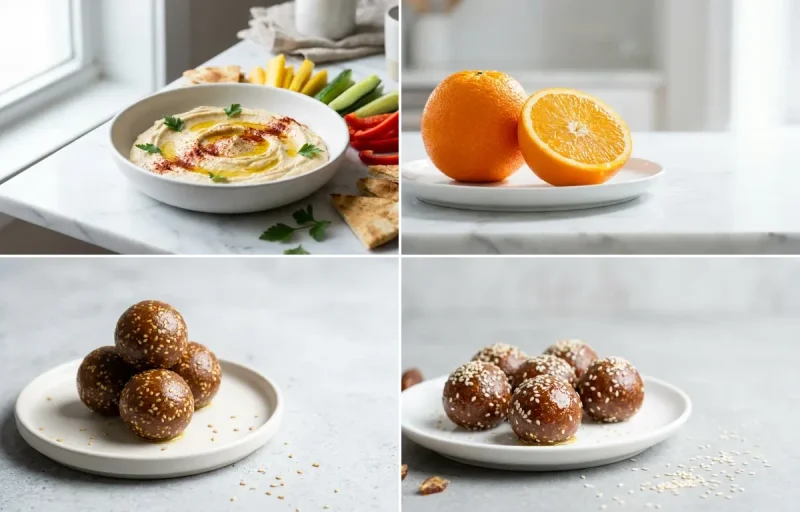
MODERN · 982 CAL
Hummus with Crudits and Pita with Fresh Orange Snack + supplement + iron
TAGGED
KEEP READING